
Bernard Law Montgomery, 1st Viscount Montgomery of Alamein
British Army officer (1887–1976) who commanded Allied forces at El Alamein, held senior commands in Italy and north‑west Europe during WWII, and later served as a senior postwar commander.
Field Marshal Bernard Law Montgomery, 1st Viscount Montgomery of Alamein (17 November 1887 – 24 March 1976) was a senior British Army officer whose leadership during the Second World War made him one of the most prominent British commanders of the twentieth century. Commonly known by the nickname "Monty," he was noted for methodical planning, an emphasis on training and logistics, and a forceful public presence. He received high honours during his career and served in several of the war's principal theatres.
Image gallery
10 Images
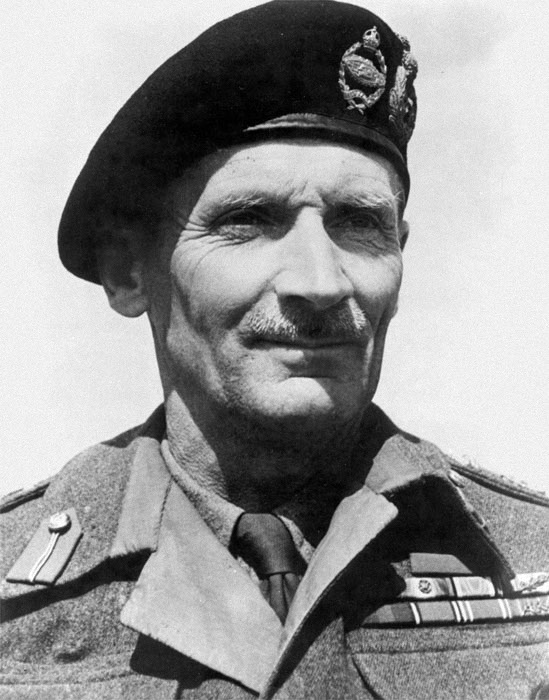


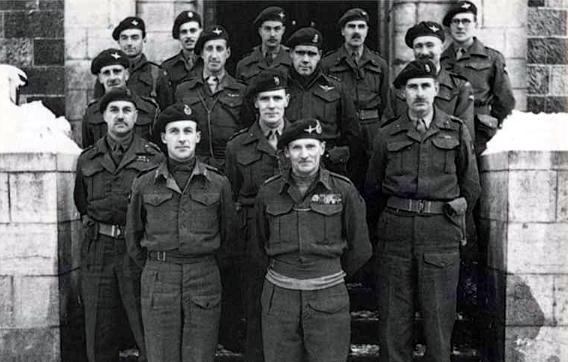
Early life, education and First World War
Montgomery entered military training in his youth and completed professional officer education before the First World War. He served with the British Army on the Western Front during the Great War, where he gained experience in staff work, small‑unit command and the emerging demands of modern, industrialised warfare. The war years shaped his appreciation for careful preparation, discipline and the value of firm leadership under pressure.
Interwar years and professional development
Between the wars Montgomery remained in the army and undertook a variety of staff and regimental appointments. Like many of his generation, he used the interwar period to study tactics and staff procedures, to refine his views on training and administration, and to develop the organisational habits that would later characterise his command approach. He became known for insisting on detailed planning and thorough rehearsals.
North Africa and the Battle of El Alamein
Montgomery rose to international prominence as commander of the British Eighth Army in the Western Desert. In the autumn of 1942 he took command prior to the Second Battle of El Alamein, which is widely regarded as a major turning point in the North African campaign. He concentrated on rebuilding morale and logistics, improving the coordination of artillery, armour and infantry, and preparing his forces carefully before launching the offensive that pushed Axis forces westward out of Egypt.
Italy, Normandy and Operation Market Garden
After the North African campaign Montgomery served in senior Allied posts during the Italian campaign and subsequently in north‑west Europe. He was given overall responsibility for Allied ground forces in the invasion of Normandy until after the initial Battle of Normandy and later acted as the principal ground commander for Operation Market Garden. Market Garden, an ambitious airborne and ground operation in the Netherlands, achieved partial success but did not secure its ultimate objectives; its planning and aftermath have been widely discussed and debated by historians.
Command style, relations and controversies
Montgomery's command style combined meticulous preparation with a strong personal presence. He emphasised training, logistics and combined‑arms coordination, and he inspired loyalty among many subordinates. At the same time his blunt manner and insistence on his own views sometimes produced tensions with allied commanders, political leaders and some peers. His public pronouncements and high profile made him a divisive figure in Allied circles as well as in the public eye.
Postwar career and honours
Following the end of hostilities, Montgomery held senior responsibilities including the command of British occupation forces in Germany and later the post of Chief of the Imperial General Staff. He was elevated to the peerage and continued to write, lecture and comment on military matters. His career was recognised with several high honours and decorations.
Legacy and historical assessment
Montgomery's legacy is mixed but substantial. He is widely celebrated in Britain for his role at El Alamein and for contributing to Allied victory in Europe. At the same time, some of his campaigns and decisions—especially those associated with coalition politics and large‑scale airborne operations—have been subject to criticism and reappraisal. He remains a central figure in studies of leadership, coalition warfare, training and twentieth‑century military history.
Further reading and resources
- General biographical overview and honours
- Official titles and distinctions
- Military honours and decorations
- Summary of British Army career
- Service during the First World War
- Campaigns and operations in the Second World War
- The Battle of El Alamein and its significance
- Italian campaign and Mediterranean operations
- Normandy, Operation Market Garden and later commands
The entries and resources above provide starting points for readers who wish to explore Montgomery's life in greater detail, examine specific campaigns, or consult primary documents and scholarly analyses. His career illustrates both the impact an individual commander can have on large operations and the complexities of coalition strategy and civil‑military relations in wartime.
Questions and answers
Q: Who was Field Marshal Bernard Law Montgomery?
A: Field Marshal Bernard Law Montgomery, 1st Viscount Montgomery of Alamein, KG, GCB, DSO, PC was a British Army officer. He is usually referred to as "Monty".
Q: When did he serve in World War I?
A: Field Marshal Bernard Law Montgomery served in World War I from 1917-1918.
Q: What major battle did he command during World War II?
A: During World War II, Field Marshal Bernard Law Montgomery successfully commanded Allied forces at the Battle of El Alamein in 1942.
Q: What other campaigns did he lead during WWII?
A: In addition to leading the Battle of El Alamein during WWII, Field Marshal Bernard Law Montgomery also led campaigns in Italy and North-West Europe.
Q: What operation did he command during Operation Overlord?
A: During Operation Overlord in 1944, Field Marshal Bernard Law Montgomery was in command of all Allied ground forces until after the Battle of Normandy.
Q: What other operation did he lead after Operation Overlord?
A: After Operation Overlord had concluded, Field Marshal Bernard Law Montgomery became the principal commander for Operation Market Garden.
Q: What position did he hold after WWII ended?
A: After WWII ended, Field Marshall Bernard Law Montgomery became Commander-in-Chief of the British Forces of Occupation in Germany and then Chief of the Imperial General Staff.
Related articles
Author
AlegsaOnline.com Bernard Law Montgomery, 1st Viscount Montgomery of Alamein Leandro Alegsa
URL: https://en.alegsaonline.com/art/10805
Sources
- thegazette.co.uk : "No. 37807"
- thegazette.co.uk : "No. 37119"
- thegazette.co.uk : "No. 35782"
- thegazette.co.uk : "No. 34893"
- thegazette.co.uk : "No. 36065"
- thegazette.co.uk : "No. 36327"
- thegazette.co.uk : "No. 37853"
- thegazette.co.uk : "No. 36125"
- thegazette.co.uk : "No. 37138"
- thegazette.co.uk : "No. 31109"
- thegazette.co.uk : "No. 37204"
- thegazette.co.uk : "No. 36569"
- thegazette.co.uk : "No. 36769"
- thegazette.co.uk : "No. 37853"
- thegazette.co.uk : "No. 38571"