
Wigmore Hall: London's historic recital hall for chamber music and song
Wigmore Hall is a London concert venue famed for chamber music and song recitals, noted for its intimate acoustics, early-20th-century architecture, distinguished artists and an active recording and broadcast programme.
Overview
Wigmore Hall is a purpose-built recital hall in central London celebrated for chamber music, solo recitals and art song. Designed for close listening rather than large orchestral spectacle, the hall sits on Wigmore Street just north of Oxford Street. Its programming emphasizes instrumental recitals, voice and small ensembles, with a long tradition of commissioning and presenting contemporary composers alongside the classical canon. For a definition and context of the recital format see recital and for the chamber-music tradition see chamber music.
Image gallery
2 Images
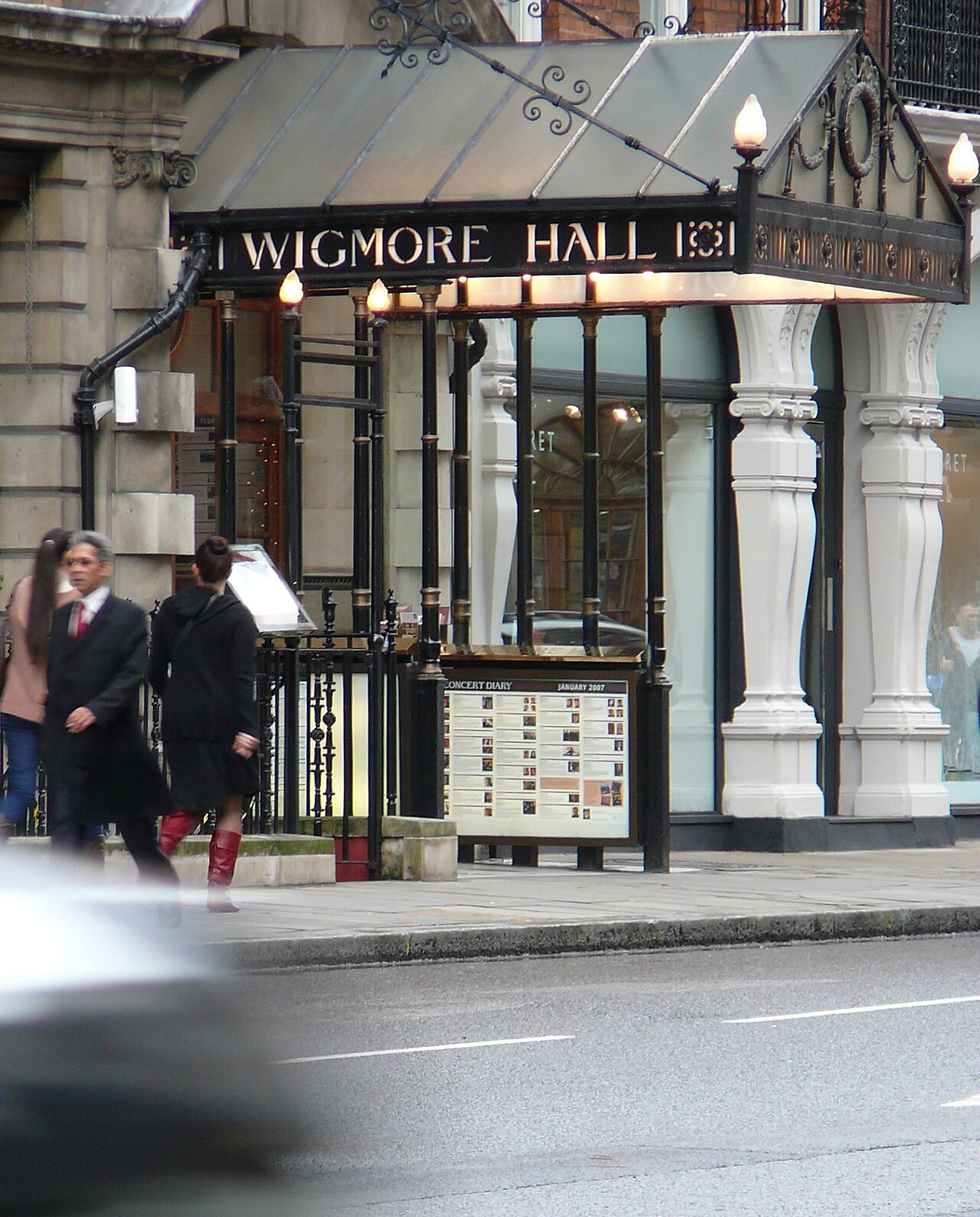
Architecture and acoustic character
Completed in the early 20th century by the German piano firm Bechstein, the building was conceived as a showroom and performance space complementing piano sales. The association with piano manufacture is a visible part of its origin, since companies that made pianos often supported concert venues in this period. The hall was executed in a late-Renaissance style with refined interior materials; descriptions highlight alabaster and alabaster and marble finishes and a rectangular shoebox-shaped auditorium. A shallow, raised stage and a cupola over the stage contribute to the clarity and warmth of the sound. Decorative programmatic paintings incorporate mythic figures such as Psyche and allegories of music.
Early history and opening
The hall opened in 1901 under the name Bechstein Hall. The inaugural season featured leading virtuosi of the age, including the pianist and composer Ferruccio Busoni and violinist Eugène Ysaÿe, and quickly became a preferred London address for recital activity. The association with prominent performers established Wigmore Hall as a venue where discerning listeners might hear the most important soloists and small ensembles of the time.
20th-century development and ownership
World events affected the hall's ownership and name. During the First World War the building, originally owned by a German firm, was seized and later sold; it reopened under its present name, Wigmore Hall. Throughout the 20th century the hall hosted successive generations of influential artists and composers who appeared there while building reputations on recital and chamber programmes. Notable performers include a wide range of pianists, violinists, singers and guitarists who passed through its stage and helped cement its international reputation.
Programming, recordings and broadcasts
Wigmore Hall presents a dense programme of concerts, often emphasizing song recitals, contemporary composition and young artist development. It has an active relationship with broadcasters and record labels: many concerts are transmitted live or recorded, extending the hall's reach beyond its audience of roughly five hundred seats. The venue also issues recordings under its own imprint, offering live performances by leading and emerging artists to a wider public. For information on contemporary partnerships and broadcast activity see links on programming and media: BBC Radio 3, Wigmore Hall Live.
Notable artists and influence
Across its history Wigmore Hall has hosted a procession of distinguished musicians. Early and mid-20th-century names included performers such as Artur Schnabel, Arthur Rubinstein, Camille Saint-Saëns and many others. Later decades saw appearances by pianists and singers of international renown, and leading 20th-century composers and performers who premiered works or gave landmark recitals. Examples of artists associated with important Wigmore appearances include Vladimir Ashkenazy, Elisabeth Schwarzkopf, Sergei Prokofiev, Paul Hindemith, Andrés Segovia, Julian Bream, Peter Pears, Benjamin Britten and Francis Poulenc. Earlier visitors included virtuosi such as Eugène Ysaÿe, Ferruccio Busoni (biographical reference) and others.
Function today and notable features
- Seating capacity and layout: the intimate auditorium accommodates around 540 listeners, promoting immediacy between performers and audience.
- Instruments and maintenance: modern performances typically use concert grands supplied by leading makers; the hall's instrument programme has shifted over time from its original association with Bechstein to other manufacturers and current regular providers.
- Education and new music: Wigmore Hall supports young artists, commissions new work and presents contemporary repertoire alongside standard repertoire.
Current leadership and artistic direction guide programming choices and audience engagement; for management and future plans visit institution pages and related resources: piano makers and partnerships, architectural style notes, material details, and institutional histories at wartime records, auction history, new ownership, and festival or series pages recital programme and chamber series.
Wigmore Hall's combination of historical character, acoustic clarity and focused programming makes it a distinctive venue in London and an influential model for recital halls worldwide. For further reading and historical details see linked references on artists, architecture and the hall's recorded legacy: mythic decoration, opening performers, commercial changes, label releases, founding firm, Busoni reference, Ysaÿe reference, Schnabel, Rubinstein, Saint-Saëns, Ashkenazy, Schwarzkopf, Prokofiev, Hindemith, Segovia, Bream, Pears, Britten, Poulenc, and miscellaneous archival notes broadcast archive.
Questions and answers
Q: What type of concerts are held at the Wigmore Hall?
A: The Wigmore Hall is a recital hall, designed for concerts given by one soloist or small group of musicians (chamber music).
Q: Where is the Wigmore Hall located?
A: The Wigmore Hall is located in Wigmore Street in the centre of London, just north of Oxford Street.
Q: Who built the original Bechstein Hall?
A: The original Bechstein Hall was built by the German firm Bechstein who made pianos.
Q: What does the ceiling painting depict?
A: The ceiling painting depicts the Soul of Music looking up at the Genius of Harmony, which is a ball of eternal fire whose rays are reflected across the world. It also includes a musician and Psyche inspiring a composer to write music.
Q: Who were some famous musicians that performed there during its early period?
A: Some famous musicians that performed at Bechstein/Wigmore Hall during its early period include Artur Schnabel, Pablo Sarasate, Percy Grainger, Myra Hess, Arthur Rubinstein and Camille Saint-Saëns.
Q: How many people can it seat today?
A: Today the Wigmore Hall seats 540 people.
Q: What record label publishes recordings from concerts given by famous musicians?
A:The Wigmore Hall publishes on its own record label "Wigmore Hall live" recordings of concerts that were given by famous musicians.
Related articles
Author
AlegsaOnline.com Wigmore Hall: London's historic recital hall for chamber music and song Leandro Alegsa
URL: https://en.alegsaonline.com/art/108001