
Wiener Schnitzel
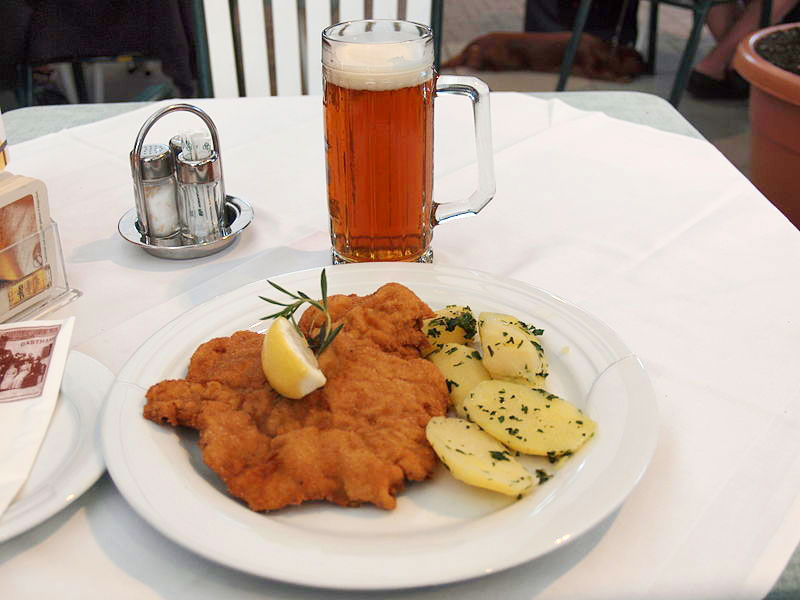
Classic Viennese breaded veal cutlet: a thin veal slice dredged in flour, egg and breadcrumbs, pan-fried and traditionally served with lemon, potatoes and lingonberry; name protected in Austria.
Overview
Wiener Schnitzel is a signature dish of Viennese and Austrian cuisine: a very thin, boneless veal cutlet that is coated in breadcrumbs and pan-fried until golden. It is widely recognized as a national classic and is commonly associated with the city of Vienna. Outside Austria the term schnitzel is used more generally for breaded and fried cutlets of various meats.
Image gallery
5 Images


Characteristics and preparation
The distinctive texture and appearance of a Wiener Schnitzel come from a simple, three-step breading procedure: the meat is lightly dusted with flour, dipped in beaten egg, and then covered with fine breadcrumbs. Before breading, the cutlet is usually pounded thin with a meat mallet to increase tenderness and achieve an even, quick cook. The schnitzel is shallow-fried in clarified butter, lard or oil until it develops a delicate, crisp crust without becoming greasy. Careful handling—no pressing down during frying and avoiding overcrowding the pan—helps preserve the airy coating.
Traditional accompaniments
In Austria a Wiener Schnitzel is traditionally presented simply to highlight the meat and crisp coating. Common accompaniments include:
- A slice of lemon to squeeze over the schnitzel for brightness.
- Potato salad or boiled potatoes tossed in butter and parsley for a comforting side.
- Lingonberry jam or other tart preserves served in some Austrian traditions.
- Light green salad or a wedge of cucumber and tomato for contrast.
Variations and naming
While the original is made from veal, similar preparations use pork, chicken or turkey. In German-speaking countries the distinction is often reflected in the name: a pork version may be called Schnitzel Wiener Art ("Viennese style schnitzel") or Wiener Schnitzel vom Schwein to indicate pork. The generic term schnitzel covers many regional variants and sauces, such as Jägerschnitzel (with mushroom sauce) or Zigeunerschnitzel (with a piquant pepper sauce).
Origins and history
The precise origin of the Wiener Schnitzel is debated. One well-known connection points to the northern Italian dish cotoletta alla milanese, a breaded veal cutlet long prepared in Milan and the surrounding region. Another popular account credits the introduction of a similar preparation to Vienna during the 18th or 19th century, with anecdotal attributions to military figures who encountered Italian cooking. The name "Wiener Schnitzel" appears in 19th-century sources, reflecting its establishment in Viennese culinary tradition. Given the close culinary exchange across Central Europe, influence and parallel development are both plausible.
Legal and cultural status
Wiener Schnitzel has achieved a protected status in Austria: by common regulation and culinary convention, the designation Wiener Schnitzel is reserved for preparations made from veal, while other meats must be identified explicitly. As a cultural emblem, the dish appears on restaurant menus across Austria and is also a popular, approachable main course at home. Its simplicity—few ingredients, clear technique—makes it an enduring favorite for both everyday meals and celebratory dining.
Notable points and related dishes
For those exploring similar foods, the cotoletta alla milanese of Italy and various Central European breaded cutlets share technique and intent: producing a tender, quick-cooking piece of meat with a crisp, flavorful crust. The Wiener Schnitzel remains notable for its emphasis on an unadorned presentation and the legal and cultural preference for veal in Austria. Further reading on regional variations and recipes is available through culinary histories and national cuisine resources.
Parsley potatoes and Milanese influences are commonly noted in comparative discussions, while general surveys of northern Italian and Austrian cuisines often reference the schnitzel among signature dishes.
Questions and answers
Q: What is Wiener Schnitzel?
A: Wiener Schnitzel is a traditional Austrian dish consisting of a thin slice of veal coated in breadcrumbs and fried.
Q: How is it traditionally served?
A: It is traditionally served with a lemon slice, lingonberry jam and either potato salad or potatoes with parsley and butter.
Q: Is it always made of veal?
A: In Austria, the term Wiener Schnitzel is protected by law, and any schnitzel called by that name has to be made from veal. However, sometimes it can be made of pork and in this case it may be referred to as "Schnitzel Wiener Art" (Germany) or "Wiener Schnitzel vom Schwein" (Austria).
Q: Where did the dish originate from?
A: The dish may have originated in Milan, northern Italy, as cotoletta alla milanese. It may have appeared in Vienna during the 15th or 16th century. According to another theory, it was introduced in 1857 by Field Marshal Radetzky who spent much of his life in Milan.
Q: When did the term 'Wiener Schnitzel' first appear?
A: The term 'Wiener Schnitzel' itself dates back to at least 1862.
Q: What does 'Schnitzel' mean?
A: 'Schnitzel' means a cutlet without bones.
Related articles
Author
AlegsaOnline.com Wiener Schnitzel Leandro Alegsa
URL: https://en.alegsaonline.com/art/107977
Sources
- practicallyedible.com : Wiener Schnitzel