
Whooper swan (Cygnus cygnus): description, range, behaviour and status
The whooper swan is a large migratory Eurasian swan known for its loud whooping calls, distinctive yellow-and-black bill, tundra breeding and wintering in temperate wetlands; similar to the trumpeter swan.
The whooper swan (Cygnus cygnus) is a large white waterbird native to northern Europe and Asia. Recognised by its upright posture, long neck and loud, far-carrying "whoop" call, it breeds in subarctic wetland and tundra habitats and migrates to temperate coastal and inland waters for the winter. It is one of several large swan species and is valued both ecologically and culturally across its range.
Image gallery
10 Images


Appearance and identification
Adult whooper swans are nearly all white in plumage with black legs and a bill patterned in yellow and black. They are large birds — broadly comparable in size to other true swans — with long wings that produce a deep, resonant wingbeat. Key field marks include the triangular yellow patch on the bill that extends toward the base, a straighter neck carriage than the mute swan, and vocal behaviour: a clear, trumpet-like whooping call that is often given in flight.
Distribution, habitat and migration
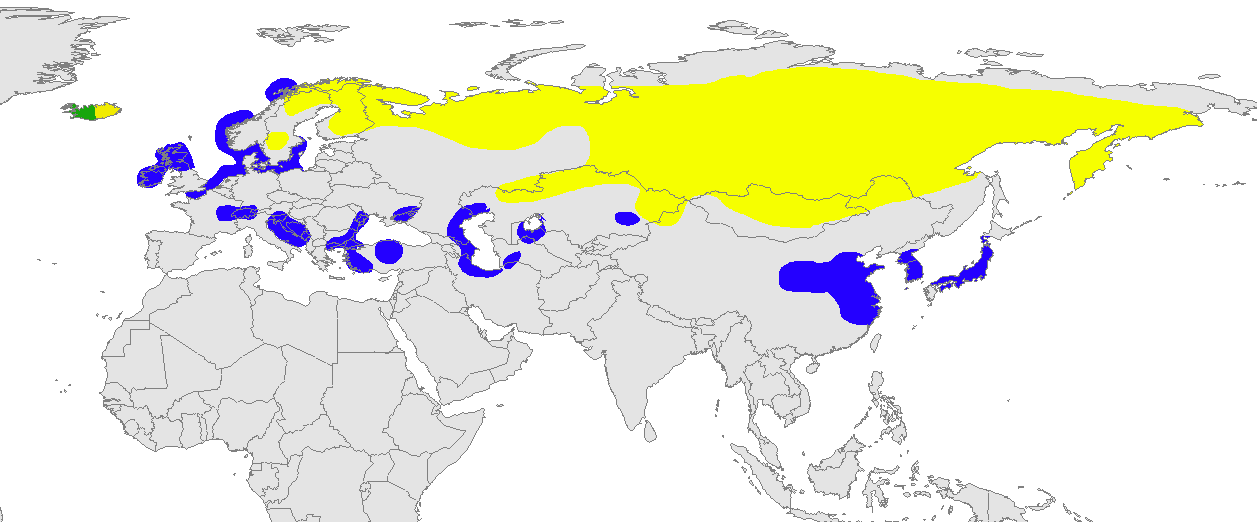
Whooper swans breed across the taiga and tundra of northern Eurasia and undertake seasonal migrations to milder lowland wetlands, estuaries and flooded fields. Wintering concentrations are found in temperate parts of Europe and East Asia. They favour shallow freshwater and brackish habitats with abundant aquatic vegetation, and they use open landscapes for feeding and roosting on larger bodies of water.
The species forms large flocks outside the breeding season and is highly site-faithful, returning to traditional staging and wintering sites. Migration routes and timing are shaped by weather, ice conditions and food availability.
Feeding, breeding and behaviour
- Diet: Mostly aquatic plants, grasses and agricultural crops; they feed by upending in shallow water or grazing on land.
- Breeding: Monogamous pairs build nests near water; clutches are incubated by both parents and cygnets are precocial but remain with parents through the first winter.
- Social behaviour: Highly vocal and gregarious, they defend nest territories in summer but aggregate in large flocks during migration and winter.
Because of their visibility and loud calls, whooper swans are often used as indicator species for wetland health. They also have significance in folklore and seasonal traditions in several countries.
Conservation status is generally favourable; the species is not globally threatened, though local populations face pressures from habitat loss, disturbance, pollution and, in places, hunting. Conservation measures focus on protecting wetland habitats, maintaining safe stopover sites and monitoring population trends.
For further reading and authoritative resources, see: species overview, European distribution, Asian range notes, taxonomic comparisons, comparison with North American swans, vocal and flight behaviour and historical references including early naturalists' accounts: classical ornithology.
Questions and answers
Q: What is the whooper swan?
A: The whooper swan is a large white bird that lives in Europe and Asia.
Q: What is the Eurasian counterpart of the North American trumpeter swan?
A: The Eurasian counterpart of the North American trumpeter swan is the whooper swan.
Q: What did Francis Willughby and John Ray's Ornithology of 1676 refer to the whooper swan as?
A: Francis Willughby and John Ray's Ornithology of 1676 referred to the whooper swan as "the Elk, Hooper, or wild Swan".
Q: Where does the whooper swan call home?
A: The whooper swan calls Europe and Asia its home.
Q: Is the whooper swan a small or large bird?
A: The whooper swan is a large bird.
Q: What color is the whooper swan?
A: The whooper swan is white in color.
Q: What are some other names for the whooper swan?
A: Other names for the whooper swan include the Elk, Hooper, or wild Swan.
Related articles
Author
AlegsaOnline.com Whooper swan (Cygnus cygnus): description, range, behaviour and status Leandro Alegsa
URL: https://en.alegsaonline.com/art/107908
Sources
- iucnredlist.org : "Cygnus cygnus"
- gdz.sub.uni-goettingen.de : Ornithologiae libri tres
- arkive.org : Whooper swan (Cygnus cygnus)
- theswansanctuary.org.uk : A Whooper Swan
- birdlife.org : Whooper Swan Cygnus cygnus