
White Christmas: meaning, occurrence, and cultural significance
A White Christmas typically means measurable snow on Christmas Day; definitions vary by country. This article explains common definitions, factors affecting occurrence, examples, history, and cultural importance.
Overview
A "White Christmas" is a seasonal term used when snow is present on or falls on Christmas Day. In everyday usage it evokes images of snow-covered landscapes, festive cards, and holiday songs. Different countries and weather services use slightly different criteria to decide whether a particular year counts as a White Christmas, so the label can mean either recent snowfall or visible snow on the ground.
Image gallery
5 Images


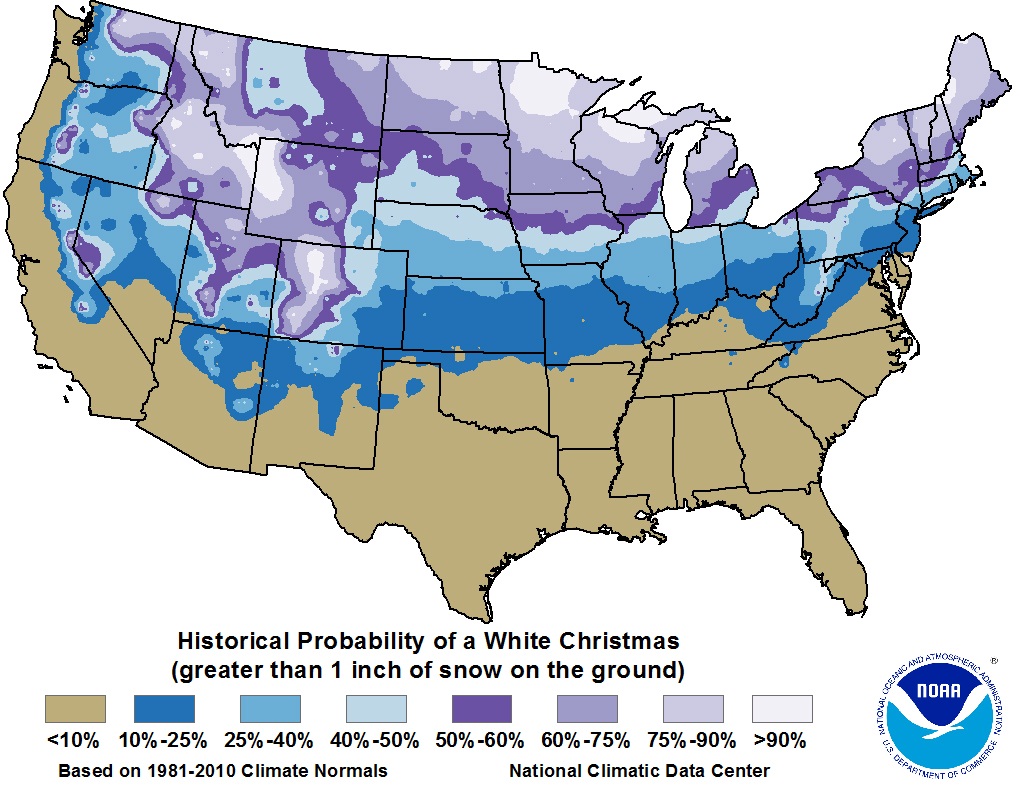
Definition and variations
The most frequently cited definition is that at least one inch of snow or measurable accumulation is present or has fallen on Christmas morning. Other authorities emphasize the observation of snow falling during the day, or the existence of snow lying on the ground at a fixed reporting time. Because there is no single international standard, meteorological services and national records often adopt their own rule for counting White Christmases.
Factors that affect occurrence
- Latitude and climatology: higher latitudes are more likely to have snow at December 25.
- Elevation: mountainous and upland areas tend to retain snow cover longer.
- Maritime influence: coastal regions can be milder, reducing chances of snow.
- Urban heat islands and recent weather patterns can prevent accumulation even where temperatures are low.
Occurrence and examples
Probability varies widely by country and region. For instance, some locations in the United Kingdom experience few White Christmases in an average decade, while many parts of Canada frequently have snow in late December. The label is applied differently in Ireland and the UK; Ireland's last officially noted White Christmas is often cited as 2004. Local climate, geography and yearly weather patterns drive these differences.
History and cultural importance
The expression entered popular culture through literature, music and holiday imagery. The song titled "White Christmas" became an iconic seasonal standard and reinforced the ideal of a snowy holiday. Beyond nostalgia, White Christmases can also affect travel, holiday events and municipal services when snowfall or lingering snow cover occurs.
Notable distinctions and further reading
When researching specific statistics or historical records, consult national meteorological agencies and local archives because each uses its own counting method. For more on measurement standards and historical frequency in particular countries, see national reports and climate summaries provided by agencies and local services: regional climate pages, UK summaries, Canadian climate notes, and Irish records.
Questions and answers
Q: What is a White Christmas?
A: A White Christmas means that at least an inch of snow has fallen on Christmas morning.
Q: Is a White Christmas common in every country?
A: No, a White Christmas is more common in some countries than in others.
Q: Why are White Christmases uncommon in the United Kingdom?
A: White Christmases are uncommon in the United Kingdom because there are not a lot of them.
Q: Which country almost always has a White Christmas?
A: Canada almost always has a White Christmas.
Q: When was Ireland's last "official" White Christmas?
A: Ireland's last "official" White Christmas was in 2004.
Q: Have there been many White Christmases in Ireland?
A: It is not clear how many White Christmases there have been in Ireland, but the last "official" one was in 2004.
Q: Is there a specific amount of snow that needs to fall for it to be considered a White Christmas?
A: Yes, at least an inch of snow needs to fall for it to be considered a White Christmas.
Related articles
Author
AlegsaOnline.com White Christmas: meaning, occurrence, and cultural significance Leandro Alegsa
URL: https://en.alegsaonline.com/art/107799
Sources
- breakingnews.iol.ie : Chances of white Christmas begin to drift
- canada.ca : "Historical Christmas snowfall data"
- ols.nndc.noaa.gov : ols.nndc.noaa.gov
- i.abcnews.com : Study: White Christmases Have Become Rare.
- metoffice.gov.uk : "White Christmases"