
White Christmas (1954 film) — American holiday musical
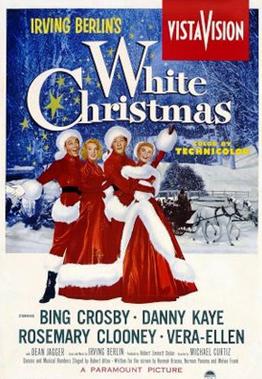
1954 Technicolor musical directed by Michael Curtiz, starring Bing Crosby, Danny Kaye, Rosemary Clooney and Vera‑Ellen; features Irving Berlin songs and was the first film released in VistaVision.
White Christmas (1954) is an American musical film directed by Michael Curtiz and produced by Paramount Pictures. The movie stars Bing Crosby, Danny Kaye, Rosemary Clooney and Vera‑Ellen. Its score is built around songs by Irving Berlin, most famously the title tune, "White Christmas", a song Crosby had previously popularized in the 1942 film Holiday Inn.
Image gallery
5 Images


Overview and plot framework
The story follows two World War II veterans who become successful song-and-dance entertainers and later team up with a sister act to help their former commanding officer save his failing Vermont inn. The film blends comic banter, choreography, and staged musical numbers with a sentimental holiday theme, establishing a tone that helped it become associated with seasonal viewing traditions in the decades after its release.
Production, format and visual style
White Christmas was shot in Technicolor and was the first feature released in Paramount's VistaVision process, a widescreen photographic system that used a larger negative area to improve image clarity when printed to standard 35mm release prints. The film showcases polished musical staging and elaborate dance sequences that benefited from the higher‑resolution negative and vibrant color printing of the period.
Cast, music and performance
The ensemble pairs the warm vocal style of Bing Crosby with the comic energy of Danny Kaye, supported by the vocal talents of Rosemary Clooney and the dance virtuosity of Vera‑Ellen. The score draws on songs by Irving Berlin, with the title number "White Christmas" serving as a thematic centerpiece. Choreography and production numbers were staged to highlight both singing and ballet‑influenced dance, creating several memorable set‑piece sequences.
Reception, legacy and cultural significance
Upon release, the film found an audience for its blend of popular music, star performers, and holiday sentiment. Over time it became a seasonal favorite in the United States and elsewhere, frequently shown in television broadcasts and reissued in home‑video formats. Its technical distinction as the first widely released VistaVision picture and its connection to an already‑famous song helped secure its place in the history of mid‑20th‑century Hollywood musicals.
Notable facts and distinctions
- Although the title song was best known from an earlier film, White Christmas packaged it within a new narrative and new arrangements for the 1954 screen audience.
- The movie is commonly cited for its early use of VistaVision, a format intended to increase image detail and reduce grain in theatrical prints.
- Performances combine vocal solos, duets and ensemble numbers alongside choreographed dance, reflecting the era's studio musical conventions.
Today, White Christmas is often referenced in discussions of classic Hollywood musicals, mid‑century musical technology, and the popularization of holiday repertoire in cinema. For further information about the film, its songs, and archival releases, consult dedicated film and music reference sources.
Questions and answers
Q: When was White Christmas released?
A: White Christmas was released in 1954.
Q: Who are the main actors in White Christmas?
A: The main actors in White Christmas are Bing Crosby, Danny Kaye, Rosemary Clooney, and Vera-Ellen.
Q: Who directed White Christmas?
A: Michael Curtiz directed White Christmas.
Q: Who produced and distributed White Christmas?
A: Paramount Pictures produced and distributed White Christmas.
Q: What is VistaVision?
A: VistaVision is a widescreen process developed by Paramount Pictures that uses twice the surface area of the then standard 35mm film to yield finer-grained standard-sized 35mm prints.
Q: What is the title of the most famous song from White Christmas?
A: The title of the most famous song from White Christmas is "White Christmas."
Q: What is the difference between a movie and a film?
A: There is no difference between a movie and a film; the terms are used interchangeably.
Related articles
Author
AlegsaOnline.com White Christmas (1954 film) — American holiday musical Leandro Alegsa
URL: https://en.alegsaonline.com/art/107797
Sources
- bbfc.co.uk : "WHITE CHRISTMAS (U)"
- the-numbers.com : Box Office Information for White Christmas
- imdb.com : White Christmas
- widescreenmuseum.com : "The VistaVision Story"
- discogs.com : "Discogs"
- barnesandnoble.com : "Barnes & Noble"
- tcm.com : "White Christmas"
- tcm.com : "White Christmas (1954) - Notes - TCM.com"
- nytimes.com : "The New York Times" · archive.org
- playbill.com : "Merry and Bright? Producers Hope White Christmas Will Play Broadway This Year"
- playbill.com : "White Christmas Will Make Broadway Debut in November, Playing to Early 2009"