
Whale shark (Rhincodon typus)
The whale shark is the largest fish and a gentle filter-feeding shark found in warm seas worldwide; reaches about 12 m, feeds on plankton and small fish, and faces conservation threats.
Overview
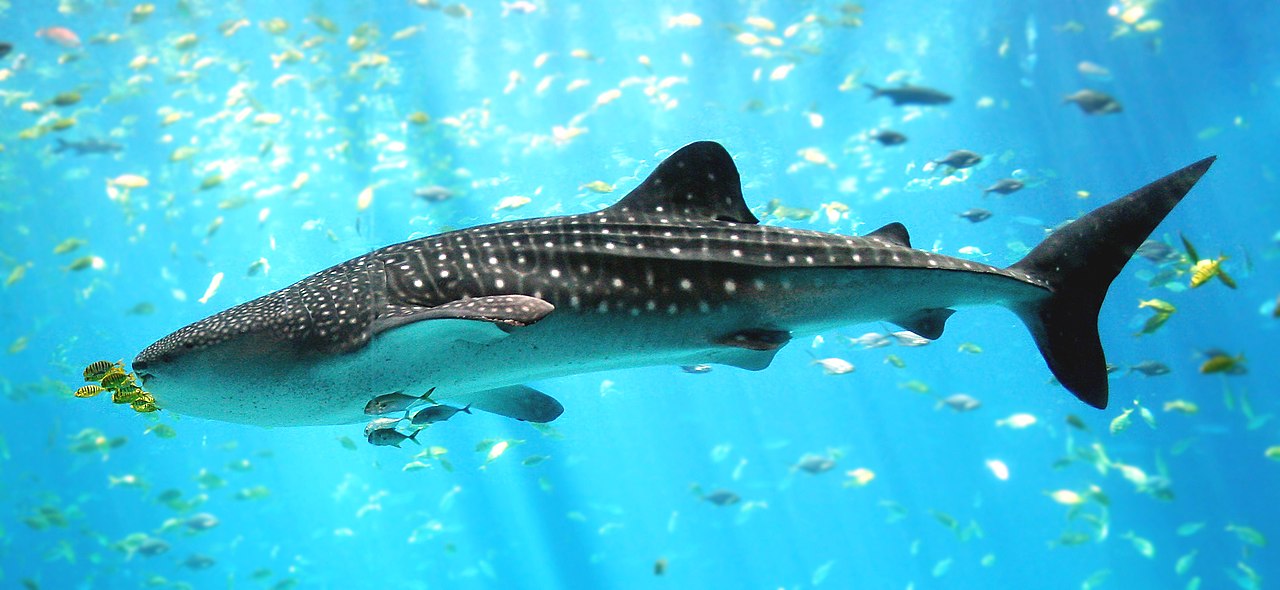
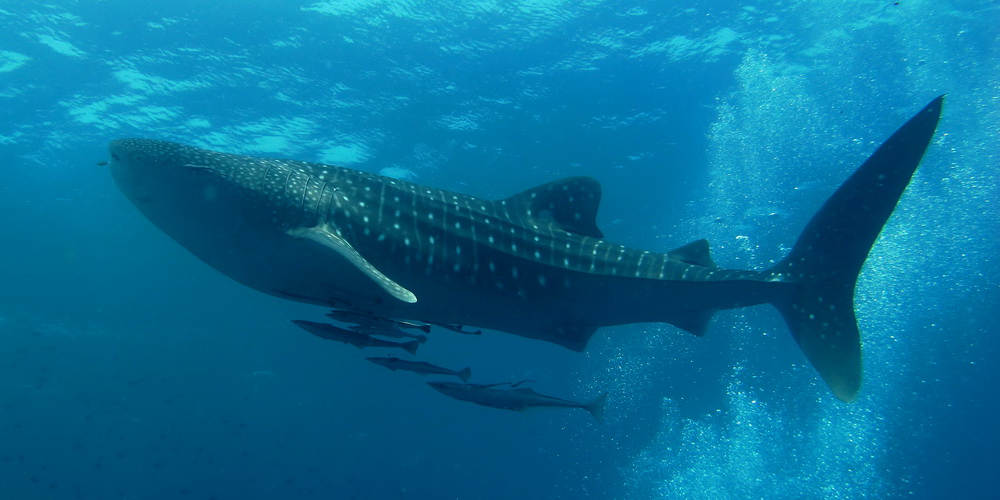
The whale shark (Rhincodon typus) is the largest living fish species and a distinctive member of the shark group. Despite its size, it is a broadly adapted shark that feeds by filtering water for small organisms rather than hunting large prey. Its placid behaviour and patterned skin make it familiar to divers and scientists alike.
Image gallery
10 Images






Physical characteristics
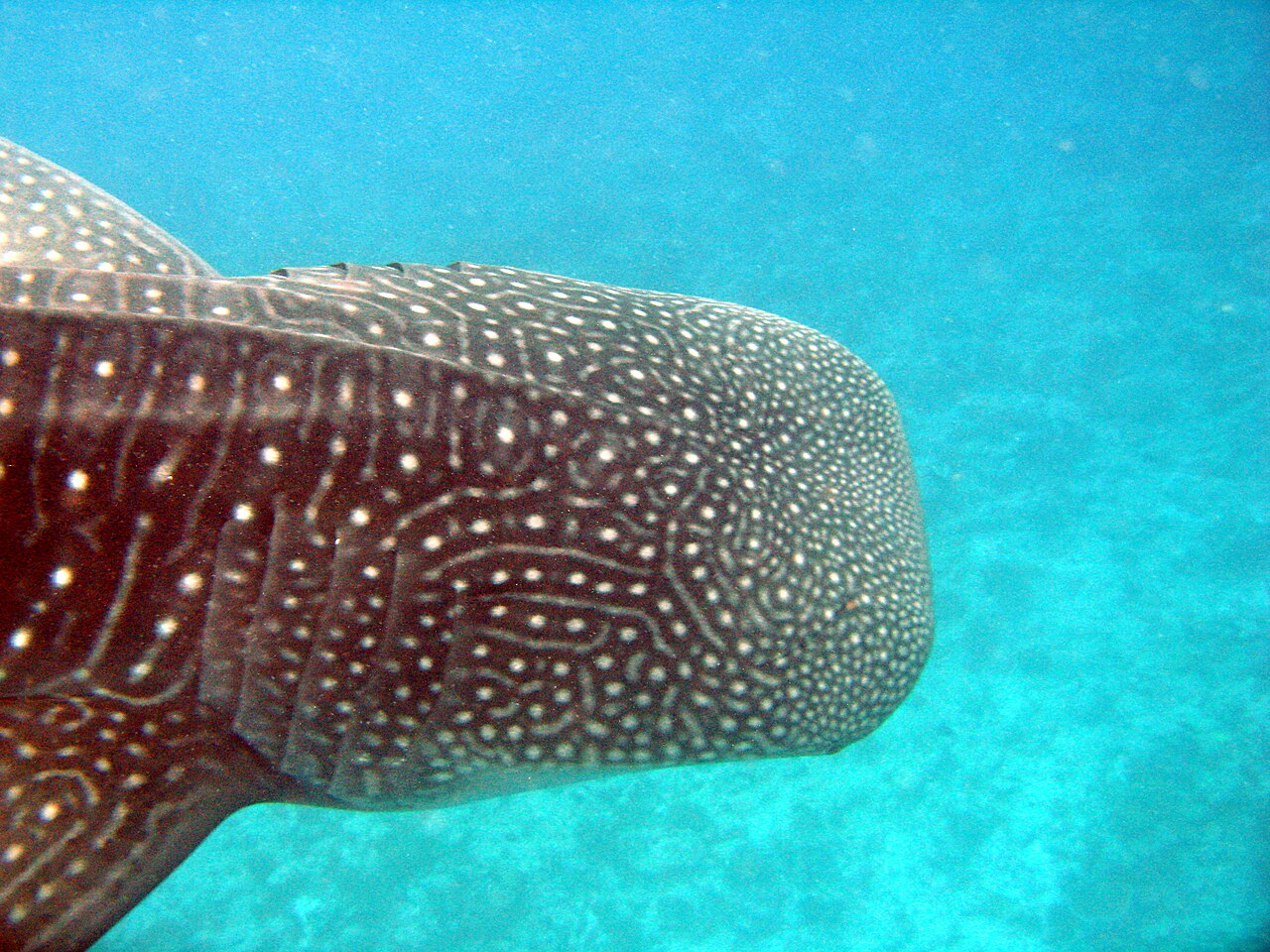
Whale sharks are notable for their massive, fusiform bodies, broad flattened heads and enormous, terminal mouths. Typical features include a unique mosaic of pale spots and stripes on a dark background and five large gill slits used for filtering. Key dimensions and traits include:
- Size: individuals can reach lengths of about 12 metres (roughly 40 feet) and may weigh on the order of many tonnes.
- Skin and markings: the spotted pattern is individual-specific and useful for identification.
- Feeding anatomy: wide mouth, gill rakers and a slow, energy-efficient swimming style adapted to filter feeding.
Distribution and habitat
Whale sharks are cosmopolitan in tropical and warm temperate oceans. They are most often encountered in surface and coastal waters where plankton blooms or fish spawning events concentrate food. They are uncommon in cooler seas and largely absent from the enclosed Mediterranean Sea. Their distribution across the world's warm seas is well documented through sightings, tagging and fisheries records (warm seas).
Feeding, behaviour and life history
As a true filter-feeding species, the whale shark consumes plankton, small schooling fish and squid by swimming with its mouth open or by active suction feeding. Individuals may be solitary or form aggregations at productive feeding sites. Reproductive biology is less visible: the species is ovoviviparous, with embryos believed to develop inside eggs that hatch within the mother before live birth. Growth rates, age at maturity and lifespan remain areas of active research.
Conservation and human interactions
Whale sharks attract ecotourism and are valued by many coastal communities, but they face threats from bycatch in fisheries, targeted hunting in some regions, vessel strikes and habitat changes. Conservation measures include protected areas, regulated tourism, and international listings that aim to reduce direct mortality and disturbance. Continued monitoring, tagging studies and public education are central to conserving this iconic giant.
For further reading on anatomy, migration and conservation status, consult specialist sources and marine research organizations (filter-feeding, shark, warm seas, Mediterranean Sea).
Questions and answers
Q: What is a whale shark?
A: A whale shark is a type of filter feeding shark and is the largest shark in the world.
Q: How big can a whale shark grow?
A: A whale shark can grow up to 12 metres long and may weigh as much as 47,000 pounds.
Q: What is the distribution of the whale shark?
A: The whale shark has a very wide distribution and can be found in all tropical and warm temperate seas, except in the Mediterranean.
Q: Is the whale shark a carnivore?
A: No, the whale shark is not a carnivore. It is a filter feeder and mostly feeds on plankton and small fish.
Q: What is the scientific name of the whale shark?
A: The scientific name of the whale shark is Rhincodon typus.
Q: How does the whale shark filter feed?
A: The whale shark uses its massive mouth to filter feed, taking in a large amount of water and then filtering out the plankton and small fish through its gills.
Q: Why is the whale shark important?
A: The whale shark is important as it serves as an indicator of the health of the ocean's ecosystem, and also as a source of ecotourism. Additionally, their large size and unique features make them a highly valued and sought after species for research purposes.
Related articles
Author
AlegsaOnline.com Whale shark (Rhincodon typus) Leandro Alegsa
URL: https://en.alegsaonline.com/art/107646
Sources
- species.wikimedia.org : Rhincodon typus
- commons.wikimedia.org : Rhincodontidae
- app.pan.pl : "Acta Palaeontologica Polonica"
- iucnredlist.org : "Rhincodon typus"
- doi.org : 10.2305/IUCN.UK.2016-1.RLTS.T19488A2365291.en
- biodiversitylibrary.org : "Contributions to the Natural History of South Africa, &c"
- biodiversitylibrary.org : "Opinion 1278. The Generic Name Rhincodon A. Smith, 1829 (Pisces): Conserved"
- biodiversitylibrary.org : Systematische Beschreibung der Plagiostomen
- dds.crl.edu : "Descriptions of New or imperfectly known Objects of the Animal Kingdom, found in the South of Africa"
- doi.org : 10.2307/1442501
- jstor.org : 1442501
- flmnh.ufl.edu : "FLMNH Ichthyology Department:Whale shark"
- bioexpedition.com : "Whales Sharks-Animal Facts and Information"
- marinebio.org : "Whale Sharks,Rhincodon typus~MarineBio.org"