
Western Sahara: geography, history and disputed political status
Overview of Western Sahara: its geography, population, colonial history, the Moroccan–Polisario dispute, current division, resources, refugees and international efforts toward a resolution.
Western Sahara is a sparsely populated territory on the northwest coast of Africa. It is known by several names in local languages: in Arabic, in Amazigh and in Spanish. Bordered to the north by Morocco, to the east by Algeria, to the south by Mauritania and to the west by the Atlantic Ocean, the region is predominantly desert and semi-desert. Its land area is often given as approximately 266,000 square kilometres, making it one of the larger non-sovereign territories on the continent.
Image gallery
10 Images


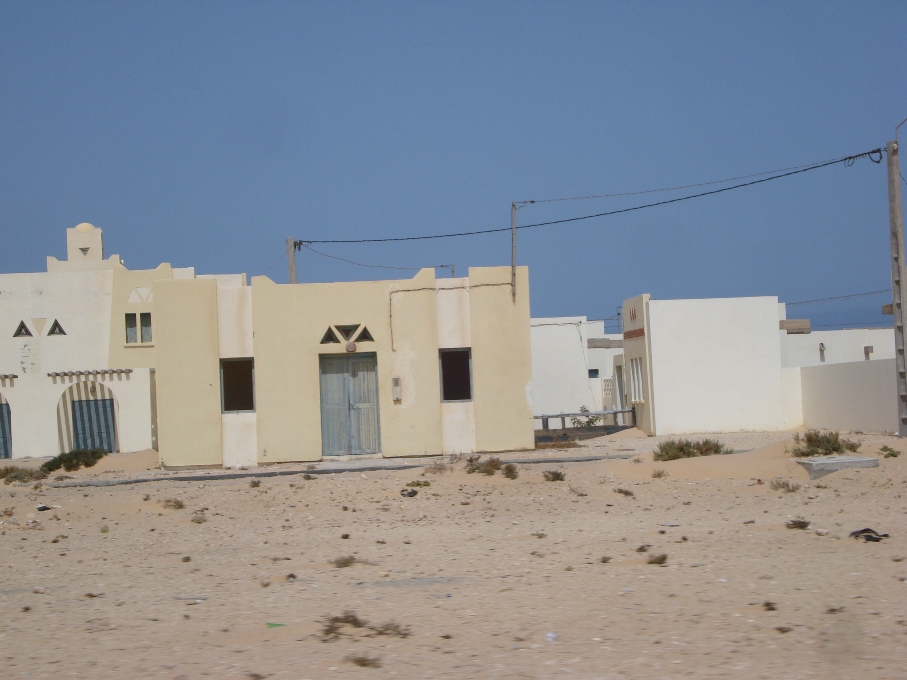
Geography and population
The landscape of Western Sahara is dominated by flat, arid plains and sand dunes, with scarce water sources and a coastline that supports valuable fisheries. Much of the inland territory consists of sandy desert, an environment sometimes described simply as desert. The largest urban center is Laayoune (El Aaiún), home to a substantial share of the territory's inhabitants; references to this city are common in reporting and negotiations (Laayoune). Overall population estimates are modest relative to the area — often cited near half a million people — and include sedentary town residents as well as people who follow nomadic or pastoral traditions. Infrastructure and services are uneven, concentrated mainly in towns and coastal settlements.
Historical background
Western Sahara was a Spanish colony for much of the 19th and 20th centuries. During the process of decolonization in the 1960s and 1970s the territory was entered onto the United Nations list of non-self-governing territories and became the focus of competing claims. An organized independence movement called the Polisario Front emerged and later proclaimed the Sahrawi Arab Democratic Republic (SADR). In the mid-1970s Morocco and Mauritania asserted control over parts of the territory, and periodic armed conflict followed. A United Nations–brokered ceasefire was reached in 1991, but the core political dispute has not been settled through the promised referendum on self-determination.
Current political status
Today Western Sahara remains divided between areas administered by Morocco and areas claimed by the SADR. Morocco controls and administers most of the populated coastal regions and has established civilian governance structures there; the Polisario Front administers sparsely populated inland zones often referred to as the "liberated territories." The two sides are separated in places by a fortified sand berm built by Moroccan forces. International positions vary: some states recognize Moroccan sovereignty, others recognize the SADR, while many remain neutral or support UN-led negotiations. Notably, a small number of influential countries have publicly changed or clarified their positions over time, including states such as the United States. African and Arab regional bodies have also taken differing stances in different periods.
Economy and natural resources
Economic activity in Western Sahara centers on fishing along the continental shelf, phosphate deposits in certain areas, and limited pastoralism. The coastal waters are regarded as productive for fisheries, and some onshore mineral resources have drawn international interest and exploration. Economic development is constrained by the political situation, limited infrastructure, and restricted access in parts of the territory. Proposals for renewable energy projects and tourism along the coast appear occasionally in policy discussions, but large-scale investment is subject to legal and political uncertainty.
Refugees, human impact and international efforts
The conflict and the movement of populations have produced a long-term refugee situation, with many Sahrawi people living in camps outside the territory. Humanitarian organizations and UN agencies remain involved, especially in refugee-hosting regions in neighboring countries. The United Nations continues to advocate a negotiated settlement and has maintained a mission to monitor the ceasefire and support a political process; the UN role is widely referenced in reporting and diplomacy (United Nations). Regional actors, including Algeria and others, have been actively engaged in diplomacy, humanitarian assistance and political backing.
Notable aspects and prospects
- The dispute over sovereignty is one of the longest unresolved decolonization issues on the UN agenda.
- Recognition and diplomatic relations have shifted over time: the SADR has had membership and recognition in African institutions, while Morocco has sought support from Arab and other states.
- The humanitarian dimension — particularly the status of refugees and human-rights concerns — remains central to international attention.
Any durable solution is widely understood to require political negotiation, credible guarantees for human rights and economic development, and an arrangement accepted by the territory's inhabitants. International mediation and periodic confidence-building measures continue, with the goal of creating conditions for a lasting, peaceful resolution.
Arabic • Amazigh • Spanish • Africa • Morocco • Algeria • Mauritania • Atlantic Ocean • Laayoune • area • desert • population • United Nations • Polisario Front • SADR • 1991 ceasefire • United States


Geography
The territory of Western Sahara is located in northwest Africa on the coast of the Atlantic Ocean and covers an area of 266,000 km². It is geographically divided into a northern part, which in Spanish colonial times was roughly the province of Saguia el Hamra, and in which flat undulating gravel and scree deserts (hammada) predominate. The terrain rises gradually from the coast inland to an altitude of about 400 metres, with the highest elevations over 700 metres in the north near the Algerian border. The southern area corresponds roughly to the former province of Río de Oro and is almost completely flat with occasional sand dunes (erg), which provide little variety in the uniform, almost vegetationless Geröllebene. The third type of landscape are the dry river valleys (wadis), which carry water after the rainy season and of which the Saguia el Hamra is the most important for the oasis economy. It is the longest river in the country, stretching 350 kilometres to its end at Aaiún just before the Atlantic Ocean.

Climate, flora and fauna
Desert climate prevails, rain is rare and fog is frequent near the coast. Lush vegetation is only found around the river oases and some gueltas. Animal species adapted to the dry habitat are found, for example desert jumping mice and thorn-tailed agamas. The largest populations of the Mediterranean monk seal, which is threatened with extinction, live in the caves on the Atlantic coast, especially on the Cabo Blanco peninsula.
Questions and answers
Q: What is the name of the largest city in Western Sahara?
A: The largest city in Western Sahara is Laâyoune.
Q: What countries border Western Sahara?
A: The countries that border Western Sahara are Morocco to the north, Algeria to the east, Mauritania to the south, and the Atlantic Ocean to the west.
Q: How much of its surface area is desert flatlands?
A: Most of the territory of Western Sahara is made up of desert flatlands.
Q: How many people live in Western Sahara?
A: There are an estimated 500,000 people living in Western Sahara.
Q: Who claims control over Western Sahara?
A: Both Morocco and Polisario Front with its Sahrawi Arab Democratic Republic (SADR) government claim control over this territory.
Q: When did it become a Spanish colony?
A: In 1960s, when it was a Spanish Colony, it was listed by United Nations as one of non-self-governing territories.
Q: How has international recognition for both parties been changing over time?
A Polisario has won formal recognition for SADR from 81 states while Morocco has won recognition for its position from Arab League; however these recognitions have been extended and withdrawn according to changing international trends over past two decades.
Related articles
Author
AlegsaOnline.com Western Sahara: geography, history and disputed political status Leandro Alegsa
URL: https://en.alegsaonline.com/art/107536
Sources
- news.bbc.co.uk : "Regions and territories: Western Sahara"
- bbc.co.uk : "Q&A: Western Sahara clashes"
- books.google.com : Western Sahara: Anatomy Of A Stalemate
- britannica.com : "Western Sahara"
- un.org : "World Population Prospects, Table A.1"
- telquel-online.com : "Au cœur du polisario"
- arabicnews.com : Arab League supports Morocco's Territorial Integrity
- arabicnews.com : Arab League Withdraws Inaccurate Moroccan maps