
Western European Union
A defunct European defence organisation established by the 1948 Treaty of Brussels, later expanded in 1954; its security roles were transferred to the EU and it was formally dissolved in 2011.
The Western European Union (WEU) was a regional defence and security organisation established after World War II to promote collective security among several Western European states. Created by the Treaty of Brussels in 1948, it provided a forum for consultation, mutual assistance and limited defence cooperation during the early Cold War. Its headquarters were based in Brussels, and it is distinct from the European Union (EU), which later absorbed many of its functions.
Image gallery
2 Images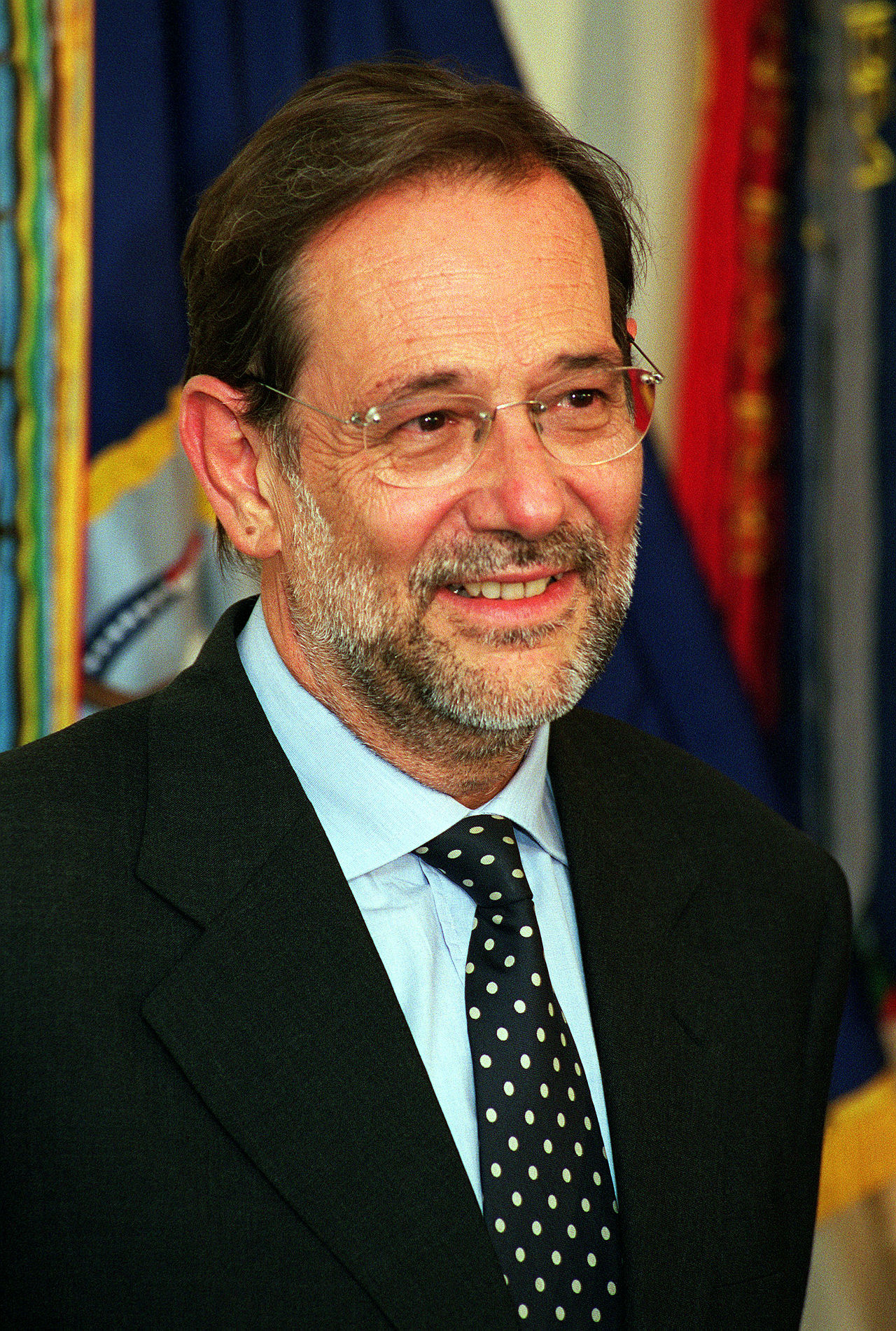

Structure and membership
The WEU began with five Western European signatories of the original treaty. In 1954 the organisation was reshaped by agreements that allowed additional states to join; notably West Germany and Italy became members, and the body became commonly known as the Western European Union. Its institutional layout included a council of foreign and defence ministers, an international staff and a parliamentary assembly composed of national parliamentarians who met to examine security and defence matters.
Roles and functions
During the Cold War the WEU served as a European forum complementary to transatlantic arrangements, facilitating cooperation on collective defence and the coordination of military preparations. In the 1990s it developed a set of priorities—often summarized as crisis management, humanitarian tasks and peacekeeping—that influenced later European policy. Known as the Petersberg tasks, these concepts were subsequently taken up by the European Union's security and defence initiatives.
History and transition
After the end of the Cold War, the landscape of European security changed and many of the WEU's responsibilities and programmes were progressively transferred to other institutions. The European Union expanded its role in security and defence policy, incorporating the Petersberg tasks into its framework, while other aspects of European cooperation moved into multilateral bodies including the Council of Europe (Council of Europe). The WEU continued in a reduced capacity until it was formally dissolved on 31 March 2011.
Legacy and significance
The WEU is remembered for helping to bridge national defence concerns and for shaping early debates on European crisis management. It provided a stepping stone between postwar bilateral arrangements and the development of a common European approach to security. Its institutional lessons and policy concepts remain part of the wider European security architecture, even though the organisation itself no longer exists.
- Founding treaty: Treaty of Brussels (1948).
- Key enlargement: accession of West Germany and Italy (1954).
- Headquarters: Brussels.
- Functions later taken on by the EU and other bodies, including the Council of Europe.
Questions and answers
Q: What is the Western European Union?
A: The Western European Union was a European defence and security organization.
Q: When was the Western European Union established?
A: The Western European Union was established by the Treaty of Brussels of 1948.
Q: Which countries joined the Western European Union later?
A: West Germany and Italy joined the Western European Union in 1954.
Q: Is the Western European Union the same as the European Union?
A: No, the Western European Union should not be confused with the European Union.
Q: Where was the headquarters of the Western European Union?
A: The headquarters of the Western European Union were in Brussels.
Q: What happened to the Western European Union after the Cold War?
A: After the Cold War, the functions of the Western European Union were gradually transferred to the European Union and the Council of Europe.
Q: When was the Western European Union dissolved?
A: The Western European Union was dissolved on 31 March 2011.
Related articles
Author
AlegsaOnline.com Western European Union Leandro Alegsa
URL: https://en.alegsaonline.com/art/107509
Sources
- ena.lu : the Western European Union