
Wepwawet — Ancient Egyptian deity of the “opener of the ways”
Wepwawet (Upuaut) is an Egyptian canid deity associated with opening routes for armies and souls, attested in art and inscriptions, with a cult centered at Asyut and roles in war, funerary practice, and royal ideology.
Overview
Wepwawet (also spelled Upuaut) is an ancient Egyptian deity whose name is usually translated as "opener of the ways." He is most commonly represented as a canid — often called a wolf or jackal — and appears in Egyptian art guiding royal barges, standing at the prow of the solar boat, or depicted on standards and stelae. His character combines aspects of a war deity, a guide for the dead, and a protective spirit associated with successful passage, whether across a battlefield or into the afterlife.
Image gallery
9 Images



Names, iconography, and attributes
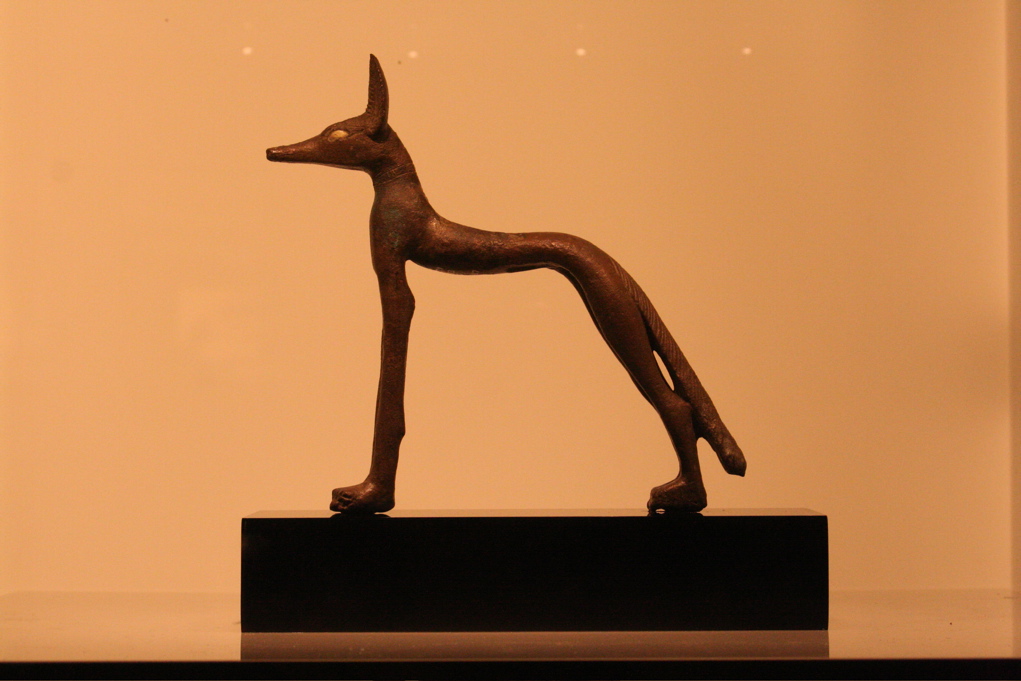
The name Wepwawet reflects his primary function: to open routes. He is typically shown as a standing or striding canid sometimes wearing a collar or a pennant, or as a canid head on a human body. In several scenes he appears at the prow of a boat, symbolically clearing the path for the sun, the king, or the army. Because of his canid form he is often compared with Anubis, but the two deities had distinct emphases: Wepwawet is closely linked to motion, scouting, and martial advance, whereas Anubis is primarily associated with embalming and funerary rites.
War, scouting and royal ideology
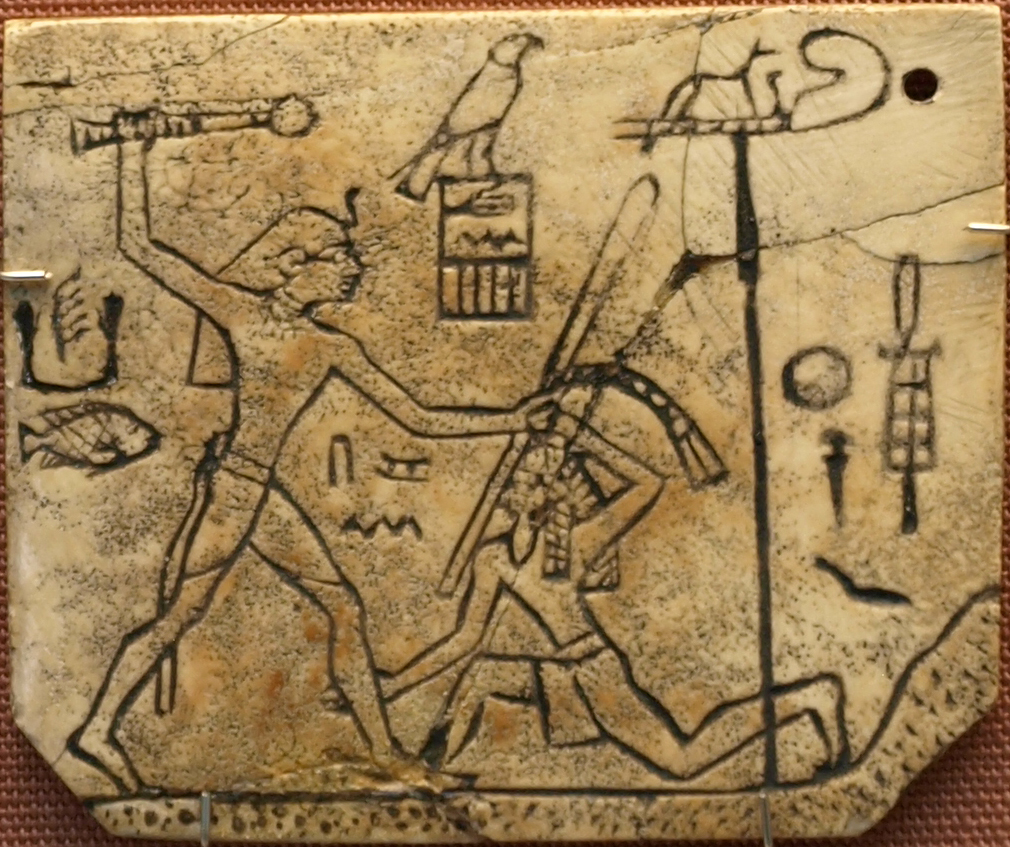
From early inscriptions and reliefs, Wepwawet is shown in a military context. He was thought to go ahead of troops and remove obstacles to victory, acting as a supernatural scout or vanguard. One Sinai inscription credits Wepwawet with "opening the way" for a king's victory, and royal titulary and temple reliefs sometimes invoke him to sanctify military action. His martial role is one reason later traditions linked him with the processes of death and transition: the same capacity to "open ways" that aided armies could also open paths for the deceased.
Funerary role and the afterlife
Over time Wepwawet came to be regarded as a guide for the dead, opening the passage through the netherworld, or Duat, and ensuring safe arrival at the afterlife. This funerary dimension did not completely replace his warlike aspects but complemented them: movement and transition are central to both domains. In tomb scenes and religious texts he can appear as a helper who leads souls or clears dangerous routes in subterranean regions.
Cult centre and worship
Wepwawet's principal cult centre was at Asyut, a significant city in Upper Egypt. There, priests maintained his cult and offerings were dedicated to him. Devotional practices included the presentation of votive objects and, as with other canid-associated cults, the use of animal imagery and votive animals. Temples and shrines bearing his name and depictions indicate sustained local importance, and his image also traveled with royal and military iconography beyond the city limits.
Distinctive facts and later associations
Wepwawet's identity sits at the intersection of military success, ritual transition, and protective guidance. He is often mentioned alongside themes of war and death, but scholars emphasize that his role is not limited to destruction; he is a facilitator of movement and access. In later periods he could be syncretized or associated with similar canid deities, yet ancient depictions preserve his unique title and functions. Archaeological and textual evidence — from stelae, tomb paintings, and inscriptions — continues to inform our understanding of how Egyptians conceived of divine assistance for both living campaigns and the soul's journey.
- Primary epithet: "Opener of the ways."
- Forms: Canid figure, canid-headed human, or emblem on standards.
- Functions: Military vanguard, guide of the dead, protector and pathfinder.
Questions and answers
Q: Who is Wepwawet?
A: Wepwawet is a war deity in late Egyptian Mythology whose cult centre was Asyut in Upper Egypt.
Q: What is the meaning of Wepwawet's name?
A: The meaning of Wepwawet's name is "opener of the ways."
Q: How is Wepwawet often depicted?
A: Wepwawet is often depicted as a wolf standing at the prow of a solar boat.
Q: What is the interpretation of Wepwawet's depiction as a wolf?
A: Some interpret Wepwawet's depiction as a wolf as him being seen as a scout going out to clear routes for the army to proceed forward.
Q: What is written in one inscription from the Sinai about Wepwawet?
A: One inscription from the Sinai states that Wepwawet "opens the way" to king Sekhemkhet's victory.
Q: How did Wepwawet's connection to war and death evolve over time?
A: Over time, Wepwawet's connection to war, and thus to death, led to him also being seen as one who opened the ways to, and through, Duat, for the spirits of the dead.
Q: What is the meaning of the term "Duat"?
A: The term "Duat" refers to the realm of the dead in ancient Egyptian mythology.
Related articles
Author
AlegsaOnline.com Wepwawet — Ancient Egyptian deity of the “opener of the ways” Leandro Alegsa
URL: https://en.alegsaonline.com/art/107281