
Wende — the peaceful political turnaround in East Germany (1989–1990)
The Wende describes the nonviolent collapse of communist rule in the German Democratic Republic (1989–1990), the political transition known as the Peaceful Revolution, and the path to German reunification.
Overview
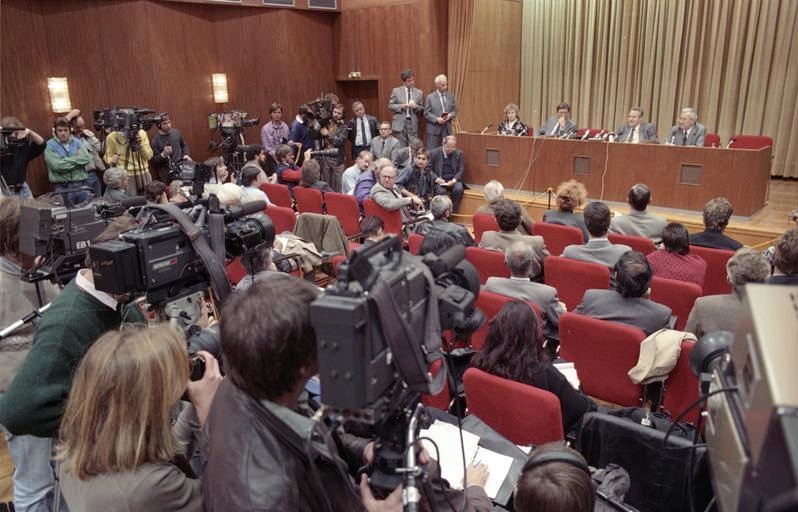
The term Wende (German for "turn" or "turnaround") is commonly used to describe the rapid political transformation of the German Democratic Republic (GDR) during 1989 and 1990. Sparked in part by broader changes in the Soviet Union under Mikhail Gorbachev, the Wende saw the ruling Socialist Unity Party of Germany (SED) lose its monopoly on power and a process begin that replaced one-party communist rule with democratic institutions. The events are often called the Friedliche Revolution (Peaceful Revolution) because mass demonstrations and political change largely avoided organized violent confrontation (nonviolent action).
Image gallery
10 Images



Background and causes
Throughout the 1980s the GDR experienced economic stagnation, political stagnation, and growing public dissatisfaction with communist governance. International developments, including reform and a loosening of centralized control by Moscow, created space for dissent. Citizens, opposition groups, churches and local activists pressed for free travel, open discussion and representative government. These pressures combined with a collapse of confidence in the SED and a desire for democratic reform (democratic institutions and rule of law).
Key events
- Regular public demonstrations — notably the Monday prayers and later protests in Leipzig — drew tens of thousands and signaled broad civic mobilization.
- The opening of border crossings and the dramatic fall of the Berlin Wall in November 1989 became iconic moments that accelerated political change.
- Negotiations between citizen groups, reformed party elements and state institutions (often called Round Table talks) led to interim administrations and preparations for free elections.
- In early 1990 a new government pursued policies that moved the GDR toward integration with the Federal Republic, culminating in formal reunification later that year.
Consequences and transition
The Wende had immediate and long-term consequences. In the short term, it replaced single-party rule and enabled competitive elections. In the longer term it produced rapid economic, legal and institutional change as the former GDR was integrated into the Federal Republic. Policy decisions and economic measures implemented during and after the transition reshaped industry, property relations and social welfare structures (policy reforms).
Distinctive features and legacy
Two features stand out: the predominantly peaceful character of the movement — often stressed in accounts of the Friedliche Revolution — and the speed with which a state that had existed for four decades was transformed. The Wende remains a reference point in German political culture: it illustrates how civic protest, negotiation and international context combined to bring about systemic change without widespread armed conflict. Scholars and the public continue to debate the social and economic trade-offs of the policies adopted during the transition, and the episode is studied as an example of a rapid democratization process.
Further reading and perspectives
For contextual overviews and primary-source material see introductory accounts of late Cold War reforms, contemporary coverage of protests and negotiations, and analyses of the post‑transition integration process. Those seeking more detail should consult sources on the SED and the GDR's last government, accounts of the demonstrations, and evaluations of the policy choices that shaped reunification and its aftermath.
Mikhail Gorbachev | communism | SED | democratic | policy | reunification | nonviolence | Friedliche Revolution
Questions and answers
Q: What is Wende?
A: Wende is a historical process in the German Democratic Republic (GDR) in the years 1989 and 1990, after the Soviet reforms of Mikhail Gorbachev.
Q: What does the term Wende signify?
A: Wende, which means turn-around in English, signifies the political changes that occurred in the GDR during the years 1989 and 1990.
Q: Who lost their power during the Wende?
A: The communist Socialist Unity Party of Germany (Sozialistische Einheitspartei Deutschlands, shortly SED) lost their power during the Wende.
Q: Was the Wende peaceful?
A: Yes, the Wende was known to be very peaceful.
Q: What was the policy of the new government that was established during the Wende?
A: The policy of the new government established during the Wende was to lead finally to German reunification in October 1990.
Q: What is another term used for the events that occurred during the Wende?
A: The events that occurred during the Wende are also known as the Peaceful Revolution (in German: Friedliche Revolution).
Q: Did the people who were against the SED and communism use violence during the Wende?
A: No, the people who were against the SED and communism did not want to use violence during the Wende.
Related articles
Author
AlegsaOnline.com Wende — the peaceful political turnaround in East Germany (1989–1990) Leandro Alegsa
URL: https://en.alegsaonline.com/art/107257