
Weather vane
A weather vane (or wind vane) is an instrument that shows wind direction. Historically practical for agriculture and navigation, today it is often decorative and can appear in many ornamental forms.
Overview
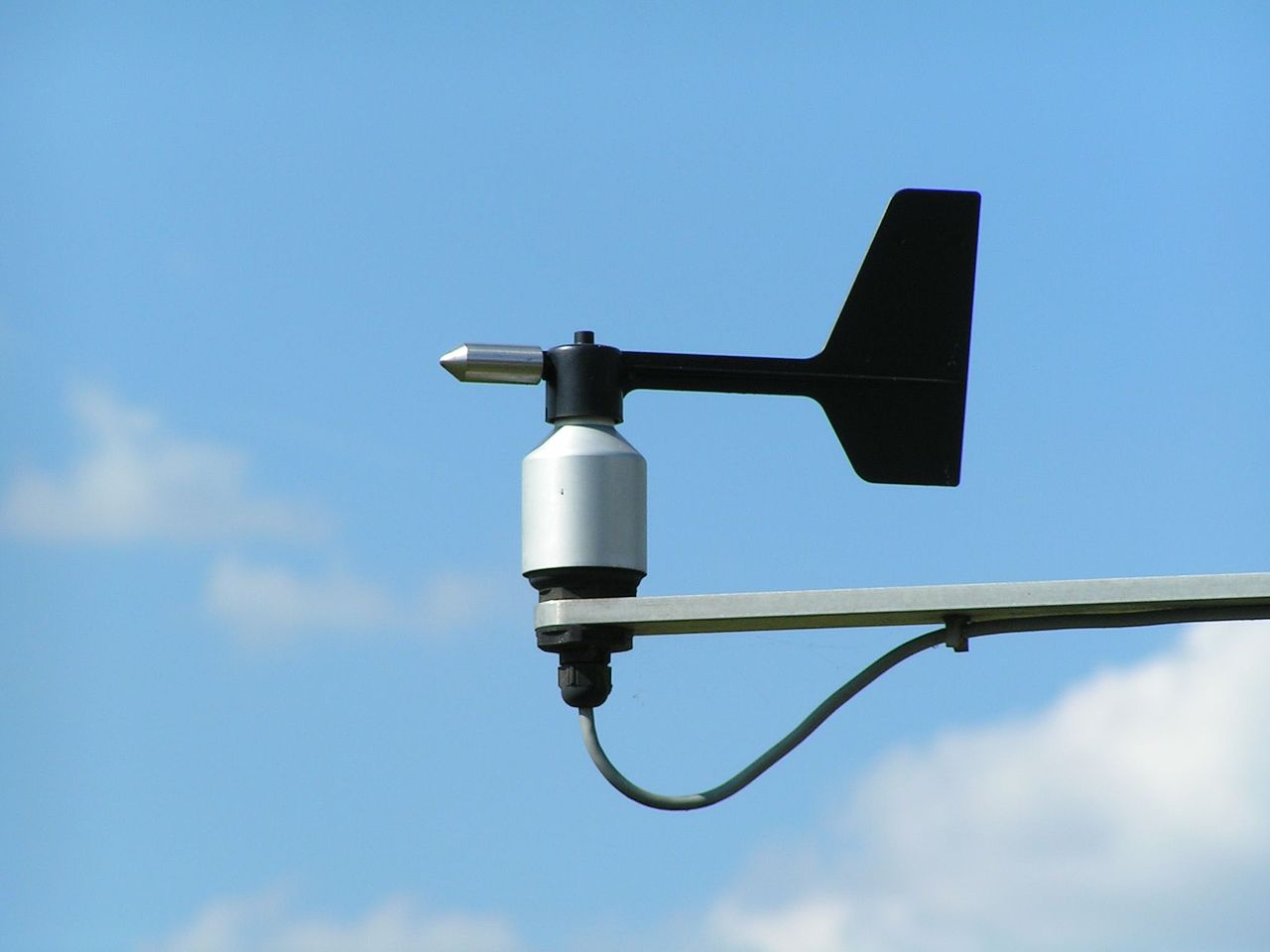
A weather vane, also called a wind vane, is a freely rotating device that indicates the direction from which the wind is blowing. Its simplest form is a balanced pointer mounted on a vertical spindle so the smallest force of wind turns the pointer until its broad surface faces away from the airflow and the narrow end points into the wind. Weather vanes have long served as a quick visual guide to local wind direction and, historically, were an important tool for agriculture, travel and shipping.
Image gallery
10 Images


Design and how it works
Most vanes consist of two main parts: a fin or ornament that catches the wind and a shaft or spindle that allows rotation. A common arrangement includes a pointer (often arrow-shaped) and a tail or enlarged surface that provides the necessary aerodynamic imbalance. When wind hits the vane, the larger surface is pushed downwind, aligning the pointer to show the wind's origin. Many installations include fixed cardinal markers (N, E, S, W) below the rotating element so an observer can read an approximate compass direction directly.
Materials, mounting and placement
Weather vanes are made from materials resistant to weathering, such as copper, brass, iron, stainless steel, or modern plastics. For accurate indication they must be mounted as high and clear of obstructions as possible—typically on a roof ridge, cupola, or spire—because nearby structures disturb airflow. Proper construction uses a low-friction bearing and careful balancing so the vane responds to light breezes without excessive wobble.
History and notable early examples
Decorative vanes appear in many cultures. One of the earliest recorded is attributed to the astronomer Andronicus of Cyrrhus, a vane that once topped the octagonal Tower of the Winds in Athens. Contemporary descriptions suggest that early sculptural vanes combined figurative elements such as a head, a torso and a pronounced tail shaped like a fish, serving both functional and symbolic roles. In medieval and post-medieval Europe, animal motifs—especially the rooster or "weathercock"—became common decorative forms.
Uses, significance and modern replacements
Historically, vanes gave farmers, sailors and travelers an immediate sense of wind trends and changes. They remain useful as a simple, maintenance-free indicator of direction. For scientific measurements and forecasting, however, dedicated instruments such as electronic wind vanes coupled with anemometers and automated weather stations provide precise, recordable data and have largely replaced traditional vanes for meteorological purposes.
Forms, symbolism and notable facts
- Common forms include arrows, ships, animals and heraldic figures; these often reflect local culture or the building's purpose.
- Rooster vanes are widespread in Europe and are frequently called weathercocks.
- Vanes can be purely ornamental or combined with modern sensors to transmit wind-direction data electronically.
- The English word "vane" traces to Old English fana (banner), related to Old High German fano and the Latin pannus (cloth), reflecting early vane shapes that resembled flags.
Questions and answers
Q: What is a weather vane?
A: A weather vane is a device with a freely rotating pointer used to indicate the direction of the wind.
Q: How long have weather vanes been used for?
A: Weather vanes have been used for centuries.
Q: What were weather vanes critical tools for?
A: Weather vanes were critical tools for agriculture, travel, and shipping.
Q: What function do weather vanes serve today?
A: Weather vanes serve a largely decorative function today.
Q: What is the simplest form of a weather vane?
A: The simplest form of a weather vane is a horizontal arrow or other form freely rotating on a vertical rod.
Q: Who made the earliest known weather vane, and when was it made?
A: The earliest known weather vane was made by the astronomer Andronicus in 48 BC.
Q: Where does the word "vane" come from?
A: The word "vane" comes from the Old English fana banner, which is related to the Latin pannus (cloth or rag).
Related articles
Author
AlegsaOnline.com Weather vane Leandro Alegsa
URL: https://en.alegsaonline.com/art/107041
Sources
- dictionary.com : "weather vane"
- classroom.synonym.com : "The History of Wind Vanes"
- denninger.com : "A Brief History of Weather Vanes"
- merriam-webster.com : "vane"