
Wattieza: the earliest known tree of the Middle Devonian
Wattieza is an extinct genus of tree-like plants from the mid-Devonian (~385 Ma). Fossils from New York show frond-crowned cladoxylopsids about 8 m tall that formed some of Earth's earliest forests.
Overview
Wattieza refers to an extinct genus of tree-like plants that lived during the middle Devonian period, roughly 385 million years ago. It is widely cited as the earliest known tree in the fossil record. Specimens come chiefly from New York State and are notable for combining a tall trunk with a crown of large fronds, a habit that resembled modern tree ferns.
Image gallery
4 Images


Structure and characteristics
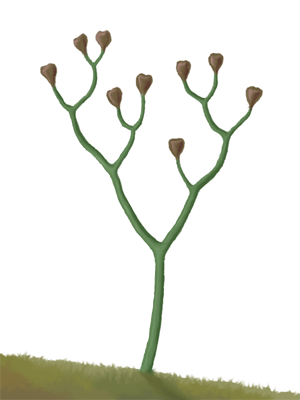
Unlike most modern trees with true leaves and familiar wood, Wattieza bore fronds rather than typical leaves and reproduced by releasing spores. Its architecture included a vertical, trunk-like support and a crown of radiating fronds; overall height estimates for mature plants are around 8 meters or more. Anatomical studies place Wattieza among the cladoxylopsids, an extinct group related to the ancestors of ferns and horsetails.
Discovery and scientific history
Parts of the plant were recognized long before the whole organism was known: fossilized stumps and root systems reported from the Gilboa area of New York were described in the 19th century. The separate crown portion was identified and in 2005 was united with the older trunk and root material, resolving a long-standing mystery about the complete plant. Early stump material had been assigned to Eospermatopteris until those pieces were linked to the full Wattieza form.
Paleoecology and importance
Wattieza-like trees contributed to the first widespread woodlands on Earth. By establishing vertical structure and expanding root networks, these plants helped stabilize soils, influence sedimentation, and alter atmospheric and hydrological cycles. Their existence marks a major ecosystem shift from low, herbaceous vegetation to taller, forested landscapes during the Devonian.
Relationships and reproduction
Wattieza is classified among cladoxylopsids and is considered related to the lineage that produced modern ferns and horsetails; studies emphasise shared features in frond organization and vascular arrangement. Reproduction was spore-based rather than seed-based, a trait common to many early land plants. For concise introductions and further reading, see general accounts of the earliest known trees, the mid-Devonian world, and the biology of ferns and horsetails.
Notable facts
- Fossils originate primarily from New York State; classic localities include the Gilboa area where trunks and roots were first described.
- The crown discovered in 2005 provided the definitive link between canopy and stump material; the trunk and root fossils had been discussed since about 1870.
- Wattieza reproduced with spores and shows connections to other early vascular plants through its placement among the known trunks and root assemblages.
For museum displays and more detailed summaries consult resources that synthesize paleobotanical findings and regional field reports: see introductory pages on ancient trees and Devonian floras for broader context.
Questions and answers
Q: What is Wattieza?
A: Wattieza is the earliest known tree whose fossils were found in New York State.
Q: How tall were Wattieza trees?
A: Wattieza trees stood at least 8m (34ft) tall.
Q: What does the crown of Wattieza unite with?
A: The crown of Wattieza discovered in 2005 was united with its root and trunk, known since 1870.
Q: What were Wattieza's relatives?
A: Wattieza was a cladoxylopsid, a close relative of modern ferns and horsetails.
Q: When did Wattieza live?
A: Wattieza lived in the mid-Devonian, about 385 million years ago.
Q: How did Wattieza reproduce?
A: Wattieza reproduced with spores and had fronds rather than leaves.
Q: What were the "Gilboa stumps" previously described as?
A: The "Gilboa stumps" had been previously described as Eospermatopteris, although the complete plant remained unknown.
Related articles
Author
AlegsaOnline.com Wattieza: the earliest known tree of the Middle Devonian Leandro Alegsa
URL: https://en.alegsaonline.com/art/106893
Sources
- cosmosmagazine.com : cosmosmagazine.com/node/1227
- nature.com : "Giant cladoxylopsid trees resolve the enigma of the Earth's earliest forest stumps at Gilboa"
- doi.org : 10.1038/446861a
- pubmed.ncbi.nlm.nih.gov : 17443169 · web.archive.org