
Wars of Scottish Independence
Late 13th–14th century conflicts between Scotland and England that secured Scottish nationhood, shaped medieval warfare, and produced iconic leaders like William Wallace and Robert the Bruce.
Overview
The Wars of Scottish Independence were a pair of related conflicts between the kingdom of Scotland and the kingdom of England in the late 13th and mid-14th centuries. They arose from a dynastic crisis and a dispute over sovereignty after the death of the Scottish heir with no direct successor, and from the attempt by the English crown to assert overlordship. These struggles involved pitched battles, sieges, raids and diplomacy and are often treated as two distinct wars: the First War (c. 1296–1328) and the Second War (c. 1332–1357). Contemporary and later chroniclers also describe widespread social disruption and a long-term impact on Scottish political identity.
Image gallery
10 Images




Origins and causes
The immediate trigger was political uncertainty over succession and English intervention. King Edward I of England enforced his influence when he was invited to arbitrate succession claims, a process that led many Scots to resent English demands and military presence. The English invasion of 1296 marked the open start of hostilities: Edward's campaign seized royal regalia and garrisoned key fortresses across Scotland, provoking a sustained resistance movement and formal military campaigns. For the English perspective and later historiography see contemporary military accounts.
Chronology and key events
- 1297: Rising leadership by figures such as William Wallace and Andrew de Moray culminated in the victory at Stirling Bridge; this period saw the development of mobile infantry tactics.
- 1306–1314: Robert the Bruce declared himself king and fought a campaign to consolidate control, culminating in the decisive Scottish victory at Bannockburn in 1314.
- 1320s: Diplomacy led to the Treaty of Edinburgh-Northampton, referenced in some records as the Treaty of Edinburgh or Northampton agreement, by which England formally recognised Scottish independence and Robert's kingship in 1328.
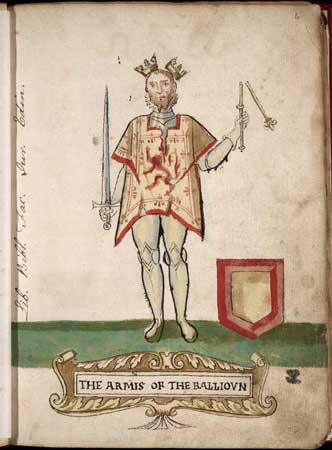
- 1332 onwards: A renewed phase began when Edward Balliol, backed by disinherited nobles and English support, invaded; this started the Second War and prolonged instability, including English-backed claims and shifting allegiances.
- 1346: Scottish king David II was captured at Neville's Cross; he remained a prisoner for years, affecting Scotland's ability to resist and negotiate.
- 1357: The Treaty of Berwick, sometimes called in period sources simply Berwick agreement, arranged David II's release after a ransom was agreed, effectively drawing the Second War to a close.
Military character and tactics
Fighting combined castle sieges and open battles. Scottish forces relied on infantry formations such as schiltrons for defence, light cavalry raids and intimate knowledge of the rough terrain. English armies brought heavy cavalry, siege expertise and an increasing use of missile troops; the period coincided with the growing prominence of the longbow as a battlefield weapon. Castles and fortified towns played a central role, both as strategic objectives and as bases for counter-operations.
Consequences and legacy
Politically, the wars established the principle of an independent Scottish crown recognised by England at points during the 14th century. The conflicts fostered a stronger sense of Scottish national identity and produced enduring national figures such as William Wallace and Robert the Bruce. They influenced medieval military practice and Anglo-Scottish relations for centuries, contributing to shifting alliances in northern Europe and occasional later border warfare. Episodes from these wars entered literary and legal memory and continue to be invoked in Scottish historical consciousness.
Notable participants and later references
Prominent leaders include Andrew de Moray, William Wallace, Robert the Bruce and Edward Balliol. The papacy and continental powers were intermittently involved in diplomacy. For contemporary chronicles and later studies consult primary sources or compendia linked in academic collections and specialised histories; see also general summaries of the period by modern historians and collections of medieval documents covering the 1296 invasion and later episodes. Additional background can be found in resources referenced under Edward Balliol and the Disinherited and regional studies of border warfare and treaties such as English accounts and Scottish records. Further treaty details appear in records indexed to Scotland and documentary collections that cite the military and diplomatic correspondence.
Questions and answers
Q: What were the Wars of Scottish Independence?
A: The Wars of Scottish Independence were a series of military campaigns fought between Scotland and England in the late 13th and early 14th centuries.
Q: When did the First War of Scottish Independence start and end?
A: The First War of Scottish Independence started with the English invasion of Scotland in 1296 and ended with the signing of the Treaty of Edinburgh-Northampton in 1328.
Q: When did the Second War of Scottish Independence start and end?
A: The Second War of Scottish Independence started with the English-supported invasion of Edward Balliol and the 'Disinherited' in 1332 and ended around 1357 with the signing of the Treaty of Berwick.
Q: Why were the Wars of Scottish Independence such an important period in Scotland’s history?
A: The wars were part of a great national crisis for Scotland and became one of the most important moments in the nation's history. Despite this crisis, Scotland remained a free and independent nation, which was her main aim throughout the conflict.
Q: Were the Wars of Scottish Independence only important for Scotland?
A: No, the wars were also important for other reasons, such as the emergence of the longbow as a key weapon in medieval warfare.
Q: What was the Treaty of Edinburgh-Northampton?
A: The Treaty of Edinburgh-Northampton was a treaty signed in 1328 that ended the First War of Scottish Independence.
Q: What was the Treaty of Berwick?
A: The Treaty of Berwick was a treaty signed around 1357 that ended the Second War of Scottish Independence.
Related articles
Author
AlegsaOnline.com Wars of Scottish Independence Leandro Alegsa
URL: https://en.alegsaonline.com/art/106621