
Warcraft III: Reign of Chaos — overview, gameplay, and legacy
Warcraft III is a 2002 real-time strategy game by Blizzard Entertainment, known for hero-driven gameplay, a powerful map editor, and an active mod scene that produced games like Defense of the Ancients.
Warcraft III is a fantasy real-time strategy title first released in 2002. Developed by Blizzard Entertainment, the game launched as Warcraft III: Reign of Chaos and later received an expansion, The Frozen Throne. It blended base-building and army management with a strong emphasis on individual hero units and scripted missions.
Image gallery
7 Images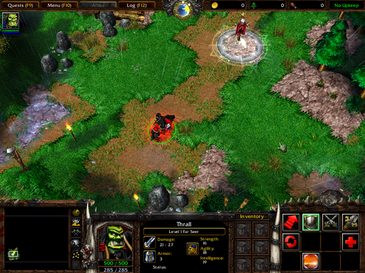



Core features
Compared with many earlier RTS games, Warcraft III introduced several distinctive elements that shaped its play and community:
- Hero units: persistent powerful characters that level up, gain abilities and carry items, creating an RPG-like progression within RTS matches.
- Diverse factions: four major playable races—Humans, Orcs, Night Elves and Undead—each with unique units, technologies and strategies.
- World Editor: a built-in map and script editor that allowed players to create custom scenarios, mods and entirely new games.
Gameplay and structure
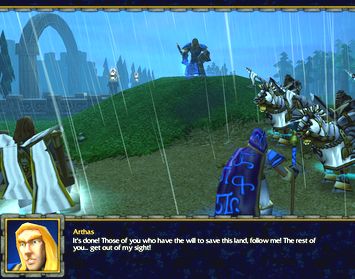
Gameplay alternates between resource management and tactical combat. Players gather resources, construct buildings, produce units and control heroes who carry out objectives. Single-player campaigns tell dramatic, cinematic stories with fixed missions, while multiplayer matches emphasize strategy, micro-management and cooperative or competitive play.
History and development
As a sequel to earlier Warcraft titles, Warcraft III refined the franchise’s lore and introduced vibrant 3D visuals and animated cinematics. Its release helped consolidate Blizzard’s reputation for polished single-player storytelling and robust online play. The expansion added new units, campaigns and features, extending the game’s longevity.
Community impact and legacy
One of Warcraft III’s most lasting contributions is its community-driven content. The World Editor enabled a thriving modding scene; among the best-known outcomes is the custom map that evolved into Defense of the Ancients (DotA), a precursor to the MOBA genre. The game also supported competitive play and map-sharing communities that remained active for years.
Notable distinctions
Warcraft III is often cited for merging role-playing elements with traditional RTS mechanics and for empowering players to create new game types. Its influence can be seen across later strategy and multiplayer titles. For players and historians of game design, the title represents a key moment when modding and developer tools began to produce entirely new genres.
For additional technical details or community resources, consult general references on real-time strategy design and archived materials from the developer: Blizzard and expansion notes for The Frozen Throne.
Questions and answers
Q: What type of game is Warcraft 3?
A: Warcraft 3 is a real-time strategy game.
Q: Who created Warcraft 3?
A: Warcraft 3 was created by Blizzard Entertainment.
Q: When was Warcraft 3 released?
A: Warcraft 3 was released on July 2, 2002.
Q: Is Warcraft 3 a sequel?
A: Yes, Warcraft 3 is a sequel to Warcraft 2: Tides of Darkness.
Q: How many versions of Warcraft 3 are there?
A: There are two versions of Warcraft 3, the base version called Warcraft 3: Reign of Chaos and the expansion version called Warcraft 3: The Frozen Throne.
Q: What is the difference between Warcraft 3: Reign of Chaos and Warcraft 3: The Frozen Throne?
A: Warcraft 3: Reign of Chaos is the base version of the game, while Warcraft 3: The Frozen Throne is a supplemental expansion version.
Q: Which game was released prior to Warcraft 3?
A: Warcraft 2: Tides of Darkness was released prior to Warcraft 3.
Related articles
Author
AlegsaOnline.com Warcraft III: Reign of Chaos — overview, gameplay, and legacy Leandro Alegsa
URL: https://en.alegsaonline.com/art/106518