
Warangal: History, heritage and modern city of Telangana
Warangal is a major city in Telangana, India, known for its Kakatiya-era monuments, UNESCO-listed Ramappa Temple, educational institutions, and selection for national heritage and smart-city programs.
Overview
Warangal is a prominent city in the southern Indian state of Telangana, and serves as the administrative headquarters of Warangal district. Historically important and culturally rich, it is among the larger urban centres in the state after Hyderabad. Contemporary Warangal combines a long architectural legacy with growing industry, education and urban development initiatives.
Image gallery
10 Images


Historical development
Warangal rose to prominence as the capital of the Kakatiya dynasty, which established firm control in the region and left many of the city’s most famous monuments; the city served as the Kakatiya capital from the late 12th century until its conquest by the Delhi Sultanate in the early 14th century. Following that period the city’s political status changed under successive regional rulers. Over time Warangal has been known by different names and has absorbed architectural and cultural influences from its long history.
Heritage and notable monuments
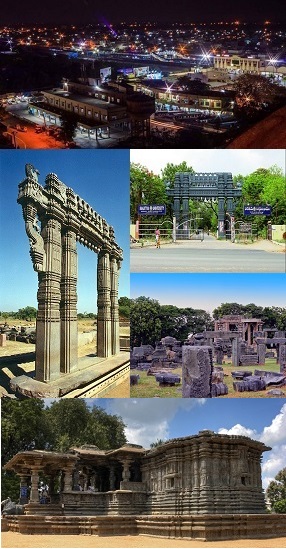
Among the surviving landmarks are the ruins of the fortified Warangal complex, the ornate gateways now celebrated as the Kakatiya Kala Thoranam, the Thousand Pillar Temple complex at nearby Hanamkonda, and several important Hindu temples such as Bhadrakali. The nearby Ramappa Temple, a fine example of Kakatiya-era sculpture and engineering, drew international recognition when it was inscribed on the UNESCO World Heritage List in recent years. These monuments make Warangal an important destination for visitors interested in medieval Deccan architecture and sculpture.
Modern growth and urban projects
In the 21st century Warangal has been selected for national redevelopment schemes. It is listed among India’s heritage cities under the HRIDAY program and was chosen in a fast-track round of the Smart Cities Mission, which aims to improve urban infrastructure and services. These designations have focused investment on conservation, transportation, water supply and the public realm while also encouraging tourism and local economic development.
Economy, institutions and life
Warangal’s economy combines agriculture from its surrounding districts with manufacturing, small-scale industry, and services. The city is an educational centre with engineering and professional colleges that attract students from across the region; such institutions contribute to local research, skilled labour and a growing services sector. Lakes and reservoirs such as Bhadrakali and Waddepally have historically supplied water for the city and surrounding agriculture.
Visiting and distinguishing features
- Heritage architecture: Kakatiya fortifications, gateways and temples.
- UNESCO-recognized Ramappa Temple and other medieval monuments.
- Designation under national heritage and urban renewal programs.
- Educational institutions and regional services that support the local economy.
For further background and official information about the region, see resources on India and state-level pages for Telangana. General historical surveys and travel guides also cover Warangal’s role in the medieval Deccan and its surviving monuments. Local authorities and cultural agencies publish conservation updates and visitor information for those planning to explore the city’s monuments and museums.
Questions and answers
Q: What is the population of Warangal?
A: The population of Warangal is 811,844 people.
Q: What is Warangal known for?
A: Warangal is known for being one of 12 heritage cities in the country chosen for Scheme HRIDAY - Heritage City Development and Augmentation Yojana by Government of India, and being selected as a smart city in the "fast-track competition" which could lead to additional investment to improve the urban infrastructure and industrial opportunities under Smart Cities Mission.
Q: What was the capital of the Kakatiya dynasty?
A: The city of Warangal was the capital of the Kakatiya dynasty from 1195 CE until that ruling family was defeated by the Delhi Sultanate in 1323.
Q: When did Telangana become a state?
A: Telangana became a state on 2 June 2014 and Warangal became a part of Telangana State after the Telangana movement.
Q: Which two lakes are the major sources of drinking water in Warangal?
A: Bhadrakali Lake and Waddepally Lake are the two famous lakes and the major sources of drinking water in Warangal.
Q: What is the area of Warangal in comparison to Hyderabad?
A: Warangal is the second largest city after Hyderabad by both area as well as population.
Q: What is the district headquarters of Warangal?
A: Warangal is the district headquarters of Warangal district in Telengana.
Related articles
Author
AlegsaOnline.com Warangal: History, heritage and modern city of Telangana Leandro Alegsa
URL: https://en.alegsaonline.com/art/106513
Sources
- censusindia.gov.in : "District Census Handbook – Warangal"
- hridayindia.in : "Warangal | Heritage City Development and Augmentation Yojana (HRIDAY)"
- thehindu.com : "Lucknow, Warangal among 13 smart cities announced by govt"
- worldcat.org : 0971-751X