
Walter Walsh - FBI agent, Marine Corps shooting instructor, and Olympian
Profile of Colonel Walter Rutherford Walsh (1907–2014): FBI agent during the public enemy era, Marine Corps marksmanship instructor, 1948 Olympic shooter, coach and centenarian public figure.
Overview
Colonel Walter Rudolph Walsh (May 4, 1907 – April 29, 2014) was an American marksman and law-enforcement figure whose career spanned several fields: federal investigation, military marksmanship instruction and competitive shooting. He served as an agent with the FBI during the so-called public enemy era, taught shooting for the United States Marine Corps, and competed at the 1948 Summer Olympics as a member of the U.S. shooting team. Walsh remained active in shooting circles for decades and was widely recognized for both his skill and remarkable longevity.
Image gallery
2 Images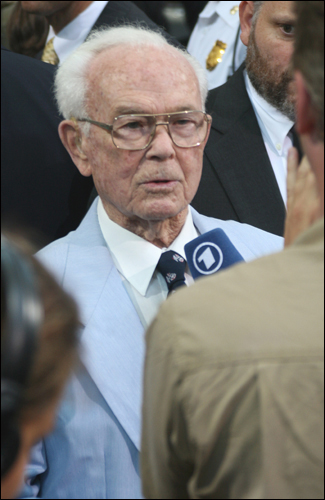

Early life and training
Walsh was born in Union City, New Jersey, and pursued legal studies at Rutgers Law School before embarking on careers in the military and federal service. He joined the National Guard in the late 1920s and later entered the Federal Bureau of Investigation in 1934, at a time when bank robbers and organized gangs drew intense public attention. Those formative years shaped his reputation as a steady and capable shooter.
FBI service and notable cases
During his tenure with the Bureau, Walsh took part in high-profile operations associated with the 1930s public enemy period. He is credited with involvement in the capture of fugitive Arthur Barker and in the shootout that ended the activities of members of the Brady Gang, a confrontation that resulted in the death of Al Brady. These incidents contributed to his public profile and to the broader effort to suppress violent organized crime at the time. For information on the historical context of such confrontations, see contemporary remembrances and local commemorations such as the Bangor re-enactment.
Military instruction, competition and coaching
Beyond federal service, Walsh became known as a shooting instructor for Marine Corps units, teaching marksmanship techniques that emphasized fundamentals, safety and tactical application. He also competed at an international level: Walsh represented the United States in shooting at the 1948 Olympics and later served as a coach for U.S. shooting teams, remaining involved in coaching and mentoring into the late 20th century. His expertise was recognized with awards and commendations within the shooting community.
Legacy and public recognition
Walsh achieved several notable distinctions later in life. He was widely reported as the oldest living retired agent of the FBI and, until his death in 2014, the oldest surviving Olympic competitor from his era. In his centenarian years he participated in public events commemorating historical episodes in which he took part; on one such occasion he received a plaque and the key to the city for his role in local history. He lived to an advanced age, survived by five children and preceded in death by his wife.
Notable facts and distinctions
- Service with the Federal Bureau of Investigation during the public enemy era and involvement in high-profile captures and shootouts, including actions connected to Arthur Barker and Al Brady (further reading).
- Representation of the United States in international competition at the 1948 Olympics and a long career as a coach and instructor.
- Work as a marksmanship instructor with the U.S. Marine Corps, influencing military and civilian shooting practice.
Walsh’s life intersected with significant chapters of 20th-century American policing, military training and sport shooting. He remains a figure of interest for historians studying the early FBI, for enthusiasts of competitive marksmanship, and for communities that remember the confrontations of the 1930s. While some details of on-the-ground operations are recorded in primary sources and local accounts, Walsh’s prolonged public presence and later honors helped preserve public memory of his long career.
Questions and answers
Q: Who was Walter Rudolph Walsh?
A: Walter Rudolph Walsh was an American FBI agent, United States Marine Corps shooting teacher, and Olympic shooter.
Q: When did Walsh join the FBI?
A: Walsh joined the FBI in 1934.
Q: What was Walsh known for during his time at the FBI?
A: Walsh was known for capturing Arthur Barker and killing Al Brady during the public enemy era.
Q: In which Olympics did Walsh compete as a shooter?
A: Walsh competed as a shooter at the 1948 Summer Olympics.
Q: What is Walsh's contribution to the Olympic shooting team?
A: Walsh was the coach of the Olympic shooting team until 2000.
Q: Where was Walsh born and where did he study law?
A: Walsh was born in Union City, New Jersey, and studied at Rutgers Law School.
Q: How did Walsh die, and how old was he?
A: Walsh died from natural causes at his home in Virginia less than a week before his 107th birthday.
Related articles
Author
AlegsaOnline.com Walter Walsh - FBI agent, Marine Corps shooting instructor, and Olympian Leandro Alegsa
URL: https://en.alegsaonline.com/art/106397
Sources
- npr.org : "FBI Marks 100; Former Agent Has Long Memories"
- teamusa.org : "1948 Olympian & Centenarian Walter Walsh Now World's Oldest Olympian Ever"
- ourstory.com : "HISTORICAL EVENT IN DOWNTOWN BANGOR, THE BRADY GANG COMES TO CENTRAL STREET"
- sports-reference.com : "Walter Walsh Biography and Statistics"
- p.washingtontimes.com : "Walter Walsh, oldest Olympian, dies days shy of 107th birthday"