
Walter Cronkite: American Broadcast Journalist and Trusted News Anchor
Biography of Walter Cronkite (1916–2009), longtime CBS news anchor renowned for reporting major 20th-century events and often called "the most trusted man in America."
Walter Leland Cronkite Jr. (November 4, 1916 – July 17, 2009) was a prominent American broadcaster whose career spanned radio and television. Best known as the anchor of the CBS Evening News from 1962 to 1981, Cronkite became one of the most recognizable figures in U.S. journalism. Viewers tuned in nightly for his concise summaries and calm delivery, and he was widely referred to in his era as "the most trusted man in America."
Image gallery
10 Images


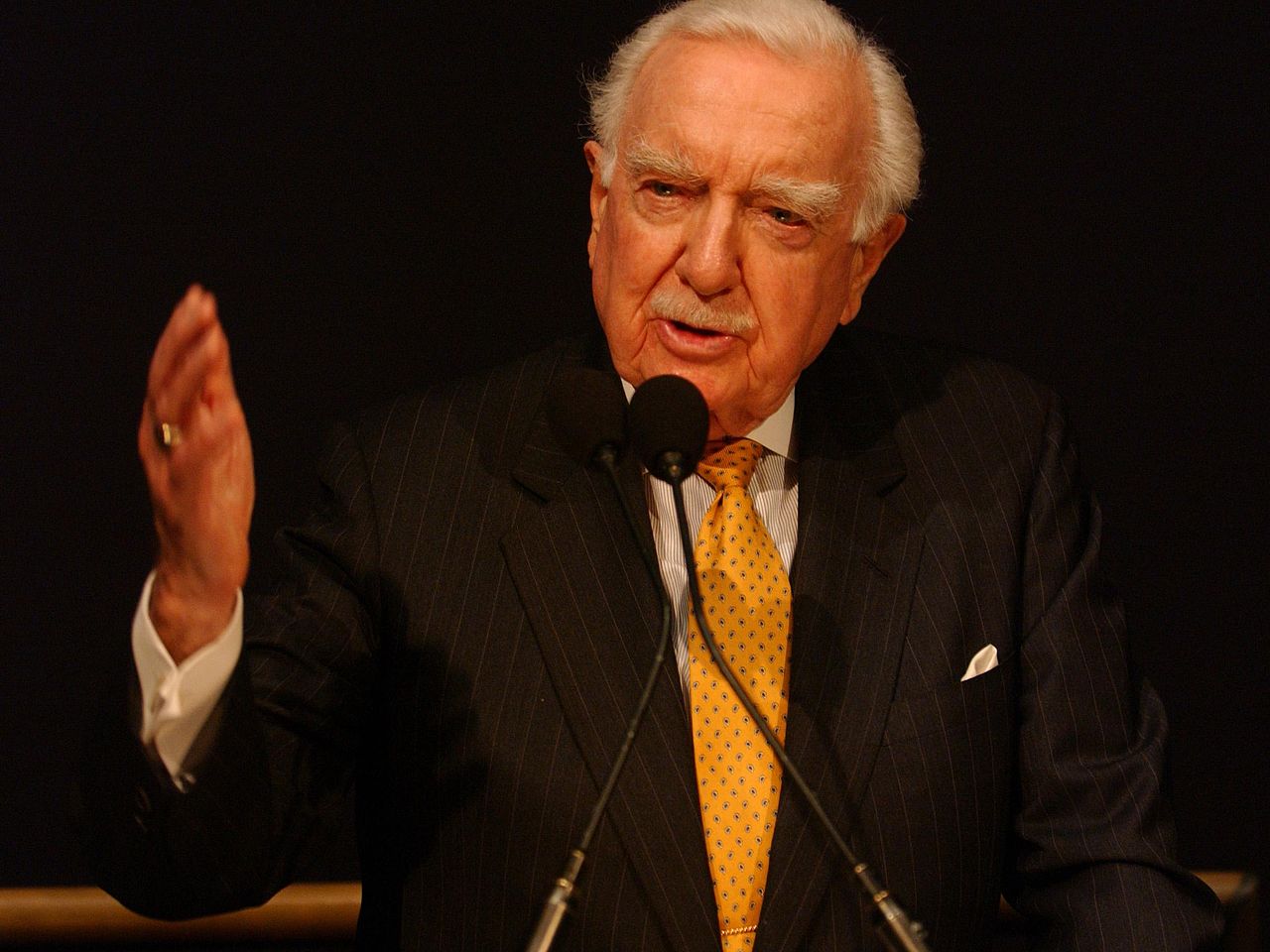

Career and reporting style
Cronkite began working in journalism in the 1930s, initially in local newspapers and radio. He moved into national broadcasting and joined CBS, where he developed a straightforward, fact-centered on-air style. He favored clear language, measured tone, and a trademark sign-off that communicated reliability. Over decades he reported a wide range of national and international stories and helped shape the modern network newscast format.
Major events covered
During his tenure as anchor, Cronkite reported on several defining events of the mid-20th century. His coverage brought major moments into American living rooms and often served as the primary evening account for millions of viewers. Notable stories he covered include:
- The assassination of President John F. Kennedy, a watershed moment in U.S. history when television became the central medium for breaking news.
- The escalation and ongoing developments of the Vietnam War, which he reported on extensively and on which he occasionally offered frank appraisals that entered public discussion.
- The Apollo 11 moon landing, which he narrated for viewers as humanity achieved the first crewed lunar landing.
- The investigation of Watergate, a multi-year reporting effort that contributed to the public record and the eventual resignation of President Richard Nixon.
Influence and public reputation
Cronkite's calm demeanor and commitment to verification made him a trusted intermediary between events and a wide television audience. He rarely expressed personal opinions on air, but when he did, his judgments drew attention and sometimes influenced public debate. His name became synonymous with measured, professional anchoring, and his broadcasts are often cited in studies of television's role in politics and culture during the Cold War era.
Legacy and honors
After leaving the anchor desk in 1981, Cronkite remained a visible public figure through documentaries, occasional reporting, and public speaking. His influence on broadcast standards and news presentation persisted. Institutions and awards have commemorated his contributions to journalism, most prominently the Walter Cronkite School of Journalism and Mass Communication at Arizona State University, which carries his name and emphasizes professional training for future reporters.
For further reading and resources about Cronkite's life and career, consult primary archives and biographies that collect his broadcasts and interviews. He occupies a notable place in 20th-century media history as a practitioner who helped define how television informs democratic publics.
Related topics and resources: news, reporter, President John F. Kennedy coverage, assassination reporting, space exploration coverage, Watergate reporting, political accountability, war correspondence, and the Walter Cronkite School.
Questions and answers
Q: Who was Walter Cronkite?
A: Walter Cronkite was an American news reporter and the anchor of CBS News from 1962 to 1981.
Q: What were some important events that Walter Cronkite reported on?
A: Walter Cronkite reported on the assassination of President John F. Kennedy, the Apollo 11 moon landing, and the Watergate scandal.
Q: What was Walter Cronkite's nickname?
A: Walter Cronkite was often called "the most trusted man in America."
Q: What was Walter Cronkite's coverage of the Vietnam War like?
A: People across the country tuned in nightly to hear Walter Cronkite's coverage of the Vietnam War as it progressed.
Q: What led to President Richard Nixon resigning from his position?
A: The Watergate scandal, which was reported by Walter Cronkite, led to President Richard Nixon resigning from his position.
Q: Is there a school of journalism named after Walter Cronkite?
A: Yes, the Walter Cronkite School of Journalism and Mass Communication at Arizona State University is named after Walter Cronkite.
Q: When was Walter Cronkite born and when did he pass away?
A: Walter Cronkite was born on November 4, 1916, and he passed away on July 17, 2009.
Related articles
Author
AlegsaOnline.com Walter Cronkite: American Broadcast Journalist and Trusted News Anchor Leandro Alegsa
URL: https://en.alegsaonline.com/art/106357
Sources
- biography.com : "Walter Cronkite Biography"
- deadline.com : "CBS News Unveils Coverage of JFK Assassination Anniversary, Dan Rather-Free"
- usnews.com : "How John F. Kennedy's Assassination Changed Television Forever"
- nationalinterest.org : "Cronkite's Vietnam Blunder"
- museum.tv : "Vietnam on Television"
- pbs.org : "Walter Cronkite"
- historynewsnetwork.org : "The Way It Wasn't: Cronkite and Vietnam"
- msnbc.msn.com : "Former CBS News anchor Walter Cronkite dies"