
Wall Street Crash of 1929
A sudden collapse of stock prices in late October 1929 on the New York Stock Exchange that helped precipitate the global Great Depression and led to major economic and regulatory changes.
Overview
The Wall Street Crash of 1929 refers to a rapid and severe decline in U.S. stock prices that began in late October 1929 on the New York Stock Exchange. Often remembered by the dramatic outpourings of selling on days labeled "Black Thursday," "Black Monday" and "Black Tuesday," the crash marked the end of the speculative boom of the 1920s. While not the sole cause of the subsequent global economic contraction known as the Great Depression, the crash was a central trigger that exposed financial weaknesses and helped transform public expectations about markets and government policy.
Image gallery
8 Images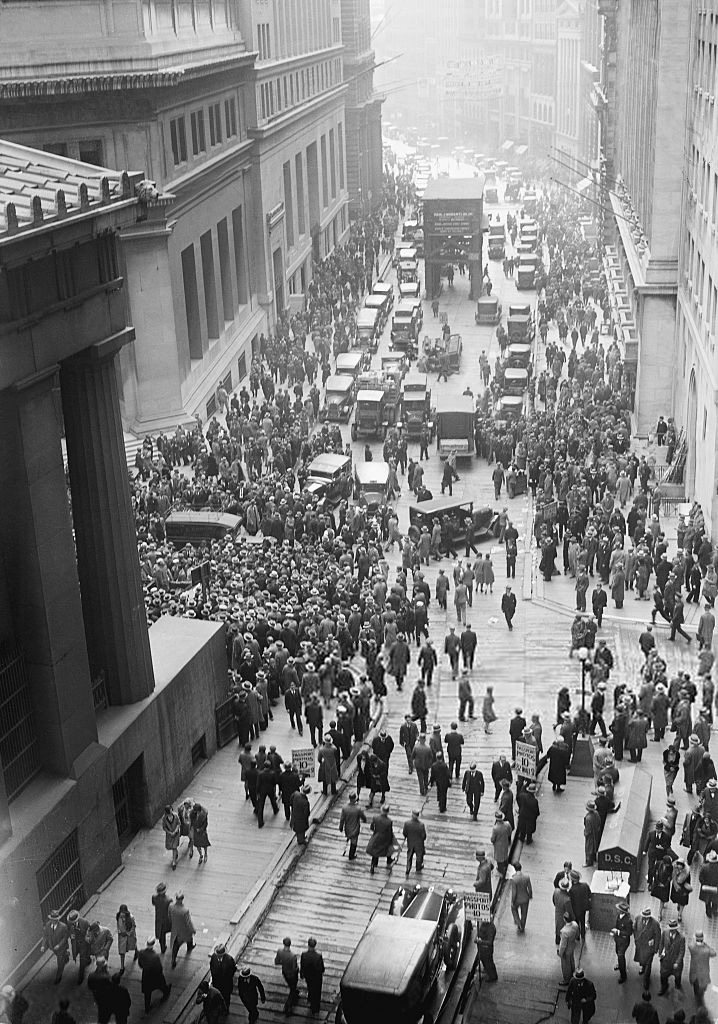


Course and characteristics
The collapse unfolded over several days in October 1929 when confidence evaporated and trading volume surged. A combination of panic selling, high leverage among investors and thin market liquidity led to sharp price falls. In the weeks and months after the peak of the crisis, many investors saw paper gains disappear, margin calls forced further sales, and the Dow Jones Industrial Average fell far from its 1929 highs. The shock reverberated beyond equities: banks and businesses that relied on short-term funding or optimistic asset values came under stress.
Commonly cited causes
Historians and economists point to several interacting factors. Widespread speculation and buying on margin amplified market moves. Underlying economic imbalances — including overproduction in some industries, unequal income distribution, and heavy foreign debts and reparations following World War I — made the economy vulnerable. Financial regulation at the time was limited, and banking networks were exposed to runs and failures. Policy responses, both domestic and international, would later shape how the downturn spread and how deep it became.
Immediate effects and social impact
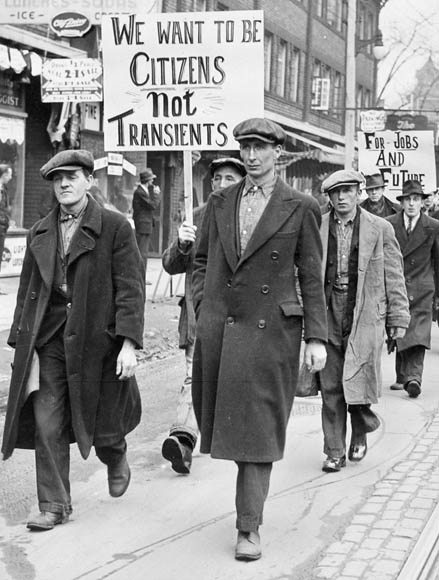
The crash was followed by a sharp contraction in industrial activity, rising unemployment, and a wave of business and bank failures that unfolded through the early 1930s. Many people lost jobs and savings; informal relief networks such as soup kitchens expanded, and makeshift shantytowns that critics called "Hoovervilles" appeared, reflecting popular anger at perceived government inaction under President Herbert Hoover. International trade fell as countries raised tariffs and erected barriers, further reducing demand for exported goods.
Government response and reforms
The crisis and prolonged depression that followed prompted major policy shifts. In the United States, the election of Franklin D. Roosevelt brought the New Deal, a set of federal programs and reforms intended to provide relief, recovery and reform. Important institutional changes included the creation of banking safeguards and market regulators: for example, legislation that led to the formation of federal deposit insurance and securities oversight restructured how banking and capital markets operated. Debates over fiscal policy, monetary policy and protectionism shaped responses in other countries as well.
Legacy and notable facts
The Wall Street Crash remains a defining episode in 20th-century economic history because of its timing and consequences. It catalyzed long-lasting reforms in financial regulation and the supervision of securities markets, and it shaped public expectations about the role of government in stabilizing the economy. International consequences included diminished trade and political strains in many countries. Although markets and economies eventually recovered, some stock price indexes did not regain their 1929 peak levels until the 1950s. Scholars continue to study the crash to understand how financial excess, policy choices and global linkages can interact to produce systemic crises.
Timeline highlights
- Late October 1929: major days of market collapse, including the events commonly called Black Thursday, Black Monday and Black Tuesday.
- 1930: protectionist measures such as the Smoot–Hawley Tariff altered global trade flows.
- Early 1930s: widespread bank failures and rising unemployment across industrial economies.
- 1933–1934: U.S. financial reforms and regulatory agencies were established in response to systemic failures.
- 1941 onward: large-scale industrial mobilization for World War II helped revive production and employment in many nations.
Further reading and sources
- Contemporary accounts and newspaper archives
- Historical summaries and scholarly overviews
- Primary market records and exchange reports
- Analyses of the Great Depression
- Studies of trade policy and tariffs
- International economic links after World War I
- Social history sources on relief efforts
- Comparative accounts of the 1930s worldwide
- Research on wartime mobilization and recovery
- Biographical and political context of the 1928–1932 period
Note: This article summarizes widely reported aspects of the 1929 crash and its aftermath. Interpretations of causes and consequences have evolved; readers are encouraged to consult the linked materials for detailed primary sources and scholarly debates.
Questions and answers
Q: What was the Wall Street Crash of 1929?
A: The Wall Street Crash of 1929 was the greatest stock market crash in the history of the United States. It happened in the New York Stock Exchange on Tuesday October 28, 1929, now known as Black Tuesday.
Q: What were some of the consequences of this crash?
A: Bank failures followed, resulting in businesses closing and causing worldwide panic which started the Great Depression. Stock prices did not reach their previous level until late 1954. The crash also signaled the beginning of a 10-year Great Depression that affected all Western industrialized countries. Countries imposed high tariffs and otherwise restricted imports while international trade declined significantly. Soup kitchens became a place to go for food for many people who had lost their homes due to poverty and suffering during this time period.
Q: How long did it take for stock prices to recover from this crash?
A: It took until late 1954 for stock prices to reach their pre-crash levels again after the Wall Street Crash of 1929.
Q: Who was blamed for causing this crisis?
A: People who lost their homes lived in what were called Hoovervilles, blaming President Herbert Hoover for causing this crisis or depression.
Q: When did World War II begin and how did it end The Great Depression?
A: World War II began at the end of 1941 when American mobilization started and ended dramatically with its start on September 3rd 1939 when WWII began, thus ending The Great Depression.
Q: How did The Great Depression spread around Europe and other parts of world?
A:The Great Depression spread rapidly from America to Europe and other parts of world as a result of economic connections between US and European economies after WWI following The Wall Street Crash on October 29th 1929 which triggered it all off
Related articles
Author
AlegsaOnline.com Wall Street Crash of 1929 Leandro Alegsa
URL: https://en.alegsaonline.com/art/106268
Sources
- americaslibrary.gov : Black Tuesday
- timesonline.co.uk : "The beginner's guide to stock markets" · web.archive.org · archive.is
- worldcat.org : 1423-3967
- worldcat.org : 38739976
- letemps.ch : letemps.ch/monde/1929-six-jours-panique-wall-street-annoncent-pire-venir
- britannica.com : Encyclopædia Britannica
- ft.com : "Crashes, Bangs & Wallops"
- books.google.com : Facing the facts: an economic diagnosis