
Walking stick
A walking stick is a staff or cane used to aid balance, mobility, fashion or self-defence. Types range from medical canes and hiking staffs to ornamental swordsticks, shillelaghs and tippling canes.
A walking stick is a pole or cane carried to improve balance while walking, to support weight, as an element of dress, or as a tool for defence. It can be a simple practical aid for uneven terrain or a crafted object valued for its material, decoration and history. Walking sticks appear in many cultures and in both medical and recreational contexts.
Image gallery
8 Images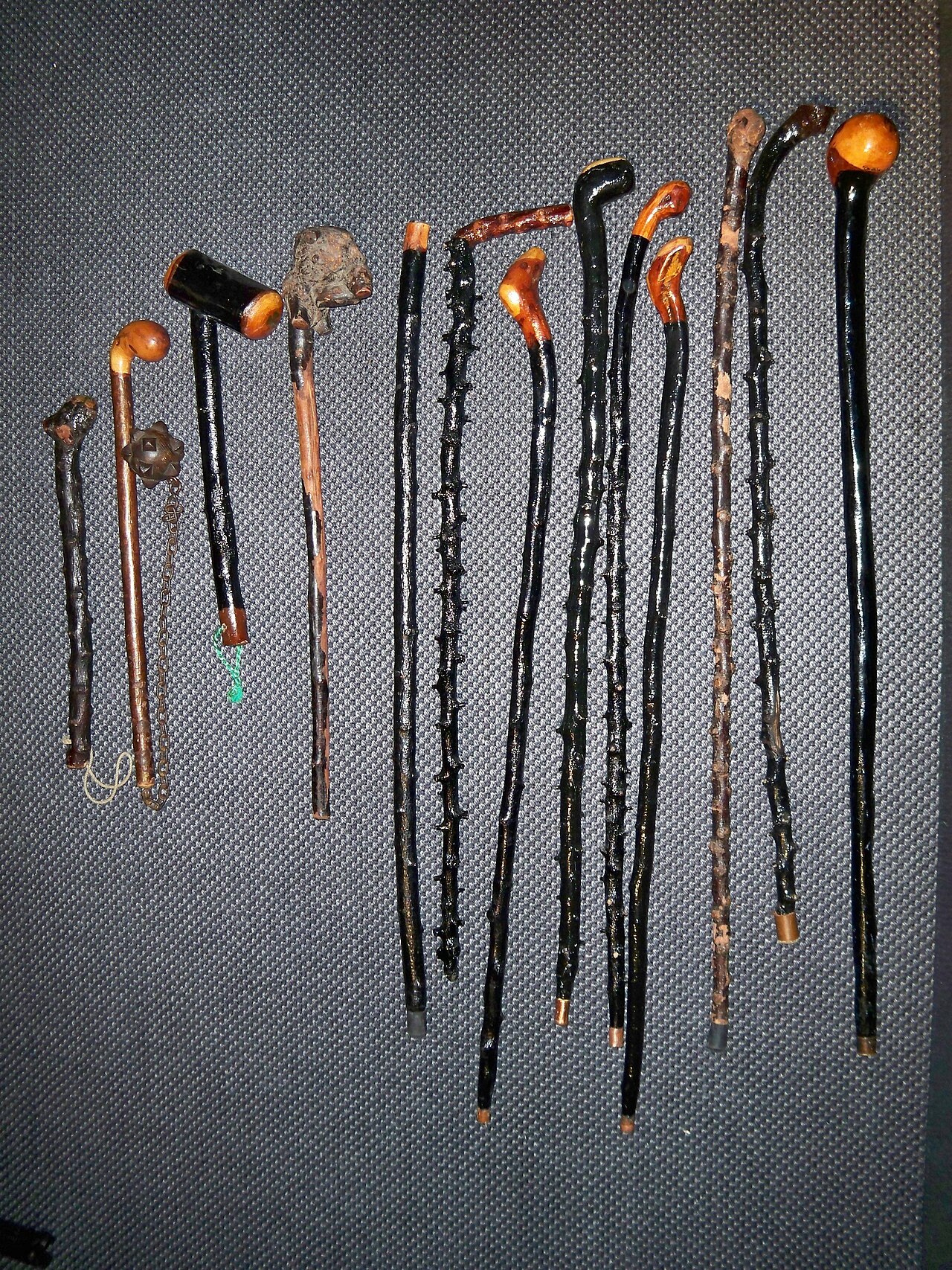



Characteristics and construction
Typical walking sticks have four basic elements: a shaft, a handle or knob, a ferrule or tip, and sometimes a collar or reinforcement at stress points. Materials range from woods such as oak, ash or ebony to metal alloys, carbon fibre and composite plastics. Handles may be shaped for comfort (T-handle, crook, derby) or ornamental. Tips are fitted with rubber ferrules for traction or metal spikes for outdoor use.
Common types
- Cane: a single-point support used for light mobility assistance and fashion.
- Crutch and support aids: heavier or specially designed devices used by people with reduced mobility; see assistive technology and medical canes and crutches.
- Hiking staff: long, robust stick for rough terrain and balance.
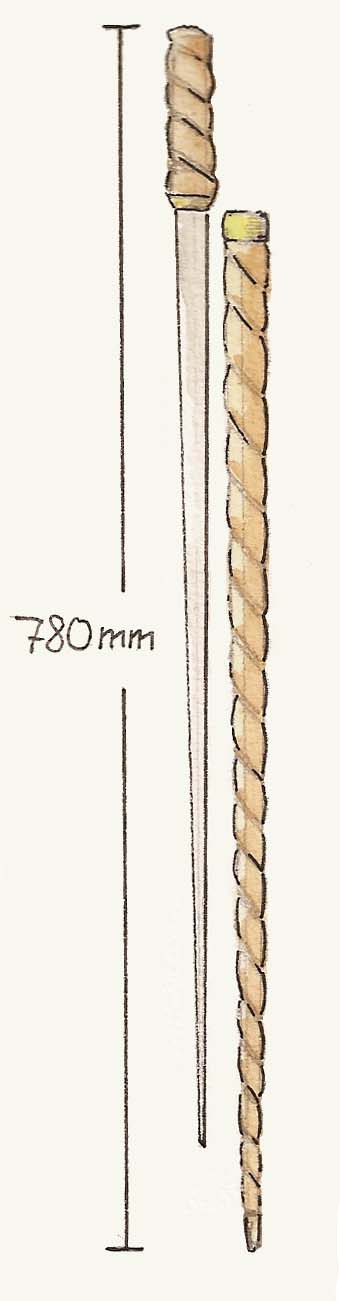
- Swordstick: a walking stick concealing a blade; historically used as a concealed weapon (swordstick).
- Walking-stick with knife: some designs hide shorter blades inside the shaft (concealed knife).
- Tippling cane: a novelty cane with an internal flask for carrying spirits (tippling cane).
- Traditional clubs: cultural sticks such as the Irish shillelagh and the long English quarterstaff, used in folk combat and ceremony.
Walking sticks have also been adapted for defence; some historical sources describe their use as both offensive and defensive implements in civilian self-defence and in formal stick-fighting systems (defensive use, offensive use).
History, uses and notable facts
From prehistoric staffs to polished 18th- and 19th-century dress canes, walking sticks have served practical, symbolic and ceremonial roles. They function as mobility aids, fashion accessories, status symbols and collectors' items. In some martial traditions sticks are trained as weapons; in other contexts they are strictly medical devices. Legal restrictions in many places distinguish ordinary walking sticks from concealed weapons such as swordsticks, and different jurisdictions regulate their manufacture and carry.
Collectors prize provenance, material and craftsmanship. Names like shillelagh and quarterstaff reflect specific regional forms and uses: the shillelagh is a short, stout club from Ireland, while the quarterstaff is a long pole used in English stick fighting. Modern walking sticks continue to evolve, with lightweight technical materials and ergonomic designs for both outdoor recreation and daily mobility.
Questions and answers
Q: What is a walking stick?
A: A walking stick is a device used by many people to help keep their balance while walking or as an accessory.
Q: What are the different shapes and sizes of walking sticks?
A: Walking sticks come in many shapes and sizes.
Q: Who uses walking sticks as a crutch or cane?
A: People with disabilities may use some kinds of walking stick as a crutch or cane.
Q: How can walking sticks be used as a weapon?
A: The walking stick has historically been known to be used as a defensive or offensive weapon and may conceal a knife or sword as in a swordstick.
Q: What is a "tippling cane"?
A: A tippling cane is a walking stick that contained a flask usually to hold a small amount of liquor.
Q: What are Quarterstaff and Shillelagh?
A: The Quarterstaff and the Shillelagh are also walking sticks.
Q: Can walking sticks be sought by collectors?
A: Yes, walking sticks can be sought by collectors.
Author
AlegsaOnline.com Walking stick Leandro Alegsa
URL: https://en.alegsaonline.com/art/106258
Sources
- commons.wikimedia.org : Walking stick
- collectorsweekly.com : "Antique Canes and Walking Sticks"
- britishpathe.com : "ANTIQUE WALKING STICKS - British Pathé"