
Wakizashi: The Short Samurai Sword
A wakizashi is a traditional Japanese short sword carried by samurai alongside the katana. It has distinct construction, cultural roles, and uses in close-quarters fighting, ceremony, and as a status symbol.
The wakizashi is a Japanese short sword traditionally worn by samurai as the companion to the katana. Shorter than a katana but longer than a dagger, the wakizashi forms one half of the daishō pair (long and short swords). Typical blade length ranges from about 30 to 60 cm (roughly 12–24 inches); smaller examples are called ko-wakizashi and larger ones o-wakizashi. It served both practical and symbolic roles in feudal Japan.
Image gallery
10 Images


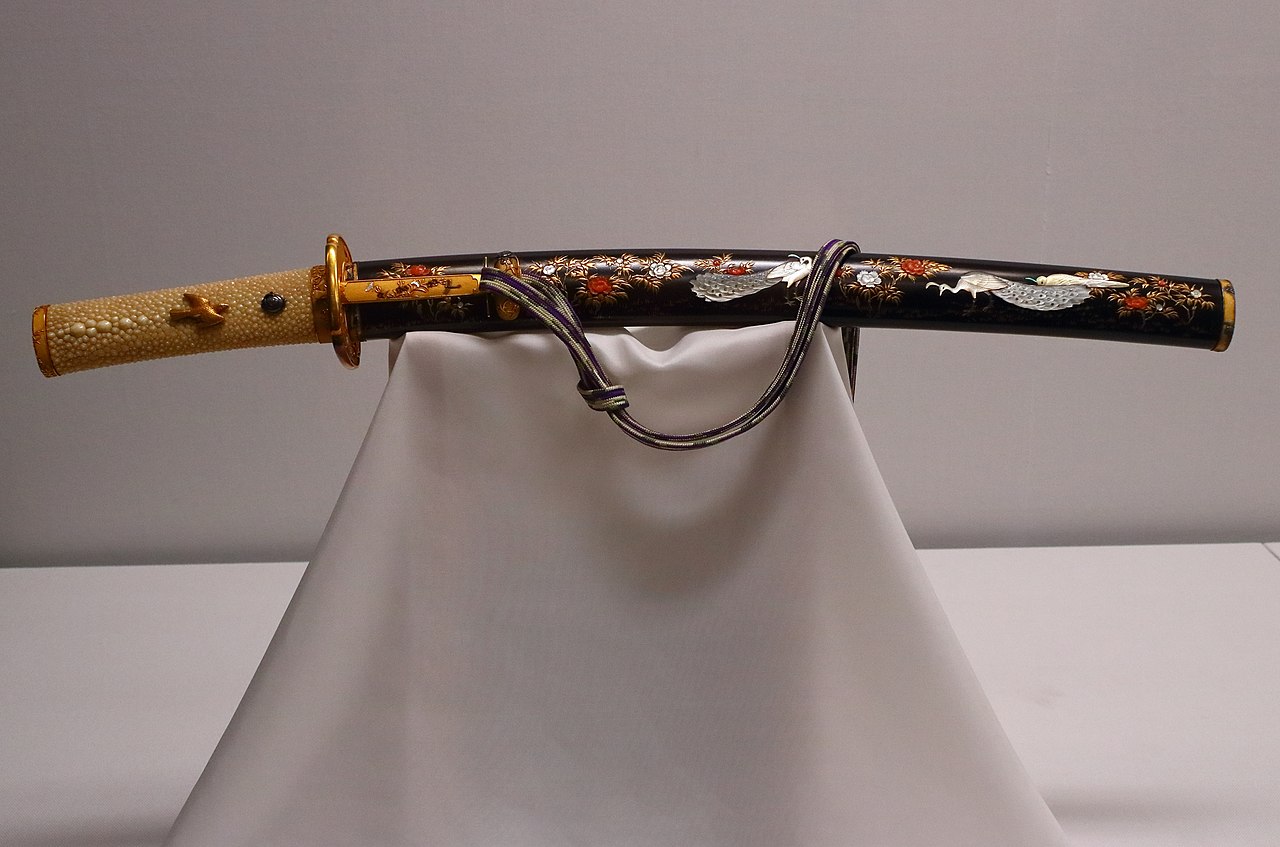


Construction and main components
Wakizashi blades were forged with techniques similar to those used for katana: layered and folded steels, differential hardening to produce a visible hamon (temper line), and a tapered, single-edged profile. Common parts include:
- Ha (blade) — the sharpened edge, with a back (mune) and a visible hamon on properly forged pieces.
- Tsuka (handle) — often wrapped with silk or cotton and backed with samegawa (stingray skin) for grip.
- Tsuba (guard) — a small hand guard between blade and handle that could be plain or ornately decorated.
- Saya (scabbard) — wooden sheath lacquered and fitted to the blade.
History and cultural role
The wakizashi developed alongside other Japanese swords and became especially prominent in the Muromachi and Edo periods. By the early Edo era it was customary for samurai to carry the pair of swords as part of their dress and identity; laws and social customs regulated when and where blades could be worn. The wakizashi also had ritual and domestic functions: it was sometimes used indoors where a longer katana would be impractical, and it could serve in ceremonial contexts such as ritual suicide (seppuku) or as a tool for close-quarters defense.
Because of its size, the wakizashi was versatile: it could be drawn quickly in confined spaces, used to complete a wounded opponent, or kept as a trusted backup weapon. Blades vary from simple battlefield tools to highly finished works of art, with fittings that reflect the owner's rank and taste. Collectors and museums value wakizashi for both their craftsmanship and cultural significance.
Uses, distinctions and notable facts
- As part of the daishō, the wakizashi symbolized samurai status and was often worn when full armor was not required.
- It differs from the tanto (a small dagger) mainly by length and intended use; the wakizashi is a short sword usable with cutting techniques.
- Blade-makers used traditional forging and tempering methods, producing characteristic patterns and temper lines prized by swordsmen and artisans alike.
For general background on related blades and terminology, see resources on the katana and historical summaries of sword use in the early modern period (early 17th century sources).
Questions and answers
Q: What is a wakizashi?
A: A wakizashi is a traditional Japanese sword that is shorter than a katana and was used in conjunction with it.
Q: How does the wakizashi complement the katana?
A: The wakizashi finished off the work of the katana sword.
Q: What is the length range of a wakizashi?
A: The length of a wakizashi could be from 30cm to 60cm (12 to 24 inches) long.
Q: Are there different sizes of wakizashi?
A: Yes, a small version was called a "ko-wakizashi", and a longer one was called an "o-wakizashi".
Q: What is the handle of a wakizashi made of?
A: The handle of a wakizashi is made of stingray skin.
Q: What is the blade of a wakizashi made of?
A: The blade of a wakizashi is made from the finest metal and stone.
Q: What was the katana sword known as in the beginning of the 17th century?
A: The katana sword was well known in the beginning of the 17th century as a kodachi sword.
Related articles
Author
AlegsaOnline.com Wakizashi: The Short Samurai Sword Leandro Alegsa
URL: https://en.alegsaonline.com/art/106186