
Wake County, North Carolina
Wake County is a central North Carolina county whose county seat is Raleigh. It includes major cities, Research Triangle institutions, and has been among the fastest-growing U.S. counties.
Overview
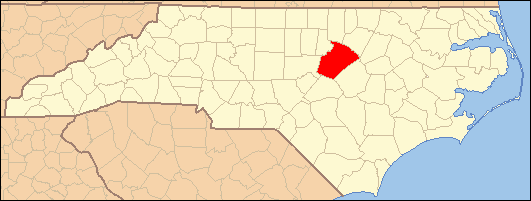
Wake County lies in the heart of the Piedmont region of the state of North Carolina. Its county seat and largest city is Raleigh, which is also the state capital. The county experienced rapid expansion in recent decades; a mid-2000s estimate recorded roughly 823,345 residents (2007), and it has been cited among the fastest-growing counties in the nation. It is one of the most populous counties in the state, second only to Mecklenburg County in some counts.
Image gallery
10 Images





Geography and character
Wake County combines urban, suburban and rural landscapes, with a mix of older neighborhoods in Raleigh and newer suburban developments radiating outward. The county sits on gently rolling terrain and serves as a regional hub for government, education and technology. Rapid residential and commercial growth has changed land use patterns along major corridors while preserving pockets of farmland and natural areas.
History and origins
Established in the 18th century, the county was created from earlier colonial districts and is named for Margaret Wake, the wife of a colonial governor. Its development accelerated with state government activity centered in Raleigh, and later with the growth of higher education and research initiatives in the region.
Economy, education and research
Wake County is part of the broader Research Triangle area and benefits from a concentration of universities, technology companies and research parks. Major academic institutions and research centers nearby attract investment and skilled labor, supporting industries such as information technology, life sciences, healthcare and government services. Public and private schools, community colleges and university campuses play a central role in workforce development.
Government, services and communities
The county government manages services such as public health, social services, and a large public school system. Several incorporated towns and suburbs form the county's residential and commercial base; notable municipalities include:
- Cary
- Apex
- Raleigh (county seat) (county seat)
- Garner
- Holly Springs
Transportation infrastructure includes interstate highways, regional airports and commuter routes that link Wake County to neighboring counties and the Raleigh–Durham metropolitan area. The county's position as a state capital and a center for education and research has made it a focal point for economic growth and regional planning.
For more detailed municipal, demographic and planning information, official county and state resources provide updated statistics and maps. Wake County continues to evolve as part of one of the most dynamic metropolitan regions in the southeastern United States.
Questions and answers
Q: What is Wake County?
A: Wake County is a county located in the U.S. state of North Carolina.
Q: How many people lived in Wake County in 2007?
A: In 2007, 823,345 people lived in Wake County.
Q: Which county has more people than Wake County in North Carolina?
A: Mecklenburg County has more people than Wake County in North Carolina.
Q: What is the county seat of Wake County?
A: The county seat of Wake County is Raleigh, which is also the state capital.
Q: Is Wake County a rapidly growing county in the United States?
A: Yes, Wake County is the 9th fastest growing county in the United States.
Q: What is the significance of Raleigh in Wake County?
A: Raleigh is not only the county seat of Wake County, but it is also the state capital.
Q: What is the population of Wake County right now?
A: The text does not provide the current population of Wake County.
Related articles
Author
AlegsaOnline.com Wake County, North Carolina Leandro Alegsa
URL: https://en.alegsaonline.com/art/106172
Sources
- wakegov.com : "WakeGov.com Population"
- money.cnn.com : "10 fastest-growing U.S. counties - 9 - CNNMoney.com"
- newsobserver.com : newsobserver.com/news/education/wake/story/734480.html
- ncparks.gov : "Falls Lake State Recreation Area - NC State Parks"
- ncparks.gov : "William B. Umstead State Park - NC State Parks"
- ncparks.gov : "Jordan Lake State Recreation Area - NC State Parks"
- wakegov.com : "WakeGOV: Page Not Found"
- wakemed.org : "Find a Location - Raleigh, North Carolina (NC) - WakeMed Health & Hospitals"