
Wagon train: migration convoy and military baggage train
A wagon train is a group of wagons traveling together for safety and logistics, used both by migrating settlers and militaries to carry people, supplies, and equipment across long distances.
A wagon train is a group of wagons moving together overland, organized so that people, animals and supplies can travel safely and efficiently. In civilian contexts the term evokes 19th‑century pioneer migration across open country; in military contexts a baggage train serves an army by carrying tents, provisions, ammunition and other matériel. The basic purpose in both uses is the same: combine resources and protection when moving heavy loads over many miles.
Image gallery
4 Images
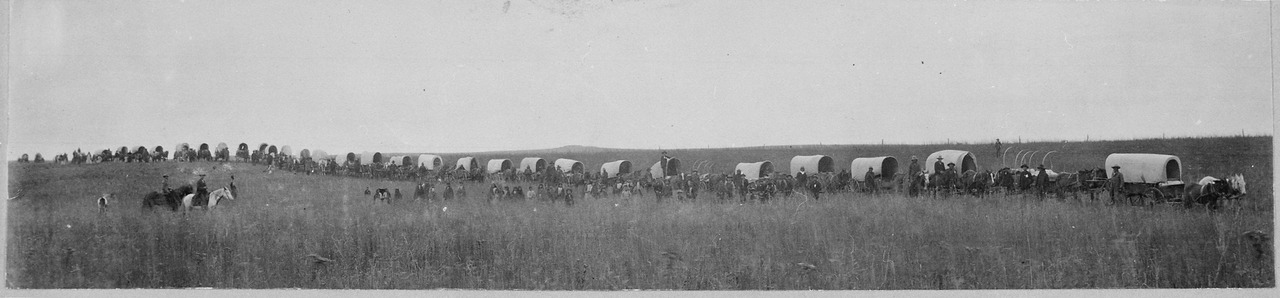

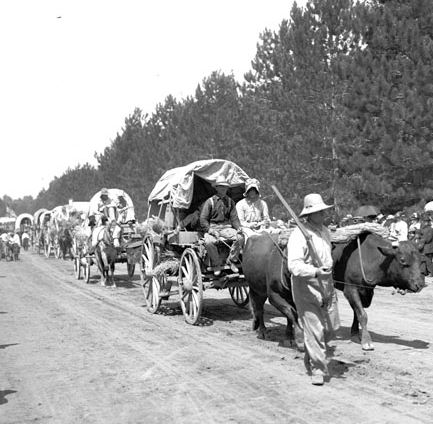
Characteristics and components
A typical wagon train is defined by its wagons, draft animals and people, and by routines that manage travel pace, camp setup and security. Wagons used by settlers and armies varied in design, but all had to be sturdy enough to cross rough terrain and to carry feed for draft animals alongside passengers' effects and tools. Draft animals might include oxen, mules or horses, chosen for strength and endurance. A well‑organized train conserves feed, water and spare parts while minimizing delays.
- Wagons and gear: boxes, axles, spare wheels, harnesses and tarps.
- Animals: oxen and mules were common for heavy pulling; horses when speed mattered.
- Human roles: wagon masters or captains, scouts, teamsters, cooks and guards.
- Supplies: food, water, tools, bedding, medical supplies and animal feed.
Organization and daily life
Wagon trains traveled at a slow, steady pace, with established practices for making camp, watering animals and repairing equipment. Decisions about route, timing and rationing were made by experienced leaders; in migrant trains these roles were often filled by a wagon master elected or hired by the group. Military baggage trains were typically subordinated to an army headquarters and moved according to operational needs rather than settlers' schedules.
History and notable routes
Moving groups of wagons has deep roots in human logistics: even ancient armies used wheeled vehicles to transport supplies, and routes and roads were developed to support them — for example, the Romans built road networks to facilitate troop and baggage movement. In the United States, wagon trains became emblematic of westward migration as people left coastal and settled areas — including the region of the Thirteen Colonies and their descendants — to seek land and opportunity farther west. Famous trails were established for these journeys, and entire communities formed around the skills needed for long overland travel.
Uses, risks and legacy
Wagon trains made long distance settlement, trade and campaigning possible before railroads and motor vehicles. They enabled families to move household goods and enabled armies to project power beyond fixed bases. But travel was slow and risky: weather, breakdowns, shortages and disease could stop progress, and encounters with rival groups sometimes led to conflict. Despite those dangers, wagon trains were central to migration patterns and to the logistical evolution that eventually led to modern transport systems.
For more on the concept and its variations, see discussions of convoy organization, migration patterns of people who migrated in search of land, and the broader American context in which many famous wagon trains operated. Additional resources and historical summaries are available through reference collections and specialized histories of overland trails and military logistics (westward migration studies and supply train analyses).
Questions and answers
Q: What is a wagon train?
A: A wagon train is a group of wagons that travel together for safety.
Q: What is a baggage train?
A: A baggage train is a military wagon train that carries equipment and supplies needed by an army.
Q: What kind of supplies did the wagon trains need to carry?
A: Wagon trains needed to carry enough supplies, including feed for the draft animals, for the entire journey.
Q: What are wagon trains most closely associated with in U.S. history?
A: Wagon trains are most closely associated with American pioneers traveling west.
Q: Why did people migrate westward in the past?
A: As the population of the Thirteen Colonies grew, people migrated Westward looking for inexpensive lands and new opportunities.
Q: What did the wagon need to carry for families traveling in the West?
A: The wagon had to carry all the supplies for the trip and all a family's personal belongings.
Q: Did the Romans make use of wagon trains?
A: Yes, the Romans built a network of roads for their armies and baggage trains to move throughout the empire, making use of wagon trains in ancient times.
Related articles
Author
AlegsaOnline.com Wagon train: migration convoy and military baggage train Leandro Alegsa
URL: https://en.alegsaonline.com/art/106124
Sources
- collinsdictionary.com : "baggage train"
- au.af.mil : "The Military Revolution; Logistics and Transport"
- historybits.com : "American Western Migration, Wagon Trains and Covered Wagons"
- crystalinks.com : "Roads in Ancient Rome"