
Wadi Halfa: Sudanese port town on Lake Nubia (Lake Nasser)
Wadi Halfa is a Sudanese border town on Lake Nubia (the Sudanese part of Lake Nasser). Known for its Nubian heritage, port and ferry links, it was reshaped by the Aswan High Dam and is undergoing rapid growth.
Overview
Wadi Halfa is a small but strategically located town in northern Sudan, situated on the shores of Lake Nubia, the Sudanese extension of Egypt's Lake Nasser. Historically a river and rail terminus, the town functions today as a regional transport and market center near the Egypt–Sudan frontier. Modern estimates place the population at roughly 18,000 people living in six main neighborhoods, though seasonal movement and recent resettlement have affected local figures.
Image gallery
7 Images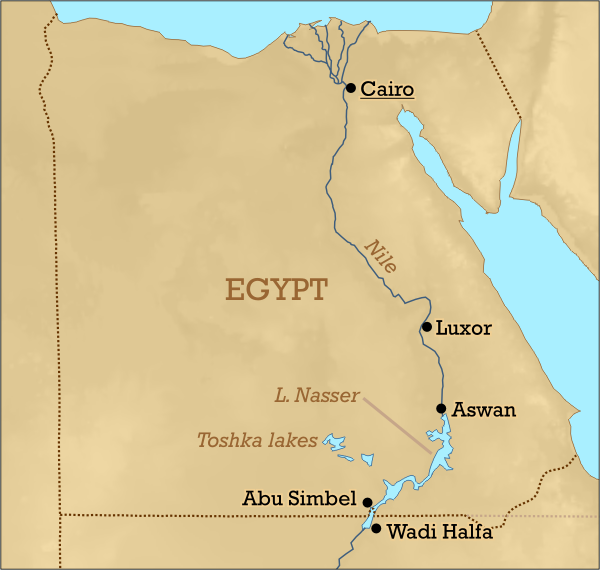


Geography and climate
Wadi Halfa occupies flat desert terrain close to the lake created by the Aswan High Dam. The climate is arid, with extremely hot summers, mild winters and very low annual precipitation. The immediate vicinity combines lakeshore habitats with the sandy and rocky landscapes characteristic of the Nubian Desert. Its lakeside position historically made it a natural hub for river transport and, after the dam, for ferry links across Lake Nubia.
History and displacement
The town and its surrounding Nubian settlements were profoundly affected in the 1960s by the construction of the Aswan High Dam. When the dam created the reservoir commonly called Lake Nasser (Lake Nubia on the Sudanese side), the original riverside site of Wadi Halfa and many traditional Nubian villages were inundated. Large numbers of Nubian residents were resettled inland to sites such as New Halfa and other locations. This displacement reshaped local demographics and cultural geography, and in subsequent decades some Nubians have returned to the area or established new communities nearby.
Economy, transport and development
Wadi Halfa's economy revolves around transport, cross-border trade, fishing on Lake Nubia and services for travelers and traders. It has long been a link between Sudan and southern Egypt: a ferry service and earlier rail and steamer connections historically linked Wadi Halfa with Aswan. Today there are ongoing infrastructure projects intended to improve road connections — including a highway under construction toward Aswan in Egypt and routes via Dongola to Khartoum — which are expected to strengthen trade and mobility.
Culture, education and institutions
The population is largely Nubian in origin, preserving distinct language, music and architectural traditions even after decades of displacement. Wadi Halfa hosts educational institutions focused on geology and earth sciences; local colleges attract students from the region and serve the area's need for technical expertise related to natural resources and development. One locally noted institution is a college of geology and earth sciences with an enrollment on the order of several hundred students.
Notable facts and challenges
- The original townsite was flooded in 1964 when the Aswan High Dam reservoir rose, an event often cited in discussions of Nubian displacement and cultural loss; see general accounts of the Aswan Dam for broader context.
- Wadi Halfa's border location gives it potential as a trade and transport hub, but the town faces typical frontier challenges: limited infrastructure, water and health services needs, and the pressure of rapid urban growth.
- Renewed interest in Nubian heritage and modest return migration have contributed to a period of urban expansion and cultural revival in recent decades.
For travelers and researchers, Wadi Halfa exemplifies the complex interaction of large-scale engineering projects, cross-border relations and the resilience of local cultures in arid environments.
Questions and answers
Q: Where is Wadi Halfa located?
A: Wadi Halfa is located in the northern part of Sudan by Lake Nubia.
Q: How many neighborhoods does Wadi Halfa have?
A: Wadi Halfa has 6 neighborhoods.
Q: How many people live in Wadi Halfa?
A: Wadi Halfa has a population of 18,000 people.
Q: What major project has been undertaken in Wadi Halfa?
A: A highway under construction will connect Wadi Halfa with Aswan in Egypt and via Dongola with Khartoum.
Q: Why were Nubians forced to relocate from the old city of Wadi Halfa?
A: The old city of Wadi Halfa was flooded when the Aswan Dam was built in 1964, forcing the Nubians to relocate to New Halfa.
Q: Are Nubians returning to Wadi Halfa?
A: Yes, there is a huge number of Nubians who are immigrating back to their mother land.
Q: What educational institution is located in Wadi Halfa?
A: Wadi Halfa is home to a Geology and earth science college with a student body of more than 500 students.
Related articles
Author
AlegsaOnline.com Wadi Halfa: Sudanese port town on Lake Nubia (Lake Nasser) Leandro Alegsa
URL: https://en.alegsaonline.com/art/106104
Sources
- fao.org : "PART II - SYNTHESES OF INFORMATION ON SELECTED AFRICAN RESERVOIRS (continued)"
- geology.ucdavis.edu : "Middle East Water"