
VX (nerve agent)
VX is a highly toxic organophosphate nerve agent and Schedule 1 chemical weapon. Exposure disrupts the nervous system and can be rapidly fatal; production, stockpiling and use are internationally prohibited.
Overview
VX is a synthetic organophosphorus compound developed as a nerve agent and is regarded as one of the most toxic chemical warfare agents. It has no legitimate civilian application and is regulated as a prohibited chemical weapon under international frameworks. Authorities and reference sources describe VX as a persistent, highly toxic nerve agent and the United Nations has treated its use and possession in the context of weapons of mass destruction (UN, weapon of mass destruction).
Image gallery
7 Images


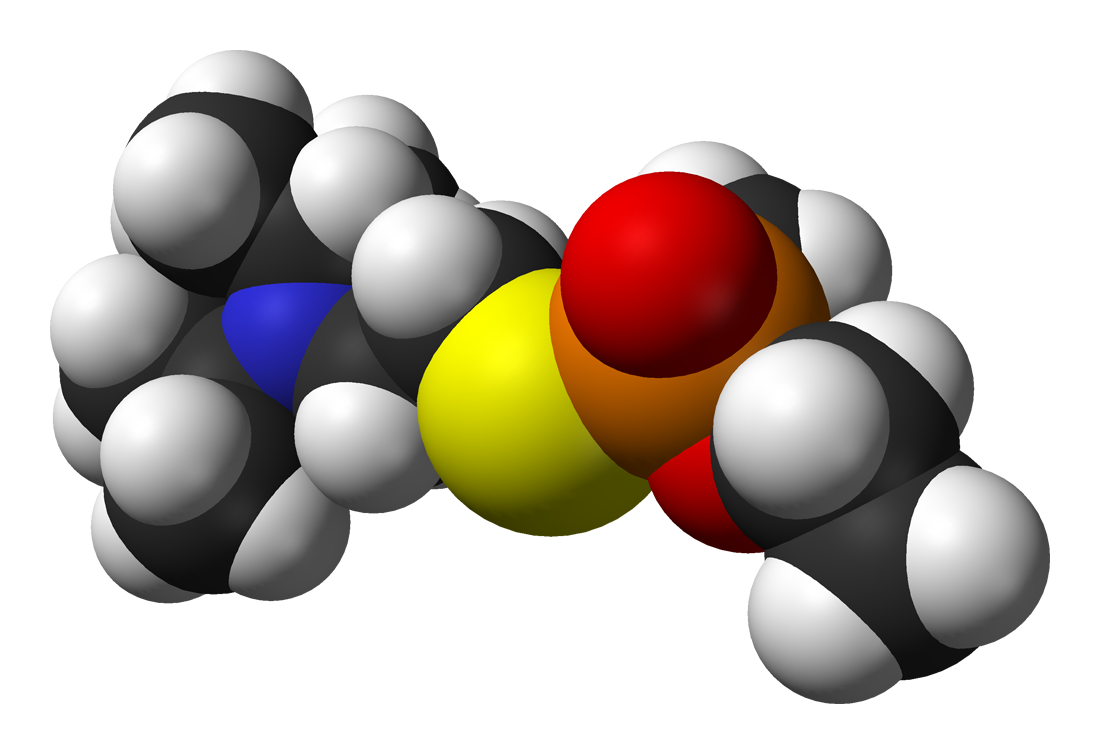


Chemical nature and mechanism
VX is an organophosphate that inhibits the enzyme acetylcholinesterase. Inhibition prevents the normal breakdown of the neurotransmitter acetylcholine, causing accumulation at synapses and neuromuscular junctions. This produces continuous stimulation of muscles and autonomic receptors, leading to the characteristic signs of poisoning and rapid risk to breathing and circulation. Public health analyses emphasize that even a tiny dermal dose can be lethal—described in some sources as a fraction of a drop—and that skin absorption is an important route for serious toxicity (nervous system effects).
Physical properties and routes of exposure
At ambient temperatures VX is typically an oily, low‑volatility liquid with little or no strong odor, properties that make it persistent on surfaces and in the environment. Major routes of exposure include dermal contact with liquid contamination, inhalation of aerosols or vapour in confined situations, and ingestion if contaminated food or objects are consumed. Its persistence means that contaminated clothing, vehicles, and terrain can remain hazardous until properly decontaminated and disposed of.
Signs, medical treatment, and protection
Symptoms of VX poisoning reflect overstimulation of muscarinic, nicotinic and central nervous system receptors. Early signs often include pinpoint pupils, blurred vision, excessive salivation, tearing, sweating, runny nose, abdominal cramps, vomiting, muscle twitching, weakness and breathing difficulty. Severe exposure can produce seizures, respiratory failure and death.
Immediate response is decontamination followed by supportive care. Established medical countermeasures include administration of a muscarinic antagonist (commonly atropine) and an oxime compound to reactivate acetylcholinesterase (for example, pralidoxime is widely cited). Seizures are managed with benzodiazepines. Personnel involved in rescue and medical care use protective equipment and procedures to avoid secondary contamination.
Detection, forensic analysis and diagnostics
Detection in the field is performed with specialized chemical detectors and test kits; laboratory confirmation uses analytical chemistry and forensic techniques to identify VX or its degradation products. Accurate identification supports clinical management, public health response and legal investigations. Research into rapid diagnostics and environmental monitoring is part of preparedness efforts and protective research (scientific exemptions, medical research).
Decontamination and environmental fate
Decontamination combines physical removal (washing, adsorption) with chemical neutralization. Commonly used approaches include hypochlorite solutions, reactive sorbents and specially formulated decontaminants; all require trained personnel and appropriate protective equipment. Environmental breakdown depends on temperature, sunlight, soil and water chemistry; VX is generally more persistent than many volatile nerve agents, which complicates cleanup and remediation.
History, control and legal status
VX was developed in the mid‑20th century during research into organophosphate compounds. Its acute toxicity and persistence led to international prohibition. Under the Chemical Weapons Convention the substance is listed among the most tightly controlled chemicals and is treated as a Schedule 1 toxic chemical (Chemical Weapons Convention). The treaty makes production, stockpiling and use illegal for peaceful purposes and requires declared stocks to be destroyed; it permits only tiny, strictly controlled quantities for protective research and medical countermeasure development (international law, stock limits). Some limited laboratory work may be authorized for antidote development or safety testing under strict oversight (antidote research, medical research).
Notable incidents and implications
Confirmed or alleged uses of VX have drawn intensive international scrutiny because a single instance of deployment may have severe humanitarian and diplomatic consequences. One widely reported case in 2017 involved the death of an individual in Malaysia that investigators linked to VX exposure; that event prompted criminal and arms‑control investigations and emphasized the need for emergency preparedness and forensic capabilities. The presence or suspected use of VX typically triggers international condemnation and legal processes.
Prevention, policy and preparedness
Prevention rests on international arms control, national export controls, secure destruction of declared stocks, interdiction and monitoring of suspicious materials. Preparedness includes medical training, stockpiling of antidotes and personal protective equipment, decontamination capacity, and public health planning. Research into improved detection, treatment and environmental remediation continues under strict regulation to reduce the risk of misuse while protecting responders and the public.
Further reading
Authoritative sources include treaty documents, public health guidance and security analyses for policymakers, emergency services and clinicians. Where carrying out research or clinical work, organizations and laboratories follow legal requirements and consult relevant authorities to remain within the narrow exceptions for protective or medical research (scientific exemptions, antidote research, medical research).
Questions and answers
Q: What is VX?
A: VX is a type of chemical weapon called a nerve agent.
Q: Is VX highly toxic?
A: Yes, VX is a very toxic chemical.
Q: Can VX be used for anything other than a chemical weapon?
A: No, because VX is so toxic, it cannot be used as anything other than a chemical weapon.
Q: How is VX classified by the United Nations?
A: The United Nations classifies VX as a weapon of mass destruction.
Q: What does the Council on Foreign Relations say about VX?
A: The Council on Foreign Relations says that a fraction of a drop of VX, absorbed through the skin, can fatally disrupt the nervous system.
Q: Is it legal to use VX as a chemical weapon?
A: It is illegal to use VX as a chemical weapon according to the Chemical Weapons Convention of 1993, an international law.
Q: Is it illegal to make or keep large amounts of VX?
A: Yes, the Chemical Weapons Convention of 1993 made it illegal for countries to make or keep more than 100 grams of VX.
Related articles
Author
AlegsaOnline.com VX (nerve agent) Leandro Alegsa
URL: https://en.alegsaonline.com/art/106037
Sources
- un.org : "United Nations Security Council Resolution 687 (1991)"
- cfr.org : "VX"
- opcw.org : "Convention on the Prohibition of the Development, Production, Stockpiling, and use of Chemical Weapons and on their Destruction (Chemical Weapons Convention)"
- emergency.cdc.gov : "Nerve Agents"
- cs.amedd.army.mil : Medical Aspects of Chemical and Biological Warfare
- utsw.ws : "EMS Subspecialty Certification Review Course: Organophosphates"
- armypubs.army.mil : Toxic Chemical Agent Safety Standards
- atsdr.cdc.gov : "Cholinesterase Inhibitors: Including Insecticides and Chemical Warfare Nerve Agents, Part 4 - Section 11, Management Strategy 3: Medications - 2-PAM (2-Pyridine Aldoxime Methylchloride) (Pralidoxime)"
- pubmed.ncbi.nlm.nih.gov : 15862082