
VRML (Virtual Reality Modeling Language)
VRML is a text-based file format and scene-graph standard from the 1990s for describing interactive 3D graphics on the World Wide Web; it helped establish web 3D and was later succeeded by X3D.
Overview
Virtual Reality Modeling Language (VRML, pronounced "vermal") is a plain-text file format and scene description language for creating interactive 3D worlds intended for use on the World Wide Web. VRML files describe geometry, appearance, lighting, viewpoints and simple interactivity. Originating in the mid-1990s (initially called Virtual Reality Markup Language), VRML enabled designers to place navigable 3D content in web pages, typically viewed through browser plugins or standalone viewers.
Image gallery
1 Image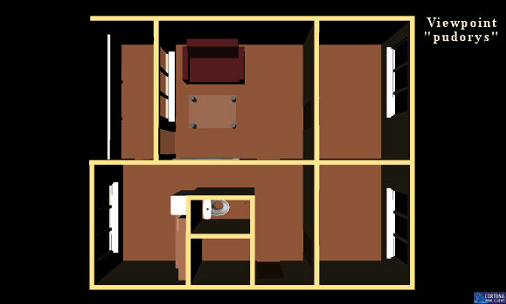
Structure and characteristics
VRML represents scenes as a hierarchical scene graph composed of nodes. Each node type encapsulates geometry, appearance, transformation, sensors or behaviors. Files are human-readable ASCII with a node/field syntax that is easy to edit by hand or generate from tools. VRML supports basic scripting and an event-routing mechanism to connect sensors and animated behaviors.
- Common node families: Transforms, Grouping, Shapes and Geometry.
- Appearance: Material and Texture nodes define surface look.
- Geometry primitives: IndexedFaceSet, Sphere, Box, Cylinder and others.
- Interactivity: Sensor nodes, Script nodes and ROUTE statements.
For background on 3D formats and scene graphs see 3D format resources.
History and development
VRML emerged as a community-driven way to exchange interactive 3D content on the web. A common reference release known as "VRML97" refined earlier drafts and standardized features such as texturing, lighting, and the event model. Despite interest, native in-browser support remained limited, so creators relied on external viewers and plugins. Many early web-based virtual environments and demonstrations used VRML.
Historical specifications and archived materials are available from legacy repositories and documentation sites: specification archives.
Uses, examples and importance
VRML was used for architectural walkthroughs, educational simulations, product visualization and simple virtual communities. Its relatively compact, readable syntax made it suitable for tooling and conversion into other 3D formats. Sample files and tutorials illustrate typical use cases such as annotated models, guided tours and interactive exhibits.
Introductory tutorials and example libraries can be found at various developer collections: developer resources.
Legacy and successor
While VRML is no longer the dominant web 3D format, it influenced subsequent standards. X3D succeeded VRML by modernizing the specification, offering XML encodings, improved APIs and support for newer rendering features. Archived VRML content still appears in legacy projects and museums; conversion tools and community guides help migrate or interpret these files: community guides.
Questions and answers
Q: What is VRML?
A: VRML stands for Virtual Reality Modeling Language, which is a 3-dimensional interactive vector graphics file format for the World Wide Web.
Q: How do you pronounce VRML?
A: VRML is pronounced "vermal" or by its initials.
Q: What was VRML known as before 1995?
A: VRML was known as Virtual Reality Markup Language before 1995.
Q: What is the purpose of VRML?
A: The purpose of VRML is to provide a standard 3D interactive vector graphics file format for the World Wide Web.
Q: Has VRML been replaced by another format?
A: Yes, VRML has been succeeded by X3D.
Q: What is X3D?
A: X3D is a successor to VRML, which is a standard for 3D graphics on the World Wide Web.
Q: Is VRML still used today?
A: VRML has been succeeded by X3D and is no longer widely used today.
Related articles
Author
AlegsaOnline.com VRML (Virtual Reality Modeling Language) Leandro Alegsa
URL: https://en.alegsaonline.com/art/105985
Sources
- news.zdnet.co.uk : "Is a 3D web more than just empty promises?"
- web3d.org : "Version 1.0 Specification"
- martinreddy.net : "VRML Version 1.0 Specification"
- sciencedirect.com : "Study on the collaborative design process over the Internet: a case study on VRML 2.0 specification design"
- doi.org : 10.1016/S0142-694X(98)00007-6
- graphics.stanford.edu : "VRML Version 2.0 Specification"
- doi.org : 10.1109/38.749123
- w3.org : "Extending WWW to support Platform Independent Virtual Reality"
- www94.web.cern.ch : "First World Wide Web Conference"
- livingwork.com : "Peter Kennard's page"
- allbusiness.com : First 3D/VRML Plug-in for Netscape 2.0 shown by TGS; TGS extends leadership in Internet 3D products and technology
- siggraph.org : A Commentary on GeoVRML
- biota.org : "Floops general narrative"
- digitalspace.com : "Floops in his first episode"