
Vostok 2 — Soviet manned flight that spent a full day in orbit
Vostok 2 carried Gherman Titov into orbit for over a day and 17 revolutions to study prolonged weightlessness. The mission revealed effects of space sickness, manual piloting, and crew ejection landings.
Vostok 2 was the second manned flight of the Soviet Vostok programme and the first to keep a human in orbit for an entire day. Launched in early August 1961, the mission carried cosmonaut Gherman Titov on more than 17 revolutions of Earth to examine the physiological and operational effects of prolonged weightlessness and to expand knowledge gained from the first flight, Vostok 1. The spacecraft is often referenced by its Russian designation in historical records (Восток-2) and by variant names such as Orient 2 or East 2 in some Western sources.
Image gallery
4 Images


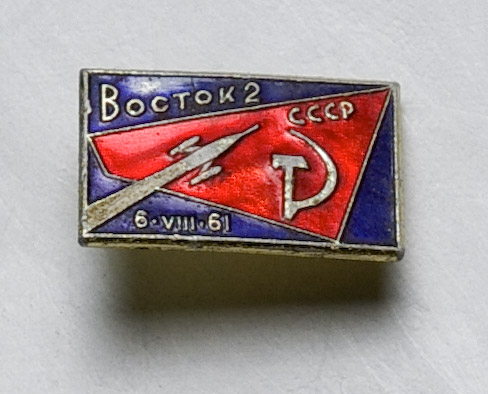
Spacecraft and mission profile
The Vostok capsule was a spherical reentry module attached to a service module that housed instruments and propulsion. The flight plan emphasised short-term scientific observation and human factors research rather than complex maneuvers. During the mission Titov had opportunities to operate controls manually for a limited period to verify pilot inputs could be made from inside the capsule. The flight demonstrated that a human could remain functional during repeated day–night cycles and extended weightlessness.
In-flight events and problems
Although largely successful, the mission encountered several issues. A heater was not turned on, allowing cabin temperatures to fall to around 10 °C, and Titov reported symptoms that have been described as space sickness. The mission also recorded difficulties during the separation sequence when the reentry module did not detach cleanly from its service module, creating concern for recovery operations. These problems provided engineers with practical data that informed later spacecraft design.
Landing and ejection
As with other Vostok missions, Titov did not remain inside the capsule through touchdown. He ejected at the end of the flight and descended under parachute to the ground; this procedure was later confirmed as the standard landing method for the Vostok program. Titov's brief manual control, his ejection, and the capsule separation issues are often cited in accounts of the mission. The original reentry capsule used by Titov was later destroyed during modifications and development work leading into the Voskhod programme.
Significance and legacy
Vostok 2 extended the human presence in space from a single orbit to more than one day of continuous flight, providing the first systematic observations of how extended weightlessness affected sleep, orientation, and other bodily functions. Titov became notable for being very young at the time of his flight—he was 25 years old—and as of the 2010s remained among the youngest people to reach space. The mission's lessons influenced subsequent Soviet and international human spaceflight efforts.
Quick facts
- Cosmonaut: Gherman Titov (Titov)
- Program: Vostok (Soviet space programme)
- Orbits completed: over 17
- Notable outcomes: extended-duration human flight, documented space sickness, ejection landing method
- Historical references and mission records: see archival summaries and mission analyses (mission report, contemporary sources)
Vostok 2 remains a key early milestone in human spaceflight history: a short, focused mission that converted the technical achievement of placing a person in orbit into practical understanding about living and working in space.
Questions and answers
Q: What was the purpose of the Vostok 2 mission?
A: The purpose of the Vostok 2 mission was to study the effects of a long period of weightlessness on the human body.
Q: Who was the cosmonaut that was launched into orbit during the Vostok 2 mission?
A: The cosmonaut launched into orbit during the Vostok 2 mission was Gherman Titov.
Q: How many times did Titov orbit the Earth during the Vostok 2 mission?
A: Titov orbited the Earth over 17 times during the Vostok 2 mission.
Q: What were the problems encountered during the Vostok 2 mission?
A: The problems encountered during the Vostok 2 mission included not turning on a heater which caused the temperature to drop, a period of space sickness, and problems on re-entry when the reentry module failed to separate cleanly from its service module.
Q: Did Titov land with his spacecraft after the Vostok 2 mission?
A: No, Titov did not land with his spacecraft after the Vostok 2 mission.
Q: Why did Titov eject from his capsule during the Vostok 2 mission?
A: Titov said he ejected from his capsule to test another landing system.
Q: Who is the youngest person to have reached space as of 2012?
A: As of 2012, Gherman Titov is the youngest person to have reached space at the age of 25 at launch.
Related articles
Author
AlegsaOnline.com Vostok 2 — Soviet manned flight that spent a full day in orbit Leandro Alegsa
URL: https://en.alegsaonline.com/art/105940
Sources
- flightglobal.com : "The First Day In Orbit"
- astronautix.com : "Baikonur LC1" · web.archive.org
- maps.google.com : "Google Maps - Vostok 2 Landing Site - Monument"
- flightglobal.com : "Missiles and Spaceflight"
- nssdc.gsfc.nasa.gov : "NASA - NSSDCA - Spacecraft - Trajectory Details"
- worldcat.org : 71210133
- svengrahn.pp.se : "The flight of Vostok-2"
- history.nasa.gov : "The Partnership: A History of the Apollo-Soyuz Test Project"
- astronautix.com : "Astronaut Statistics"