
Voluntary Human Extinction Movement (VHEMT)
An overview of the Voluntary Human Extinction Movement: its aims, history, rationale, criticisms and cultural influence, and how it fits into broader environmental debates.
Overview
The Voluntary Human Extinction Movement (VHEMT) is a controversial advocacy group that argues humans should willingly stop reproducing to reduce their impact on the natural world. It is generally described within the context of the environmental movement, though its position is extreme compared with mainstream conservation organizations.
Image gallery
2 Images
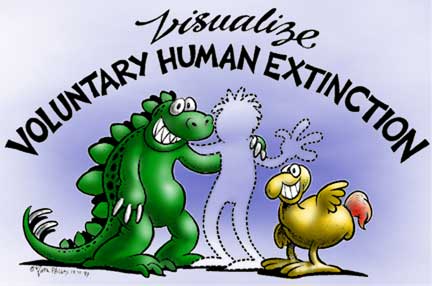
Beliefs and goals
VHEMT promotes the idea that gradual, voluntary cessation of human reproduction will allow Earth's ecosystems to recover. The movement emphasizes nonviolence and personal choice: it advocates for individuals to choose not to have children rather than promoting coercion. Supporters often stress humility before nature and long-term reduction of consumption.
- Core proposition: voluntary human extinction through universal non-reproduction.
- Means: persuasion, education, and example rather than force.
- Ethos: nonviolent and future-oriented.
History and organization
VHEMT was founded in 1991 by the American activist Les U. Knight. It began as a small, largely internet-based group and has remained an informal movement rather than a structured political organization. Its materials include essays, forums, and manifestos that outline moral and ecological arguments for population decline.
Rationale and arguments
Advocates cite environmental pressures that accompany human population growth, arguing that fewer people would reduce habitat destruction, pollution, and resource depletion. They point to concerns about human numbers and consumption patterns in relation to planetary boundaries and stewardship of Earth. Critics note that the movement conflates population with consumption and that solutions can vary by region and technology.
Criticism, ethics, and influence
Critics challenge VHEMT on ethical, practical, and social grounds: some view its ideas as misanthropic, potentially undermining reproductive rights, or impractical because demographic change is complex. Others argue environmental solutions should focus on sustainable technology, equity, and consumption changes rather than extinction. Despite publicity and discussion online, VHEMT remains small and has had limited policy influence. Debates around it continue to surface in broader environmental and population discussions, including topics of population dynamics and personal choice over reproduction.
Questions and answers
Q: What is the Voluntary Human Extinction Movement?
A: The Voluntary Human Extinction Movement is an environmental movement that advocates for humans to stop reproducing to reduce the human population on Earth.
Q: Who founded the Voluntary Human Extinction Movement?
A: The movement was founded by American activist Les U. Knight in 1991.
Q: What does Les U. Knight believe about the human population?
A: Les U. Knight believes that the human population is too big for the Earth to sustain, and that humans should choose to stop reproducing.
Q: What is the goal of the Voluntary Human Extinction Movement?
A: The goal of the Voluntary Human Extinction Movement is to reduce the human population on Earth to a sustainable level through voluntary means.
Q: Does the Voluntary Human Extinction Movement advocate for violent means to achieve its goal?
A: No, the Voluntary Human Extinction Movement advocates for voluntary means such as choosing to stop reproducing, rather than violent means.
Q: How long has the Voluntary Human Extinction Movement been active?
A: The Voluntary Human Extinction Movement has been active since its founding in 1991 by Les U. Knight.
Q: What is the rationale behind the Voluntary Human Extinction Movement's beliefs?
A: The rationale behind the Voluntary Human Extinction Movement's beliefs is that the Earth's resources are finite and cannot sustain an infinitely growing human population, and that voluntarily reducing the human population is necessary for the long-term survival of both humans and other species on Earth.
Related articles
Author
AlegsaOnline.com Voluntary Human Extinction Movement (VHEMT) Leandro Alegsa
URL: https://en.alegsaonline.com/art/105893