
Vogtlandkreis: rural district of Saxony on Germany’s southwestern border
Vogtlandkreis is a rural district in southwestern Saxony, Germany, centered on Plauen. It spans hilly countryside, historic towns, cross‑border links to Czechia, and industry in music, textiles and engineering.
Overview
The Vogtlandkreis is a rural district in the southwest of the Free State of Saxony. Its administrative centre and largest town is Plauen. The district occupies part of the historic Vogtland region, a landscape of wooded hills and river valleys that stretches into neighbouring German states and across the border into Bohemia.
Image gallery
2 Images
Geography and administration
Vogtlandkreis borders several federal states and a neighboring country: it meets Thuringia to the northwest, Bavaria to the west and lies adjacent to the Czech Republic to the south and east. The district includes a mixture of small towns, villages and rural areas with river systems such as the White Elster running through the region.
History and cultural identity
The name "Vogtland" derives from the medieval office of the Vogt (a steward or reeve) who governed parts of this border area. The modern district was formed during administrative reorganisation in the late 20th century and brings together communities with a shared cultural heritage: folk music, instrument making and textile traditions are part of local identity.
Economy, transport and towns
Economic life combines light industry, mechanical engineering, crafts and small‑scale manufacturing. The district is famous for instrument making around towns such as Markneukirchen and for a long textile history centered on towns including Plauen. Transport links include regional rail lines and roads that connect to larger motorways and to neighbouring states.
Tourism and notable features
Visitors come for hiking, winter sports and historic engineering landmarks. Notable sights and towns include:
- Plauen – cultural centre and market town
- Markneukirchen – traditional instrument makers and workshops
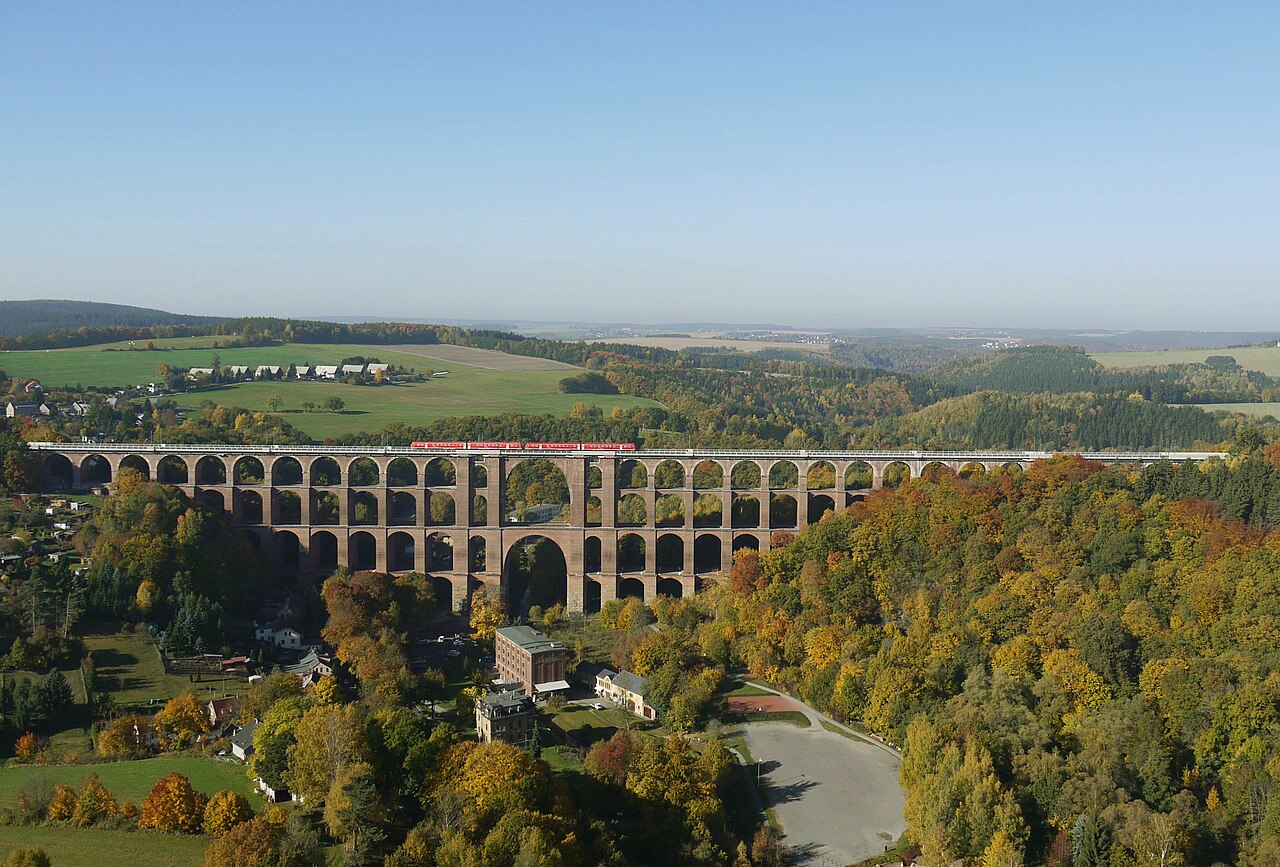
- Göltzsch Viaduct – a major 19th‑century brick railway bridge often cited among the largest of its kind
Cross‑border ties and modern role
Because of its border position the Vogtlandkreis participates in cross‑border cooperation on transport, tourism and cultural exchange with neighbouring regions in the Czech Republic and other German states. The district combines rural character with manufacturing heritage and serves as a regional hub for smaller surrounding communities.
For administrative details, municipal lists and visitor information consult local government and tourism resources.
Questions and answers
Q: What is Vogtlandkreis Rural District?
A: Vogtlandkreis Rural District is a rural district in the southwest of the Free State of Saxony, Germany.
Q: What are the neighboring countries of Vogtlandkreis Rural District?
A: Vogtlandkreis Rural District borders Thuringia, Bavaria, and the Czech Republic.
Q: Which city is the capital of Vogtlandkreis Rural District?
A: Plauen is the capital of Vogtlandkreis Rural District.
Q: Is Vogtlandkreis Rural District an urban or rural area?
A: Vogtlandkreis Rural District is a rural area.
Q: What is the significance of Vogtlandkreis Rural District's location?
A: Vogtlandkreis Rural District's location is significant as it shares borders with three different countries - Thuringia, Bavaria, and the Czech Republic.
Q: What is the population of Vogtlandkreis Rural District?
A: The population of Vogtlandkreis Rural District is not provided in the given text.
Q: What is the main economic activity in Vogtlandkreis Rural District?
A: The main economic activity in Vogtlandkreis Rural District is not provided in the given text.
Related articles
Author
AlegsaOnline.com Vogtlandkreis: rural district of Saxony on Germany’s southwestern border Leandro Alegsa
URL: https://en.alegsaonline.com/art/105783