
Vocal cords (vocal folds): structure, function, and variation
An accessible overview of the vocal cords: anatomy, how they produce sound, size and sex differences, development and clinical issues, and their role in speech and singing.
Overview
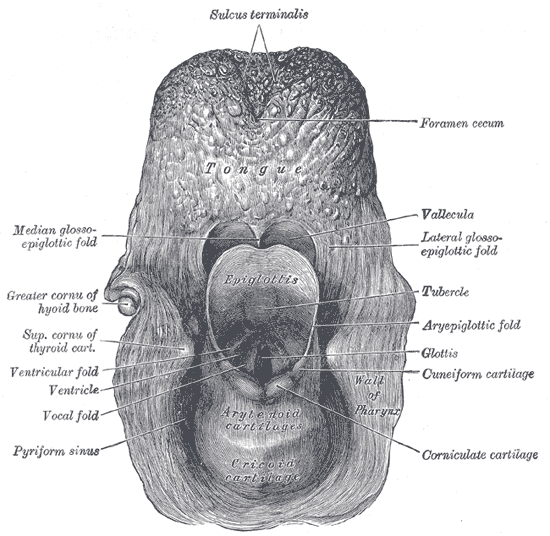
The vocal cords, more accurately called vocal folds, are paired bands of tissue located in the larynx. When air from the lungs passes between them they can vibrate, producing sound that is shaped into speech and song. These vibrations are a mechanical process influenced by airflow, tissue tension and mass; combined with articulators such as the tongue and lips, they enable the wide range of human vocalizations used for language and expression.
Image gallery
10 Images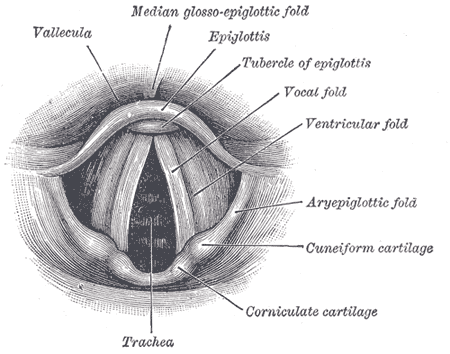



Structure and characteristics
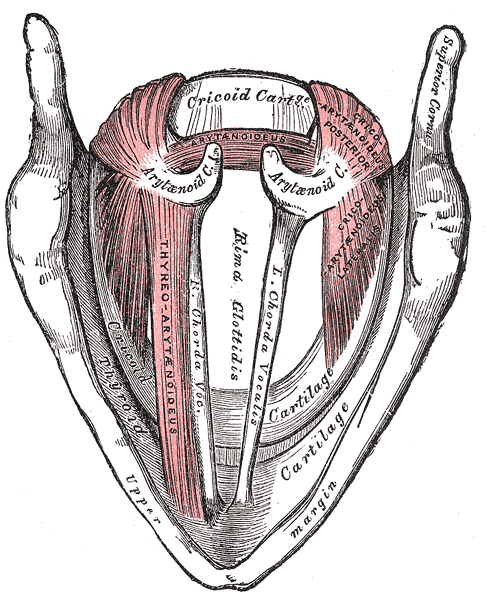
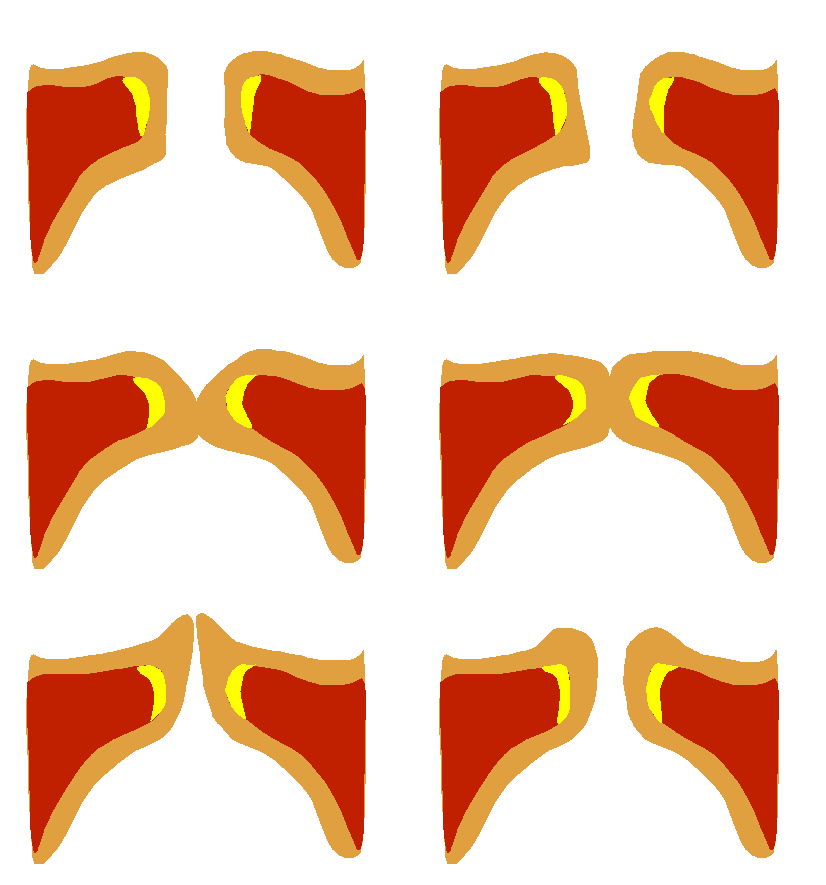
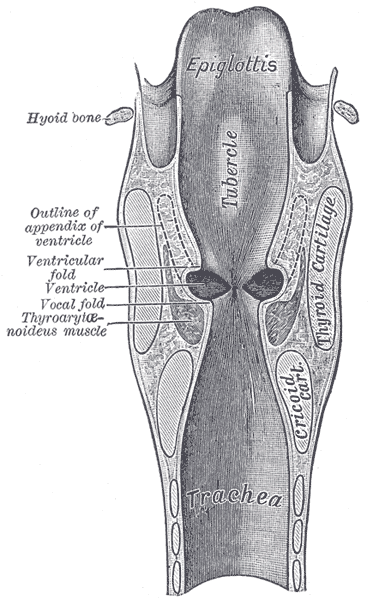
Each vocal fold consists of several layers: a thin outer epithelium, a pliable lamina propria with superficial, intermediate and deep layers, and the deeper vocalis (thyroarytenoid) muscle. The coordinated action of muscles within the larynx adjusts length, tension and position of the folds to change pitch and loudness. The process of vibration during phonation is often described by the myoelastic–aerodynamic theory: muscular force brings the folds together while aerodynamic forces and elasticity cause them to open and close rapidly, producing sound waves — a phenomenon sometimes broadly referred to as vibration.
Size, pitch and biological variation
Vocal fold dimensions affect pitch: longer, thicker folds vibrate at lower frequencies, producing deeper voices; shorter, thinner folds vibrate faster, producing higher pitch. Typical adult male vocal folds are often reported in the range of about 17–25 mm in length, while adult female folds are commonly nearer 12.5–17.5 mm. These differences emerge during puberty under the influence of hormones; genetic and developmental factors also contribute to individual variation (genes). However, pitch also depends on tension and subglottal pressure, so size is not the sole determinant.
Functions and examples of use
In humans (humans) the vocal folds serve multiple roles: producing voiced sounds for speech, enabling sustained singing and pitch modulation, protecting the airway during swallowing by closing to prevent aspiration, and helping to generate increased intra-thoracic pressure for coughing or lifting. Singers and speakers learn to control breath support and laryngeal muscle activity to access different registers (chest voice, head voice, falsetto) and to avoid strain.
Clinical and practical considerations
Vocal folds are subject to injury and disease: inflammation from infection or overuse (laryngitis), benign lesions such as nodules or polyps, scarring, and neural problems that can cause paralysis or weakness. Diagnosis uses laryngoscopy and stroboscopy; treatments range from voice therapy and behavioral techniques to medical or surgical interventions. Proper vocal hygiene — hydration, controlled voice use, and prompt care for persistent hoarseness — helps preserve fold health.
Notable distinctions and facts
- Terminology: "vocal folds" emphasizes layered tissue and function; "vocal cords" is older, colloquial usage.
- Pitch control: achieved by changing length, tension and mass per unit length, plus airflow.
- Cross-species: Other mammals and birds have analogous vibrating structures, but human vocal anatomy supports complex learned speech.
For further anatomical detail and clinical resources see introductory texts and specialist sources: laryngeal anatomy guides often illustrate the layered structure, and voice clinics provide practical information on prevention and treatment. Additional reading and multimedia resources are available from general anatomy and otolaryngology references (larynx, vibratory mechanics, sound production). For genetics and development consult resources on endocrine and developmental influences (genes, hormones), and for speech and language contexts see materials on human communication (language, humans).
Questions and answers
Q: What are vocal cords?
A: Vocal cords or vocal folds are two sets of tissue stretched across the larynx that vibrate when air passes through, producing sounds.
Q: What is the function of vocal cords in humans?
A: Humans use their vocal cords to produce language and speak.
Q: Do men and women have different vocal fold sizes?
A: Yes, men and women have different vocal fold sizes.
Q: How does the size of vocal folds affect pitch?
A: Vocal folds' size affects pitch because the thicker and longer vocal cords produce deeper sounds.
Q: What is the average length of vocal folds in adult males?
A: The average length of vocal folds in adult males is between 17 mm and 25 mm.
Q: What is the average length of vocal folds in adult females?
A: The average length of vocal folds in adult females is between 12.5 mm and 17.5 mm.
Q: What causes differences in pitch among individuals?
A: Genes influence how the larynx is made, resulting in each person having a slightly different pitch.
Related articles
Author
AlegsaOnline.com Vocal cords (vocal folds): structure, function, and variation Leandro Alegsa
URL: https://en.alegsaonline.com/art/105765