
Vivien Leigh — English actress and stage performer (1913–1967)
Vivien Leigh (born Vivian Mary Hartley; 1913–1967) was an English stage and film actress, acclaimed for Scarlett O'Hara and Blanche DuBois; she won two Academy Awards and worked extensively with Laurence Olivier.
Vivien Leigh (born Vivian Mary Hartley; 5 November 1913 – 8 July 1967) was an English actress whose career spanned stage and screen and whose performances became landmarks of mid-20th-century acting. She achieved international fame for two film roles—Scarlett O'Hara in Gone with the Wind and Blanche DuBois in A Streetcar Named Desire—each of which earned her the Academy Award for Best Actress. Though she is often remembered for her striking beauty, critical attention has long emphasised the psychological depth and emotional precision she brought to complex characters.
Image gallery
10 Images


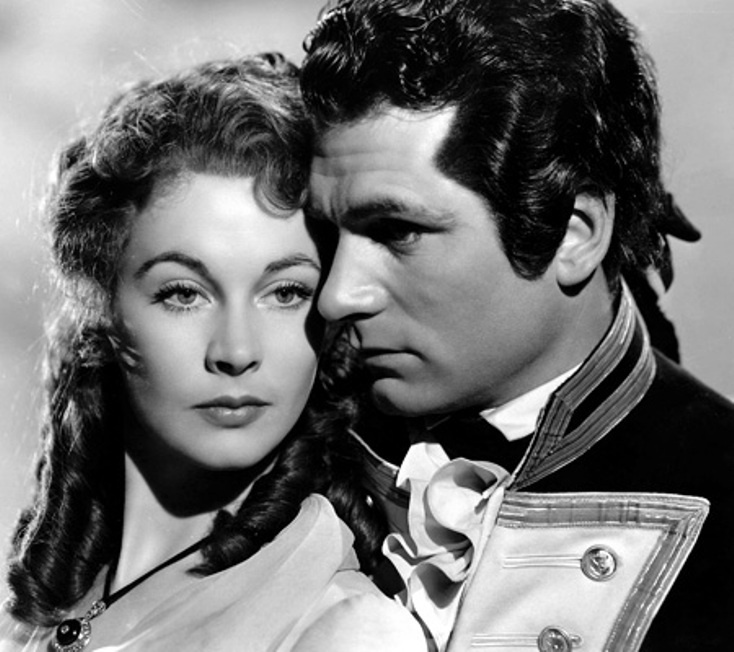


Early life and training
Leigh was born in Darjeeling in what was then British India and spent parts of her childhood in both India and England. Her family background and early education exposed her to different social and cultural environments, and she later trained as an actress in Britain. Leigh began working in repertory theatre and gradually moved into film and West End productions. Her theatrical training and early stage work contributed to a disciplined approach to voice and characterisation that informed both her stage and film performances.
Film career and signature roles
Leigh's breakthrough came with the Hollywood epic Gone with the Wind (1939), in which she played the determined and often contradictory heroine Scarlett O'Hara. The role established her as an international film star and won her a first Academy Award. More than a decade later she won a second Academy Award for her portrayal of Blanche DuBois in the screen adaptation of Tennessee Williams's A Streetcar Named Desire (1951). Leigh's screen career was comparatively selective: she made relatively few films but chose parts that allowed concentrated study of character. Critics have praised her for the emotional intensity and subtle psychological nuance she brought to each key performance.
Stage work and collaboration with Laurence Olivier
Leigh devoted much of her professional life to the theatre, where she frequently worked with Laurence Olivier, her second husband. The two formed one of the most prominent theatrical partnerships of their era and appeared together in Shakespearean productions, modern drama and numerous revivals. Leigh was styled Lady Olivier after Olivier received a title, and the couple were central figures in mid-century British theatre. While Olivier was often celebrated for his vocal authority and commanding stage presence, Leigh developed a reputation for intimate, finely observed acting, preferring realism and emotional truth over declamatory style.
Acting style and critical reception
Observers have noted that Leigh's acting combined an acute attention to inner life with an ability to convey frailty, temperament and defiance. Her stage work demonstrated a commitment to character detail, while her film performances translated that approach to the close scrutiny of the camera. Some critics compared her unfavourably to Olivier, often measuring her by his standards; others defended her on the grounds that her gifts lay in different expressive registers. Her reputation has been sustained by restorations of her films, revivals of plays in which she appeared and scholarly reassessment of her methods.
Personal life and health
Leigh's private life included two marriages and prolonged periods of ill health. Her first marriage was to Herbert Leigh Holman; later she married Laurence Olivier in 1940 and the two remained publicly linked even after their separation and eventual divorce in 1960. Throughout her adult life Leigh suffered from recurrent physical and mental health problems. She experienced episodes consistent with bipolar disorder and had repeated bouts of tuberculosis, illnesses that affected her capacity to work and sometimes led to descriptions of her as difficult to employ. Those health struggles also shaped later assessments of her career and personal resilience.
Awards, later years and legacy
Leigh's two Academy Awards place her among a small number of performers who have won multiple Best Actress Oscars. Beyond awards, her legacy rests on the force of her best-known roles and on her contributions to British theatre in partnership with leading practitioners of her time. She continued to act on stage and screen into the 1950s and 1960s, but ill health curtailed sustained activity in her later years. Leigh died in London in 1967; her life and work have been the subject of biographies, critical studies and exhibitions that seek to balance celebration of her artistry with recognition of the personal difficulties she endured.
Selected roles and recognitions
- Gone with the Wind (Scarlett O'Hara) — Academy Award for Best Actress
- A Streetcar Named Desire (Blanche DuBois) — Academy Award for Best Actress
- Important stage work including Shakespeare, repertory theatre and modern drama
Further information
- Biography and overview
- Filmography and screen credits
- Gone with the Wind: production and reception
- A Streetcar Named Desire: background and adaptation
- Early life in Darjeeling
- Context: Bengal during the British period
- History of British India and cultural context
- Laurence Olivier: career and partnership
- Accounts of her stage appearances and reviews
- Selected films and critical reception
- Contemporaries and co-stars
- Discussion of mental health and historical diagnosis
- Tuberculosis and its impact on public figures
- Records of death, obituaries and legacy materials
Note: This summary presents widely documented aspects of Vivien Leigh's life and work. For original letters, archival documents and specialist research consult theatre and film archives and the institutional collections referenced in the links above.
Questions and answers
Q: What is Vivien Leigh best known for?
A: Vivien Leigh is best known for playing Scarlett O'Hara in Gone with the Wind in 1939, and Blanche DuBois in A Streetcar Named Desire in 1951.
Q: Where was Vivien Leigh born?
A: Vivien Leigh was born in Darjeeling, Bengal, British India.
Q: Who was her first husband?
A: Her first husband was Leigh Holman.
Q: How did she come to the US?
A: She came to the US to accompany Laurence Olivier who came to Hollywood to star in David O. Selznick's production of "Rebecca" directed by Alfred Hitchcock. It was lucky that Miss Leigh's agent just happened to be David O. Selznick's brother, Myron.
Q: Why did Clark Gable insist on a change of director during the shooting of GWTW?
A: Clark Gable insisted on a change of director during the shooting of GWTW because he felt that George Cukor was devoting too much time and attention to directing Miss Leigh and her co-star, Olivia de Havilland.
Q: What did Vivien Leigh believe about acting?
A: Vivien Leigh believed that Olivier was the best actor of his (or any) generation, and worked very hard to be worthy of acting with him - on stage, of course. She also believed that the only place "real" acting took place was on the stage.
Q: What difficulties did she face throughout her career?
A: Throughout her career she faced difficulties due to ill health such as bipolar disorder and tuberculosis which meant that her career went through period of decline and she sometimes considered difficult to work with. She also faced criticism from critics who felt that she lacked presence or vocal prowess compared to her husband Laurence Olivier
Related articles
Author
AlegsaOnline.com Vivien Leigh — English actress and stage performer (1913–1967) Leandro Alegsa
URL: https://en.alegsaonline.com/art/105699