
Viral life cycle: stages, variations, and biological significance
Overview of the viral life cycle: structure and genome types, stepwise infection process, major variations (lytic, lysogenic, retroviral), and why the cycle matters for disease control and research.
The viral life cycle describes the sequence of events by which a virus infects a host cell, uses host machinery to reproduce, and releases progeny to infect new cells. Viruses are obligate intracellular parasites: they lack the full complement of molecular tools needed for independent metabolism and replication, so they are only "active" inside susceptible host cells. Their genomes and physical structure vary widely, influencing how they attach, enter, and reproduce.
Image gallery
2 Images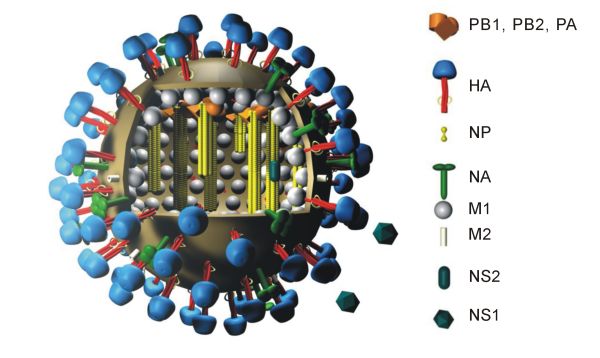

Key structural and genomic features
A typical virus has a nucleic acid genome (DNA or RNA, single- or double-stranded, sometimes segmented), a protective protein coat called a capsid, and in some cases a lipid envelope derived from the host. These features determine stability outside the host and the mechanisms used to invade cells. Because viral genomes encode relatively few proteins, most replication steps depend on host enzymes and resources; viral traits that increase reproductive success are selected for the fitness of the virus.
Core stages of the life cycle
- Attachment — specific binding between viral surface proteins and receptors on the host cell surface.
- Entry — penetration of the cell membrane by fusion or endocytosis, sometimes followed by uncoating to release the genome.
- Genome replication and gene expression — viral genes are transcribed and replicated using host or viral polymerases; strategies differ for DNA, positive-sense RNA, negative-sense RNA, and retroviruses.
- Assembly — newly made genomes and structural proteins are packaged into capsids.
- Release — progeny leave the cell by lysis, budding (acquiring an envelope), or other mechanisms to begin new infections.
Variations on this theme create distinct infection patterns. Bacteriophages may follow a lytic cycle that quickly destroys the host, or a lysogenic pathway in which the viral genome integrates and is passively replicated with the host. Retroviruses reverse-transcribe RNA genomes into DNA that integrates into host chromosomes, enabling persistent or latent infections.
Importance and applications
Understanding the viral life cycle informs antiviral drug design, vaccine strategies, and diagnostic development. Drugs can target attachment, entry, replication enzymes, or release; vaccines aim to block early steps like attachment or to prime immune clearance of infected cells. Beyond medicine, viral life cycles are central in ecology, gene transfer, and biotechnology (for example, viral vectors used in gene therapy).
For general background on viruses, see Virus. The viral life cycle remains a major focus of research because its diversity underlies differences in disease course, transmission, and how best to interrupt infection chains.
Questions and answers
Q: Are viruses considered living organisms?
A: Viruses are near the same to living organisms, however there are differences.
Q: What is one way in which a virus can be seen as living?
A: A virus needs to make more of themselves.
Q: Can a virus survive on its own?
A: No, a virus cannot survive on its own.
Q: Where does a virus reproduce?
A: A virus reproduces within a host.
Q: How does a virus reproduce within a host?
A: A virus uses a host's resources and food to reproduce within it.
Q: What is a virus's main purpose once inside a host?
A: A virus's main purpose once inside a host is to make as many copies of itself and infect other host cells.
Q: Why does a virus try to increase the number of its offspring?
A: Everything a virus does is to benefit its fitness and increase the number of its offspring.
Related articles
Author
AlegsaOnline.com Viral life cycle: stages, variations, and biological significance Leandro Alegsa
URL: https://en.alegsaonline.com/art/105499