
Viqueque Municipality
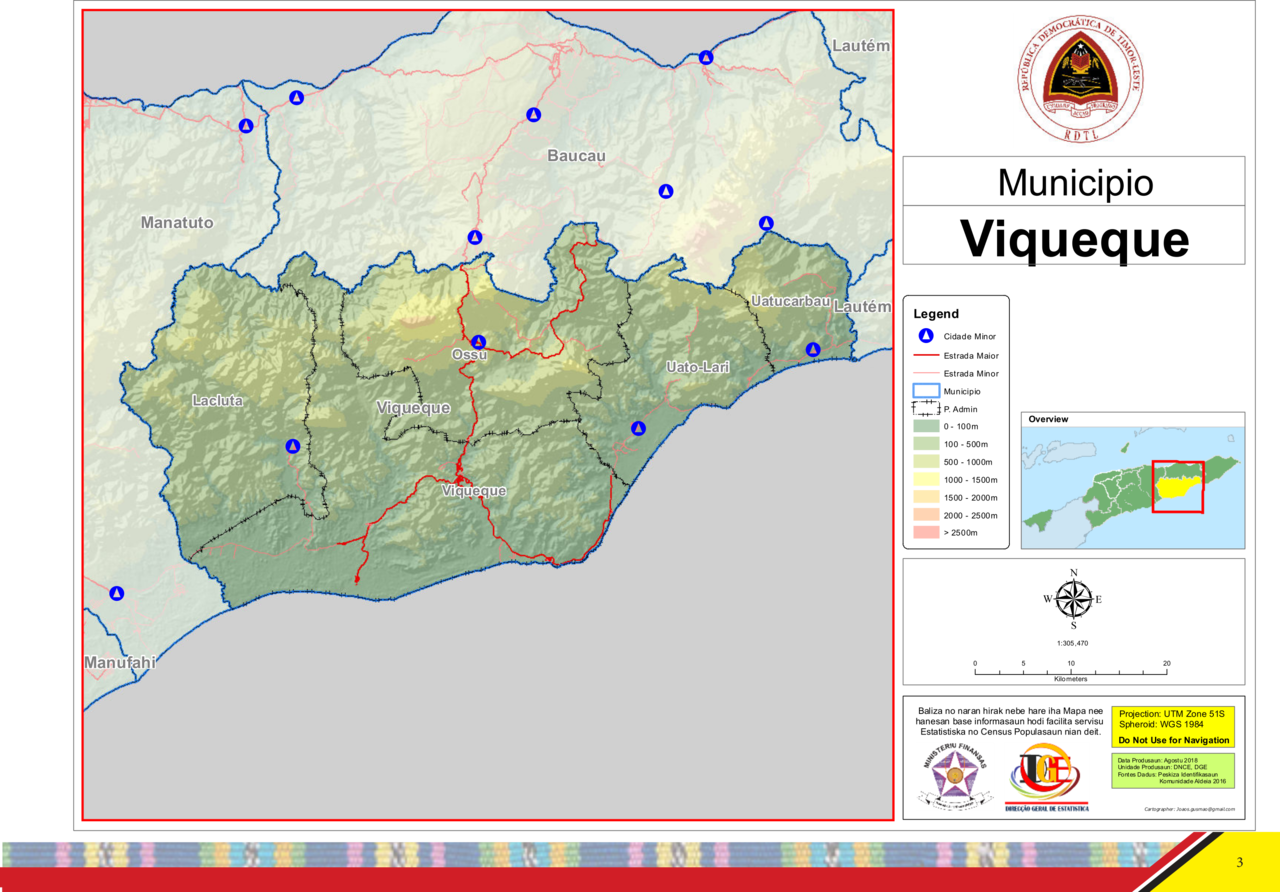
Viqueque is the largest municipality of Timor-Leste, centred on the town of Viqueque. It combines coastal plains and upland areas, with a history, culture, and economy tied to agriculture and local communities.
Overview
Viqueque is the largest municipality of Timor-Leste (East Timor) and takes its name from an older form, often rendered in Tetum as Vikeke. The traditional etymology links the name to local words meaning "water" and "bracelet," reflecting the region's rivers and cultural motifs. The municipal centre is the town of Viqueque, which serves as the main market, administrative and service hub for the surrounding communities.
Image gallery
10 Images




Geography and administration
The municipality spans a mix of coastal plain, river valleys and upland terrain. This variety supports both coastal fishing and inland farming. Administratively, Viqueque is divided into several administrative posts that group villages for local governance and services. These local divisions handle civil registration, primary education, and basic health outreach in dispersed rural settlements.
History and culture
Viqueque's landscape and communities have a deep history of settlement and local cultural practice. Tetum and other local languages are spoken alongside Portuguese and Indonesian influences from the twentieth century. Catholicism is widespread and interwoven with customary ceremonies and rites. The area also played a role in the broader struggle for Timorese independence and post‑1999 recovery, like many parts of the country.
Economy and infrastructure
The local economy is largely rural and based on subsistence and smallholder agriculture: staple crops, garden produce and some cash crops, plus fishing along the shore. Infrastructure varies; the municipal centre provides secondary services, while many villages rely on basic roads, water springs and community schools. Development efforts in Viqueque focus on improving market access, education and rural health services.
Uses, importance and notable facts
- Viqueque is important as a food-producing area and as a cultural heartland for eastern Timorese communities.
- Its name, often cited in local histories, evokes natural features and traditional objects, linking language to landscape.
- Visitors encounter a mix of coastal scenery and upland villages, with communal events and markets providing insights into local life.
For general context on Timor-Leste's municipalities and administrative structure, see country-level summaries such as those for East Timor. The municipality remains a focal point for rural development, cultural continuity and local governance within the young nation.
Questions and answers
Q: What is Viqueque?
A: Viqueque is the largest municipality in East Timor.
Q: What does the name "Vikeke" mean in Tetum?
A: The name "Vikeke" means "water bracelet" in Tetum.
Q: What is the ancient name of Viqueque?
A: The ancient name of Viqueque is "We Keke".
Q: What does "We" mean in the ancient name of Viqueque?
A: "We" means "water" in the ancient name of Viqueque.
Q: What is the meaning of "Keke" in the ancient name of Viqueque?
A: "Keke" means "bracelet" in the ancient name of Viqueque.
Q: How does the name Viqueque relate to water and bracelets?
A: The name Viqueque is derived from the ancient name "We Keke", where "We" means "water" and "Keke" means "bracelet", suggesting a connection to water and a decorative accessory.
Q: What is the significance of the name Viqueque?
A: The name Viqueque has historical and cultural significance as it reflects the ancient language and traditions of East Timor.
Related articles
Author
AlegsaOnline.com Viqueque Municipality Leandro Alegsa
URL: https://en.alegsaonline.com/art/105493
Sources
- dne.mof.gov.tl : "2010 Census Wall Chart (English)"
- statistics.gov.tl : Ergebnisse der Volkszählung von 2015
- suaimediaspace.org : "Koba Lima – Suai"
- birdlife.org : "A lost world in Timor- Leste. Mount Mundo Perdido. A profile of its biodiversity and conservation"
- dne.mof.gov.tl : "Timor-Leste in figures 2011"