
Vinson Massif — Highest Mountain in Antarctica
Vinson Massif is Antarctica's tallest massif, rising to 4,892 m in the Sentinel Range of the Ellsworth Mountains. Remote, glaciated and part of the Seven Summits, it is a major objective for polar mountaineers.
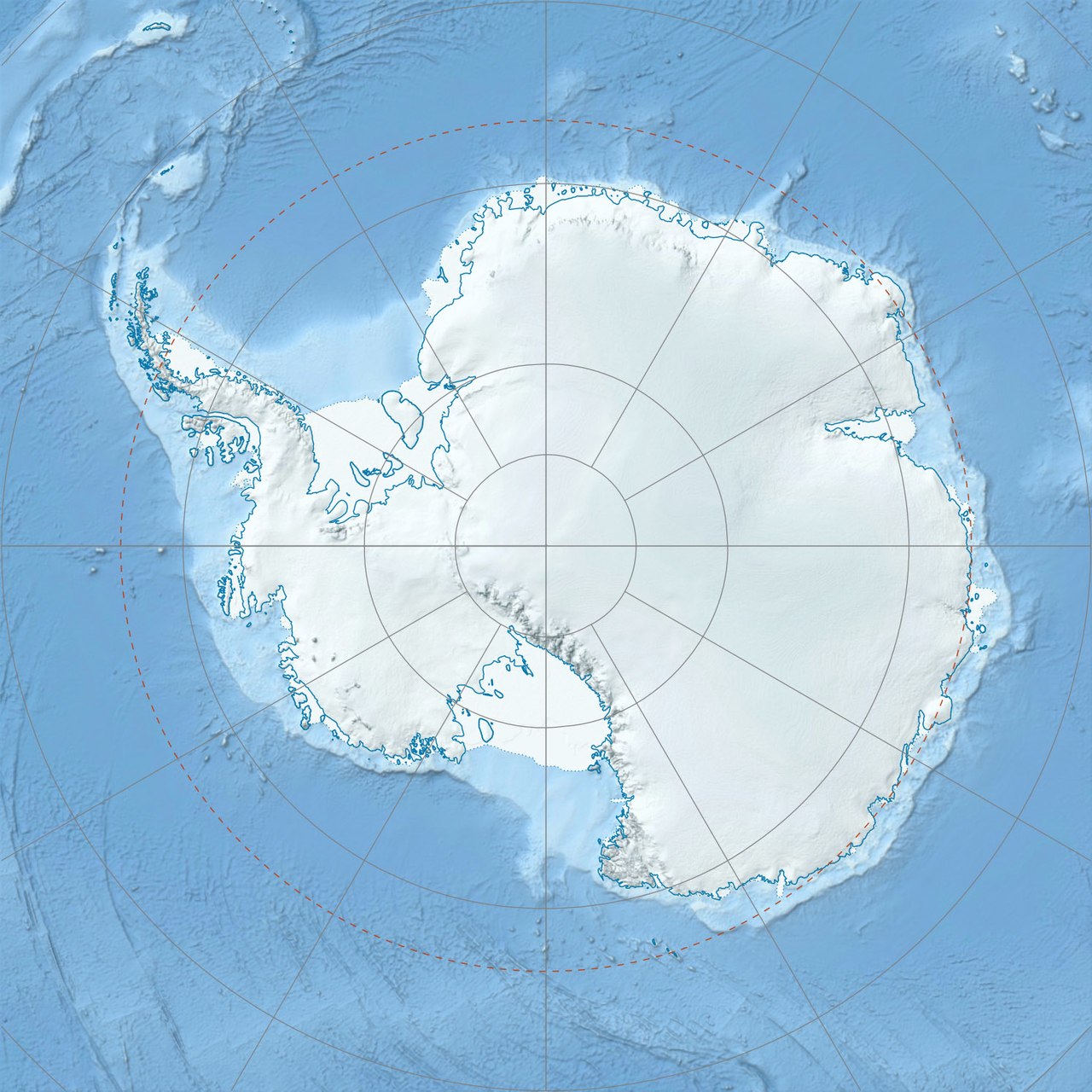
Vinson Massif is the highest mountain massif on the Antarctic continent. Located in the Sentinel Range of the Ellsworth Mountains, it reaches a maximum elevation of 4,892 metres (about 16,050 feet) at Mount Vinson. The massif lies roughly 1,200 kilometres from the geographic South Pole and occupies an area approximately 21 km long by 13 km wide. Because of its elevation and remoteness it is a distinctive feature of the Antarctic landscape and a principal target for climbers attempting the Seven Summits.
Image gallery
5 Images


Physical characteristics
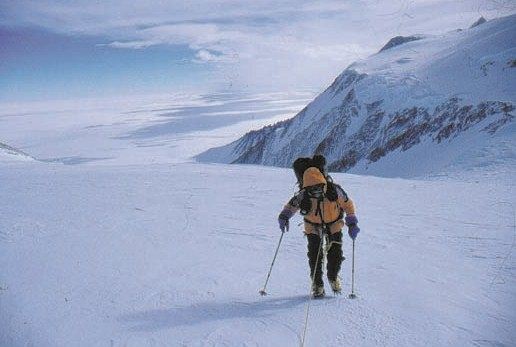
The massif is a compact, heavily glaciated block of peaks and ridges. Broad ice slopes and steep, wind-scoured ridgelines connect its summits. Glacial flow on and around Vinson drains into larger outlet glaciers that run between the ranges of the Ellsworth Mountains. Persistent katabatic winds and extreme cold result in hard-packed snow and exposed ice on many routes. Despite the high latitude, the massif is not perpetually shrouded in darkness: during the austral summer (roughly November to January) the region receives continuous daylight, while winter brings long nights and even colder conditions.
Climate and snow conditions
Annual precipitation at Vinson is very low compared with temperate mountains; most years see only a few tens of centimetres of snow equivalent. However, strong winds can transport and locally deposit significant snow drifts, so campsite accumulation can vary. Summer temperatures at base-camp elevations commonly average well below freezing—often in the range of about −30 °C during the warmest months—so climbers must plan for severe cold despite the season. Weather changes can be rapid and visibility may be reduced by blowing snow.
History and naming
The massif was first sighted in the late 1950s during aerial and ground reconnaissance of West Antarctica. The first documented ascent of Mount Vinson, the massif’s highest point, occurred in 1966 by an American expedition. The peak and massif are named for Carl Vinson, a long-serving member of the United States Congress, in recognition of his support for Antarctic exploration and research. For historical background and mapping resources see Antarctic mapping and regional guides such as Ellsworth Mountains.
Access and climbing
Access to Vinson Massif requires careful logistics. Most modern expeditions travel by ski-equipped aircraft to a blue-ice runway or to a field camp on the nearby glacier, then establish a base camp from which climbing parties make acclimatization climbs and summit pushes. Routes vary in technical difficulty; the most commonly used lines involve snow, ice and some crevasse navigation rather than sustained technical rock climbing. Climbers should be prepared for crevasse rescue, cold-weather camping and self-sufficiency over long distances.
- Elevation: 4,892 m (Mount Vinson)
- Range: Sentinel Range, Ellsworth Mountains
- Approximate distance to South Pole: 1,200 km
- First ascent: 1966 (American expedition)
- Typical access points: blue-ice runways and glacier camps
Significance and notable facts
Vinson Massif is notable both as the continent’s highest point and as one of the classic high-latitude mountaineering objectives. It is included in the widely known Seven Summits collection of highest peaks on each continent, which adds to its popularity among elite and commercial climbing teams. The massif’s combination of cold, isolation and logistical complexity makes any expedition a serious undertaking: climbers and support staff must account for limited rescue options, environmental protection rules, and seasonal windows for safe travel. Further reading and expedition planning resources are available from polar operators and national polar programs; see general references polar logistics, mountaineering resources and Antarctic safety.
For geographers, glaciologists and historians the massif remains important as a marker of continental topography and as a site for ongoing scientific observations. The interplay of extreme altitude, polar weather, and glacial processes around Vinson provides insights into ice dynamics at high latitudes. For more information on regional research and travel guidance consult research summaries and expedition operators listed at logistics directories.
Questions and answers
Q: What is Vinson Massif?
A: Vinson Massif is the highest mountain in Antarctica.
Q: Where is Vinson Massif located?
A: Vinson Massif is located in the Sentinel Range of the Ellsworth Mountains, about 1,200 kilometres (750 mi) from the South Pole.
Q: How big is Vinson Massif?
A: Vinson Massif is about 21 km (13 mi) long and 13 km (8.1 mi) wide.
Q: What is the highest point of Vinson Massif?
A: The highest point of Vinson Massif is Mount Vinson, which is 4,892 metres (16,050 ft) high.
Q: When was Vinson Massif named after Carl Vinson?
A: Vinson Massif was named after Carl Vinson in 2006.
Q: When was Vinson Massif first seen and climbed?
A: Vinson Massif was first seen in 1958 and climbed in 1966.
Q: What is the weather like on Vinson Massif during the summer season?
A: During the summer season, which is from November through January, there are 24 hours of sunlight and the average temperature is −30°C (−20°F).
Related articles
Author
AlegsaOnline.com Vinson Massif — Highest Mountain in Antarctica Leandro Alegsa
URL: https://en.alegsaonline.com/art/105440
Sources
- peakbagger.com : "Vinson Massif"
- peaklist.org : "Antarctica - Ultra Prominences"
- 7summits.com : "GPS waypoints for the Vinson Massif"
- geonames.usgs.gov : "Vinson Massif"
- geonames.usgs.gov : "Mount Vinson"
- commons.wikimedia.org : Vinson Massif
- wikidata.org : wikidata.org/wiki/Q163758
- d-nb.info : 4560008-9
- id.loc.gov : sh2004002189
- uli.nli.org.il : 000886192
- idref.fr : 183349989
- viaf.org : 49148570651724311357
- worldcat.org : 49148570651724311357