
Vienna Secession: the Austrian art movement founded in 1897
Austrian avant-garde group formed in 1897 that promoted modern art, design and architecture; known for its exhibition building, the magazine Ver Sacrum, and influence on Jugendstil and the Wiener Werkstätte.
Overview
The Vienna Secession was an association of Austrian artists who broke away from the conservative art establishment in Vienna in 1897. Its members sought freedom from academic restrictions, promoted contemporary art across many media, and organized independent exhibitions and publications. The group played a central role in the development of Central European Art Nouveau (Jugendstil) and in efforts to unify fine and applied arts into coherent environments.
Image gallery
10 Images


Founding, goals and organization
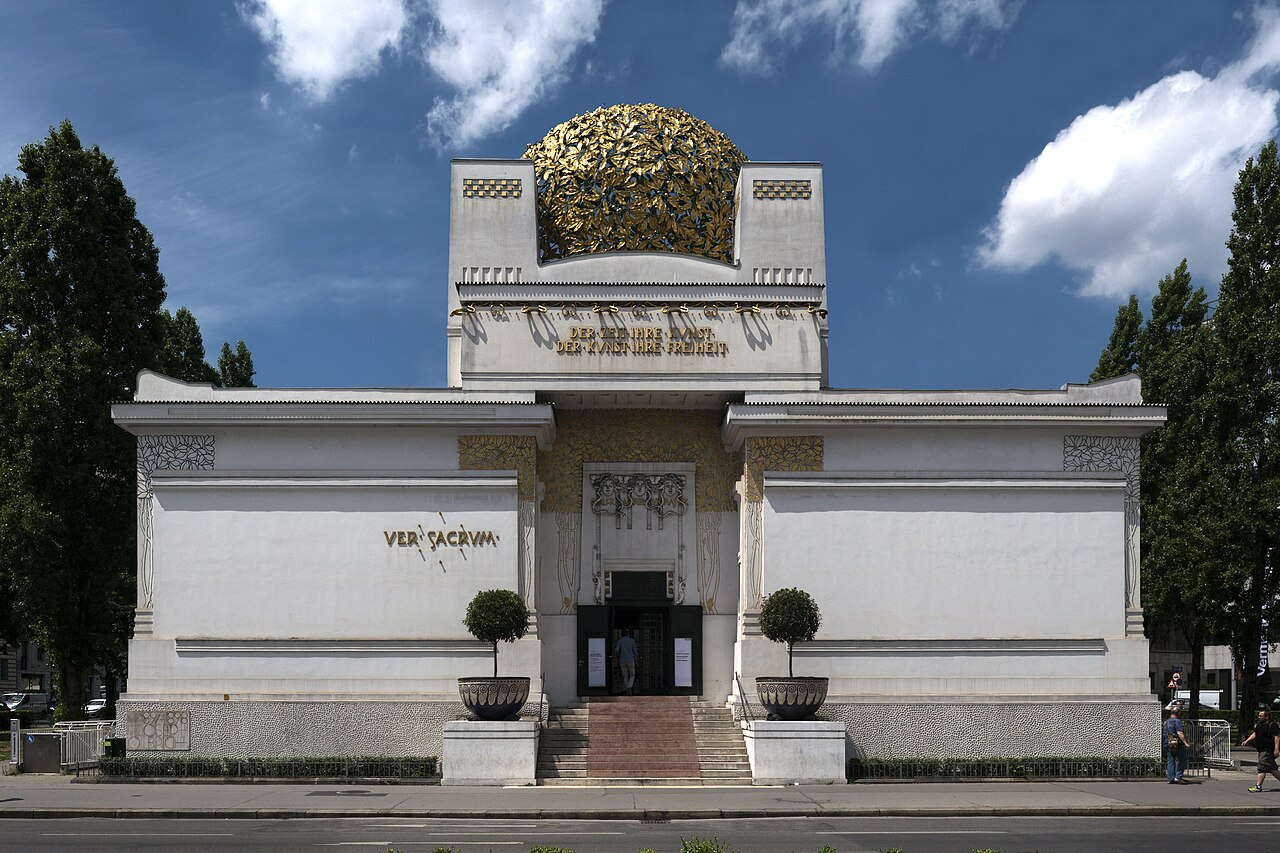
The Secession was formally established on 3 April 1897 by a cohort of painters, architects and designers who resigned from the older Association of Austrian Artists, based in the Vienna Künstlerhaus. The first president was Gustav Klimt, and the painter Rudolf von Alt accepted an honorary presidency. The group's often-quoted motto summarized its intent: "To every age its art, to art its freedom." Members emphasized exhibition autonomy, editorial control of publications, and collaboration among disciplines.
Key figures and membership
Prominent founders included Gustav Klimt, Koloman Moser, Josef Hoffmann, Joseph Maria Olbrich and Max Kurzweil. The architect Otto Wagner, though not a founder, was an influential figure and is widely associated with Secession ideas. The organization included painters, sculptors and architects who worked both in fine art and in applied or decorative arts, seeking new forms adapted to modern life; this multi‑disciplinary composition is reflected in contemporary descriptions of the movement as composed of painters, sculptors and architects.
Activities, exhibitions and publications
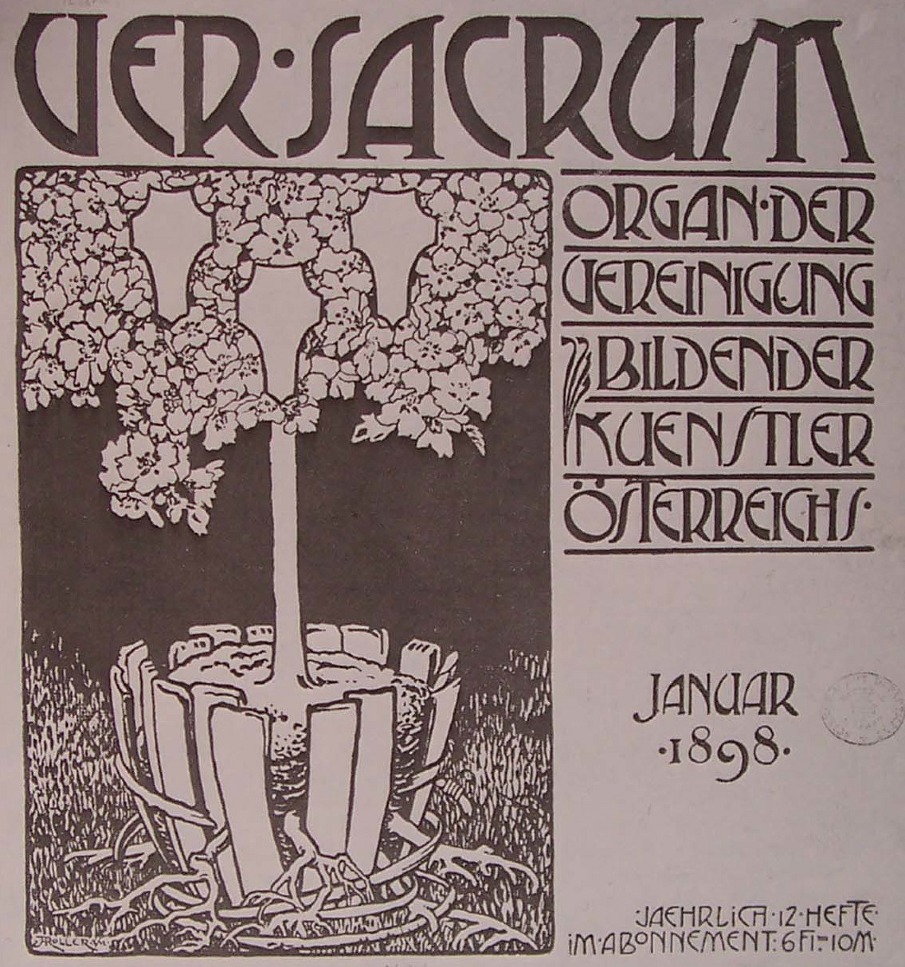
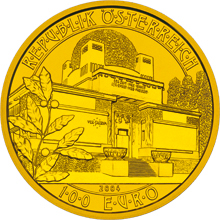
From its earliest years the Secession presented regular exhibitions that showcased international and avant‑garde work alongside the members' own projects. In 1898 the group erected a dedicated exhibition pavilion near Karlsplatz, designed by Joseph Maria Olbrich; the building itself became known simply as "the Secession" and remains an emblem of the movement's ideals. The association also produced the magazine Ver Sacrum, which combined visual experimentation with essays and typographic innovations and helped disseminate Secession aesthetics.
Related enterprises and the split of 1905
Members of the Secession were instrumental in establishing craft and design cooperatives that put its principles into practice. In 1903 Josef Hoffmann and Koloman Moser founded the Wiener Werkstätte, an enterprise aimed at integrating art and everyday objects through high-quality design and production. Internal disagreements about direction and stylistic priorities led to departures: notably, Gustav Klimt and several others left the group in 1905 after disputes about the Secession's exhibitions and policies.
Style, influence and legacy
Although sometimes grouped with broader Art Nouveau movements, the Vienna Secession articulated a distinct blend of linear ornament, geometric abstraction and decorative richness. Its members promoted the idea of the Gesamtkunstwerk or total work of art—an integrated design approach spanning architecture, furniture, textiles and graphic art. The Secession's exhibitions, building, and publications influenced Viennese modernism, design education, and later 20th‑century architecture and applied arts. For further context on personalities and architectural connections see anchors for Otto Wagner and other contributors: Otto Wagner.
Notable dates and resources
- 3 April 1897 — formal founding of the Vienna Secession
- 1898 — opening of the Secession exhibition building near Karlsplatz
- 1903 — start of the Wiener Werkstätte by Hoffmann and Moser
- 1905 — Klimt and others leave the group
These milestones mark the Secession's rapid emergence as a formative element of early modernism in Austria and its continuing role as a reference for studies of turn‑of‑the‑century art and design. For introductions to individual artists and archival material consult specialist publications and museum resources linked by institutional references such as Gustav Klimt and historical surveys of the Künstlerhaus.
Questions and answers
Q: When was the Vienna Secession formed and why did it form?
A: The Vienna Secession was formed in 1897 by a group of Austrian artists who left the Association of Austrian Artists, housed in the Vienna Künstlerhaus due to its conservatism.
Q: Who were some of the founding members of the Vienna Secession?
A: Some of the founding members of the Vienna Secession were Gustav Klimt, Koloman Moser, Josef Hoffmann, Joseph Maria Olbrich, and Max Kurzweil.
Q: Who was the first president of the Secession?
A: The first president of the Secession was Gustav Klimt.
Q: Who was made honorary president of the Secession?
A: Rudolf von Alt was made honorary president of the Secession.
Q: What was the Vienna Secession's exhibition house and who designed it?
A: The Vienna Secession's exhibition house was built near Karlsplatz and was designed by Joseph Maria Olbrich.
Q: What was the Wiener Werkstätten and who founded it?
A: The Wiener Werkstätten was a union of artists who wanted to reform the applied arts (arts and crafts) and it was founded by Josef Hoffmann and Koloman Moser in 1903.
Q: Why did Gustav Klimt and other artists leave the Vienna Secession?
A: Gustav Klimt and other artists left the Vienna Secession in 1905 due to different opinions about art.
Related articles
Author
AlegsaOnline.com Vienna Secession: the Austrian art movement founded in 1897 Leandro Alegsa
URL: https://en.alegsaonline.com/art/105068