
Bengal tiger (Panthera tigris tigris)
Large tiger subspecies native to the Indian subcontinent, known for its orange coat and black stripes; inhabits forests and mangroves and faces threats from habitat loss and poaching.
Overview
The Bengal tiger is one of the best-known tiger forms and is classified as a subspecies of Panthera tigris native to the Indian subcontinent. It occurs across multiple countries in South Asia and occupies a variety of forest and wetland habitats. The animal is a top predator in its ecosystems and has strong cultural and ecological significance in the region.
Image gallery
10 Images



Range and habitat
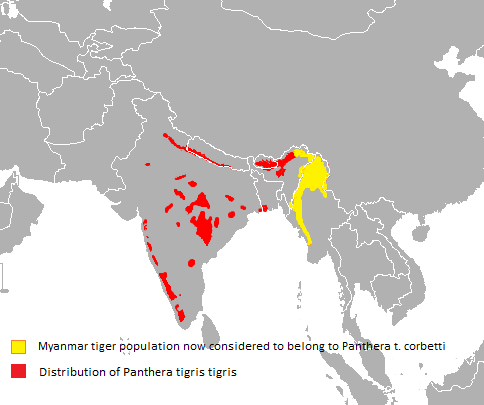
Bengal tigers are found in several countries, including Bhutan, Nepal, Bangladesh and parts of northern India. Their habitats range from lowland mangrove forests to upland temperate woodlands. Typical habitat types include tropical moist evergreen forests (wet evergreen), tropical and subtropical moist deciduous woodlands (moist deciduous) and alluvial grasslands (alluvial) that provide prey and cover.
Physical characteristics
Bengal tigers are large, powerful felids with a coat that varies from pale yellow to deep orange, marked by dark vertical stripes that are unique to each individual. Males are generally larger than females and may weigh substantially more, showing pronounced sexual dimorphism. They are obligate carnivores and rely on stealth, strength and acute senses to hunt ungulates such as deer and wild boar.
Ecology and behaviour
As solitary ambush predators, Bengal tigers maintain territories that they mark and defend. They are primarily crepuscular or nocturnal where human disturbance is high. Tigers play a key role in regulating herbivore populations and maintaining healthy forest dynamics. Reproduction, parental care and cub survival are influenced by prey availability and habitat quality.
Conservation and threats
The Bengal tiger faces threats from habitat loss, fragmentation, poaching for illegal trade, and conflict with humans as landscapes change. Conservation efforts focus on protected reserves, anti-poaching patrols, community engagement and landscape-level planning that connects habitats. National and international programs aim to monitor populations and reduce threats through law enforcement, habitat restoration and awareness campaigns.
Cultural importance and notable facts
- The Bengal tiger is a national symbol in some countries and appears in art, folklore and national emblems.
- Populations persist in a variety of protected areas, including mangrove reserves where tigers have adapted to tidal environments.
- Long-term survival depends on securing large, connected habitats, reducing illegal trade, and balancing human needs with wildlife conservation.
For further reading on taxonomy, range and conservation measures, follow resources linked above and consult regional wildlife authorities and conservation organizations for the most current information.
Questions and answers
Q: What is the Bengal tiger?
A: The Bengal tiger is a subspecies of tiger that is native to the Indian subcontinent.
Q: In which countries can the Bengal tiger be found?
A: The Bengal tiger can be found in Bhutan, Nepal, Bangladesh, and northern India.
Q: What is the natural habitat of the Bengal tiger?
A: The Bengal tiger's habitat includes tropical moist evergreen forests, tropical dry forests, tropical and subtropical moist deciduous forests, mangroves, subtropical and temperate upland forests, and alluvial grasslands.
Q: Is the Bengal tiger endangered?
A: Yes, the Bengal tiger is an endangered species.
Q: What is the national animal of Bangladesh?
A: The national animal of Bangladesh is the Bengal tiger.
Q: How many subspecies of tigers are there?
A: There are currently six subspecies of tigers, including the Bengal tiger.
Q: What is the scientific name of the Bengal tiger?
A: The scientific name of the Bengal tiger is Panthera tigris tigris.
Related articles
Author
AlegsaOnline.com Bengal tiger (Panthera tigris tigris) Leandro Alegsa
URL: https://en.alegsaonline.com/art/10499
Sources
- species.wikimedia.org : Panthera tigris tigris
- commons.wikimedia.org : Panthera tigris tigris
- iucnredlist.org : "Panthera tigris tigris"
- globaltigerinitiative.org : Global Tiger Recovery Program 2010–2022
- economictimes.indiatimes.com : Nepal has 155 adult tigers, 5% of world population
- corbett-national-park.com : With Increase in Tiger Population in India, Tourists Thronging Tiger Reserves in Huge Numbers
- science.smith.edu : Panthera tigris
- fishowls.com : Chapter 6. Who‘s king of the beasts? Historical and recent body weights of wild and captive Amur tigers, with comparisons to other subspecies