
Victoria and Albert Museum: History, collections, and significance
Comprehensive overview of the Victoria and Albert Museum (V&A) in London: its history, major collections, architecture, renovations, and cultural importance with links to related topics.
Overview
The Victoria and Albert Museum (commonly the V&A) in London is a national museum devoted to applied arts, decorative arts and design. Founded in the mid-19th century and named for Queen Victoria and Prince Albert, the V&A holds a vast multi-disciplinary collection numbering in the millions and is widely regarded as one of the world’s leading museums of design and material culture. The museum’s scope ranges from ancient objects to contemporary design, and it presents objects from many regions and historical periods for public display, research and education.
Image gallery
2 Images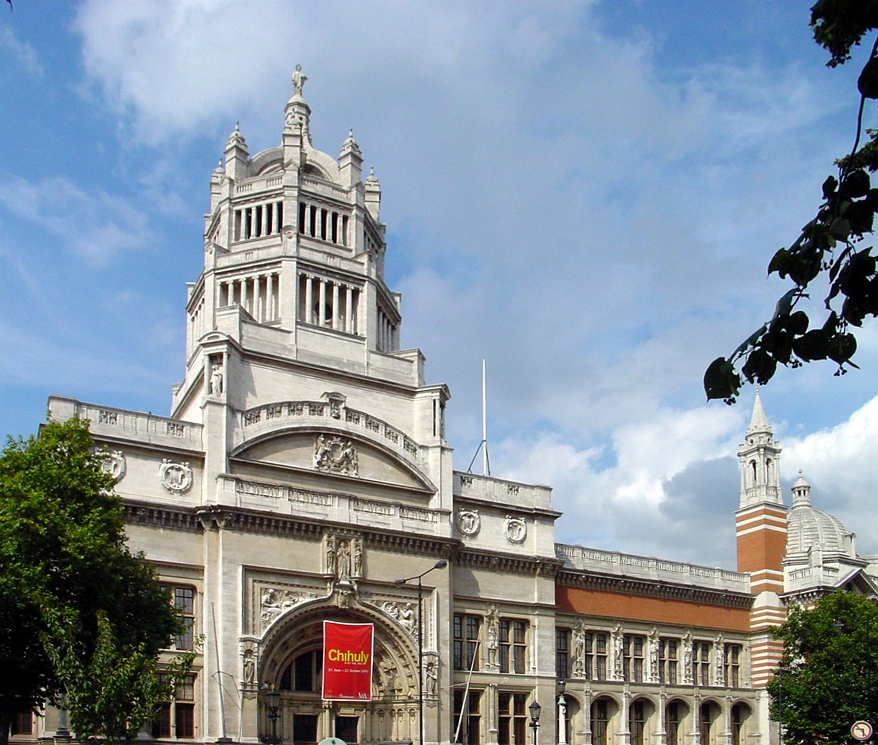
Collections and departments
The V&A’s holdings cover an extensive variety of materials and specialisms. Visitors encounter ceramics and glass alongside textiles and costume, jewellery, metalwork and furniture, as well as drawings, prints and photographs. Departments are organized to support conservation, scholarship and display of these media, and many galleries are devoted to specific material types or regions. Highlights include a preeminent collection of post-classical sculpture and one of the finest assemblies of Italian Renaissance work outside Italy.
- Ceramics and glass: fine European and Asian ceramics and historic glass collections provide examples of techniques and styles across centuries. See collections on glass and metalwork.
- Textiles and dress: historic garments and textiles illustrate changing fashion, technology and production; many items are presented within the study of textiles and costume.
- Silver, jewellery and metalwork: examples range from small personal pieces to architectural metalwork, including jewellery and ironwork.
- Furniture and interiors: cabinets, seating and architectural fittings chart domestic and public taste over centuries; see furniture collections.
- Prints, drawings and photographs: rich graphic holdings support studies in design and image-making; consult prints, printmaking and drawings.
Geographic and cultural strengths
The museum gathers objects from Europe and the wider world. Its European holdings document developments in art and craftsmanship, while substantial collections represent North America, Asia and North Africa. The V&A is particularly noted for its departments covering South Asian, Chinese, Japanese and Korean art and design, as well as material from the Islamic world. Visitors can view strong East Asian ceramics and metalwork, major South Asian objects and an important Islamic collection that ranks with those in other leading museums.
Explore regional collections through these thematic entries: Europe, North America, Asia, North Africa, South Asia, China, Japan, Korea, and the Islamic world. The museum also highlights its East Asian strengths in ceramics and metalwork.
History, site and architecture
The V&A traces its origins to Britain’s 19th-century initiatives to improve industrial design and public education following the Great Exhibition. Established formally in 1852 and later renamed to honour Queen Victoria and Prince Albert, the museum developed on the South Kensington site that became known as "Albertopolis"—a district of cultural and scientific institutions. The V&A’s buildings grew over decades into a large complex of galleries and courts, situated near the Natural History Museum and the Science Museum.
Nearby cultural institutions include the Natural History Museum and the Science Museum, and the site lies within a cluster that historically included museums, colleges and memorials of the Victorian era.
Renovation, access and public role
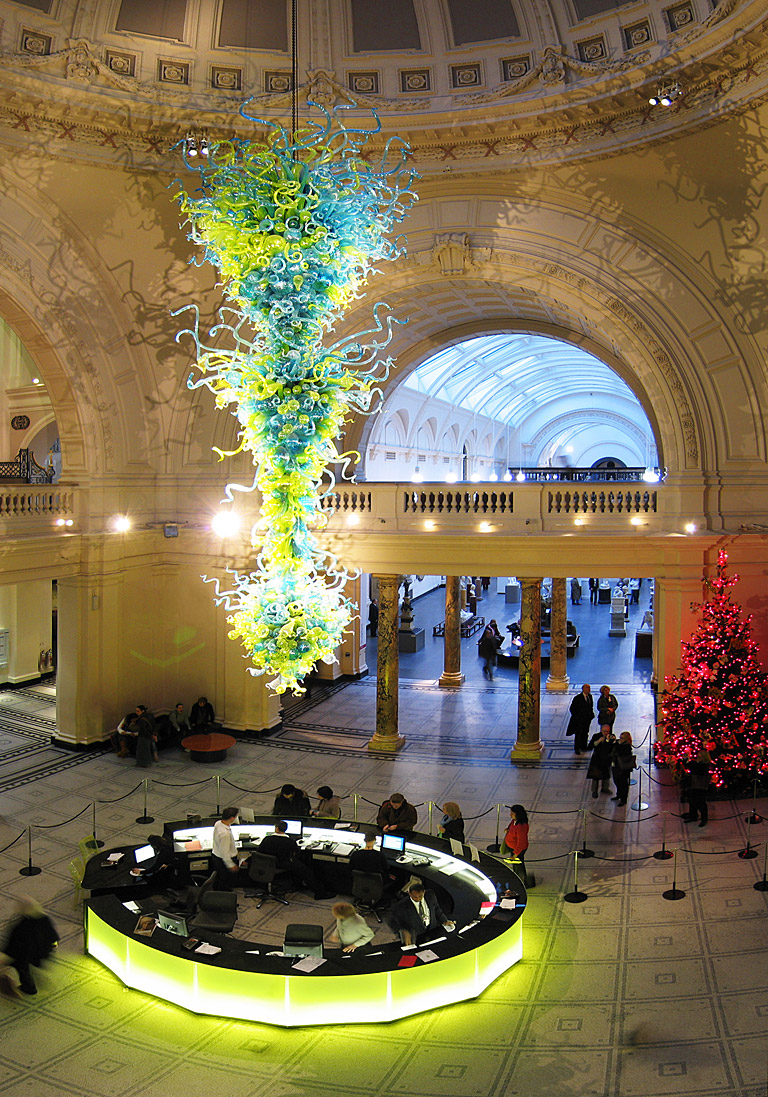
In the 21st century the V&A undertook substantial refurbishment and gallery renewal to improve display, conservation and visitor facilities. Investment has refreshed permanent galleries, introduced new temporary exhibitions and enhanced public spaces, gardens and shops. Like other national museums in the United Kingdom, the V&A offers free general admission while charging for some temporary exhibitions and special events. The institution also supports scholarship, loans, touring exhibitions and digital access to collections.
For formal administration and sponsorship details see references to government and museum policy: museum homepage and topics such as applied art and decorative arts and design. The museum’s organizational history and its role in public education remain subjects of continuing study.
Notable facts and comparisons
The V&A is home to one of the world’s largest collections of post-classical sculpture and holds exceptionally strong Renaissance works, often cited as the most extensive Italian Renaissance holdings outside Italy. The museum’s Islamic art collection is frequently compared with major international holdings such as those of the Musée du Louvre and the Metropolitan Museum of Art in New York, while its East Asian holdings are regarded among Europe’s best. These distinctions reflect the museum’s long-term collecting, international loans and scholarly collaborations.
Further resources
For thematic research, exhibition information and departmental entries, consult linked resources on glass, ceramics, metalwork and regional collections: sculpture, Italian Renaissance and the museum’s coverage of the Italian holdings outside Italy. Additional topical pages include conservation, learning programmes and outreach that connect the V&A with national cultural policy.
Useful entry points: costume, medieval, prints, printmaking, drawings, and the museum’s many online catalogues and educational pages available via institutional portals and partner sites.
Readers wishing to explore the V&A in person or online will find curated displays, research resources and programming that reflect the museum’s mission to preserve and present design and material culture for both specialist and general audiences.
Questions and answers
Q: What is the Victoria and Albert Museum?
A: The Victoria and Albert Museum (often abbreviated as the V&A) in London is the world's largest museum of applied art, featuring decorative arts and design.
Q: When was it founded?
A: The V&A was founded in 1852.
Q: How many objects does it have in its permanent collection?
A: The V&A has a permanent collection of over 4.5 million objects.
Q: How big is the museum?
A: The museum covers 12.5 acres (5 hectares) and 145 galleries.
Q: What type of art does it feature?
A: Its collection spans 5000 years of art, from ancient times to the present day, in virtually every medium, from the cultures of Europe, North America, Asia and North Africa.
Q: Who sponsors the museum?
A: The museum is sponsored by the Department for Culture, Media and Sport.
Q: What are some highlights of its collections? A: The holdings of ceramics, glass, textiles, costumes, silver, ironwork, jewellery furniture medieval objects sculpture prints and printmaking drawings and photographs are among the largest and most comprehensive in the world. It also possesses one of the largest collections outside Italy for Italian Renaissance items as well as one of three major Islamic collections with Musée du Louvre and Metropolitan Museum of Art New York being two others.
Related articles
Author
AlegsaOnline.com Victoria and Albert Museum: History, collections, and significance Leandro Alegsa
URL: https://en.alegsaonline.com/art/104979
Sources
- vam.ac.uk : Future Plan
- inexhibit.com : "Victoria and Albert Museum - London"
- news.bbc.co.uk : BBC News | ARTS | V&A to have £150m facelift