
Vicenza — city of Palladio and Renaissance architecture in Veneto
Vicenza, in northeastern Italy, is a provincial capital famed for Andrea Palladio's architecture, the Teatro Olimpico and nearby Palladian villas; it combines cultural heritage, industry and active civic life.
Vicenza is an Italian municipality located in the Veneto region of Northeast Italy. It serves as the provincial capital of the province of Vicenza and sits roughly sixty kilometres west of Venice and about two hundred kilometres east of Milan. The city retains a compact historic core of piazzas, churches and palaces that coexist with modern industry and lively cultural institutions, giving it a reputation as a cosmopolitan urban centre.
Image gallery
10 Images


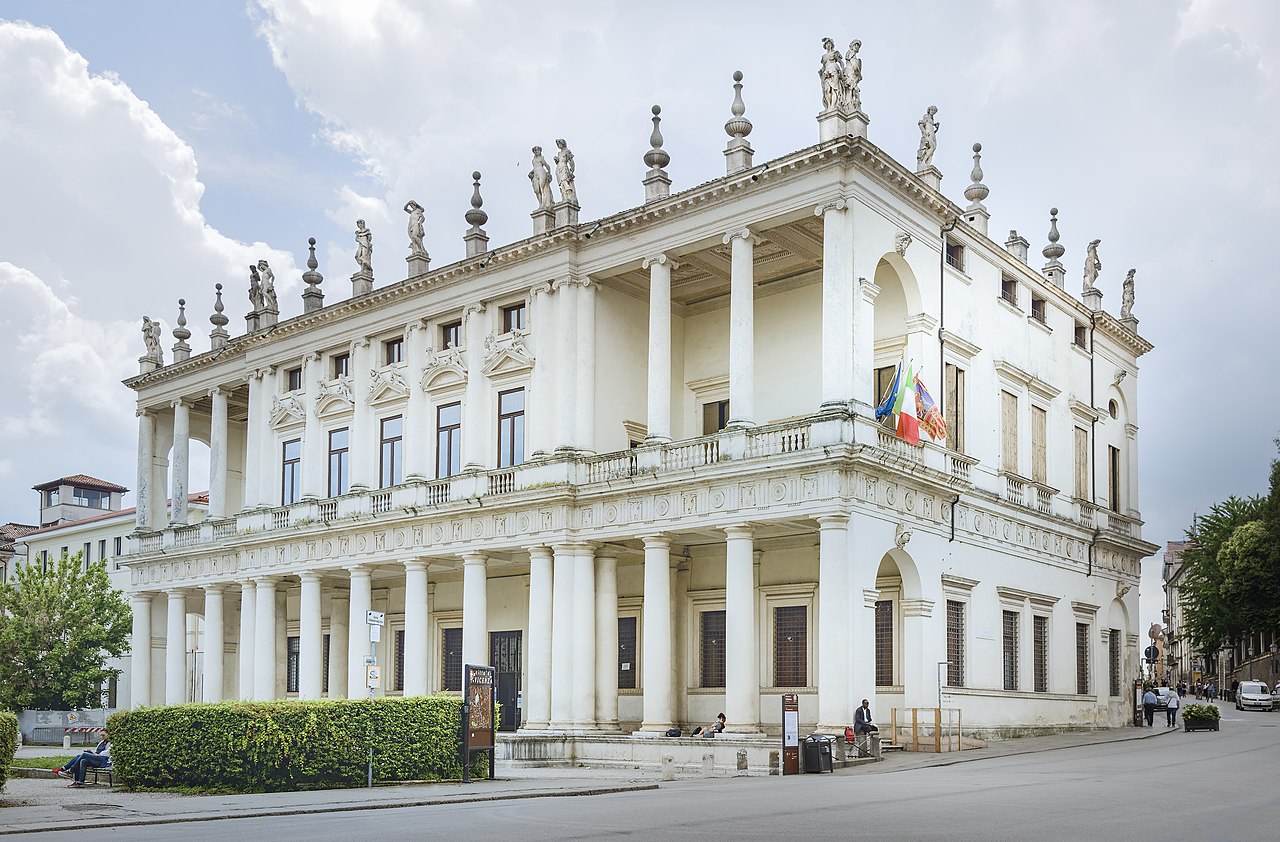
Architectural character and principal sites
Vicenza's built fabric is most closely associated with its architectural legacy. Its public squares and civic buildings display layers of styles from medieval and Renaissance periods to later additions. The city contains many museums, notable piazzas such as Piazza dei Signori, a scattering of historic villas in the surrounding countryside and numerous churches and palazzi that shape its streetscapes.
Central among Vicenza's landmarks is the Teatro Olimpico, an indoor theatre famed for its permanent trompe-l'oeil stage set that evokes a classical street scene. The architect most closely identified with the city is Andrea Palladio, an influential architect whose designs for civic buildings and country villas around Vicenza have defined an international model of classical proportion and harmony. Many of the villas and urban buildings attributed to Palladio or his followers remain well preserved.
World Heritage recognition and conservation
Because of its concentration of Palladian architecture and the quality of its preserved historic centre, Vicenza and the nearby villas have been designated a UNESCO World Heritage site. This recognition highlights both the local importance of Palladio's work and the global influence that his ideas exerted over subsequent centuries. Conservation and adaptive reuse efforts in the city attempt to balance living urban functions with protection of architectural heritage.
History, economy and cultural life
Vicenza's origins stretch back to antiquity and it developed through medieval communes and later under Venetian influence. Over time the city became prosperous through trade and craft specializations. Today its economy combines light manufacturing, specialized artisanship—particularly a long-standing jewellery and goldsmithing sector—and a service base that supports cultural tourism and trade fairs. A calendar of exhibitions, concerts and museum programs contributes to active civic life and attracts both regional visitors and international scholars.
Visiting and notable facts
- Key sights include the Basilica Palladiana, Teatro Olimpico and numerous Palladian villas in the surrounding plain and hills.
- The city offers museums and galleries that interpret its history and culture, alongside contemporary arts programs.
- Vicenza's social spaces—squares, cafés and markets—remain central to daily life and to the city’s identity as an urban meeting place.
For visitors and students of architecture, Vicenza provides a concentrated example of how classical ideas were reinterpreted in the Renaissance and then disseminated worldwide. Its mixture of historic conservation, ongoing urban life and specialized industries illustrates the layered roles a mid-sized European city can play: guardian of art and history, home to craftsmen and entrepreneurs, and a living community shaped by centuries of change.
municipality • Veneto • region • Northeast Italy • provincial capital • province of Vicenza • Venice • Milan • cosmopolitan • history • culture • museums • piazzas • villas • churches • Renaissance • palazzi • UNESCO • World Heritage • Andrea Palladio • architect
Questions and answers
Q: Where is Vicenza located?
A: Vicenza is located in the Veneto region, in Northeast Italy.
Q: What is the capital of the province that Vicenza is in?
A: Vicenza is the capital of the province of the same name.
Q: How far is Vicenza from Venice and Milan?
A: Vicenza is about 60 km (37 mi) west of Venice and 200 km (120 mi) east of Milan.
Q: What kind of city is Vicenza?
A: Vicenza is a cosmopolitan city with a rich history and culture, and many museums, art galleries, piazzas, villas, churches, and elegant Renaissance palazzi.
Q: Why is Vicenza famous?
A: The city of Vicenza is famous for its "Palladian Villas of the Veneto" in the surrounding area, its renowned Teatro Olimpico, and its association with Andrea Palladio, an architect who designed and built several important buildings in Vicenza and other cities.
Q: When was Vicenza listed as an UNESCO World Heritage Site?
A: Vicenza was listed as an UNESCO World Heritage Site since 1994.
Q: What is Vicenza also known as?
A: Vicenza is also known as the "City of Palladio" after Andrea Palladio, the architect who played a significant role in designing and building important structures in Vicenza and other cities.
Related articles
Author
AlegsaOnline.com Vicenza — city of Palladio and Renaissance architecture in Veneto Leandro Alegsa
URL: https://en.alegsaonline.com/art/104914
Sources
- istat.it : "Superficie di Comuni Province e Regioni italiane al 9 ottobre 2011"
- demo.istat.it : "Popolazione Residente al 1° Gennaio 2018"
- demo.istat.it : "Statistiche demografiche ISTAT"
- tuttitalia.it : "Comune di Vicenza"
- tuttitalia.it : "Comuni limitrofi a Vicenza"
- weatherbase.com : "Vicenza, Italy - Köppen Climate Classification"
- weatherbase.com : Vicenza, Italy Travel Weather Averages (Weatherbase)