
Vice‑President of the Executive Council (Irish Free State)
Deputy head of government in the Irish Free State (1922–1937) who stood in for the President of the Executive Council and simultaneously led a government department.
Overview
The Vice‑President of the Executive Council was the deputy head of the government of the Irish Free State from its establishment in 1922 until the adoption of a new constitution in 1937. The office existed within the small cabinet known as the Executive Council and was charged principally with acting in place of the President of the Executive Council when that officeholder was absent or unable to perform the duties of office.
Image gallery
4 Images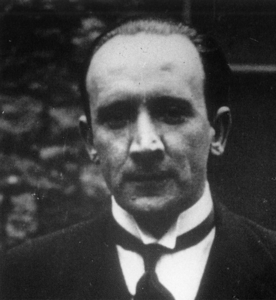


Role and functions
Constitutional provisions required the Vice‑President to act for the President during temporary absences or until a new President could be chosen. Because the Free State's cabinet was deliberately compact, the Vice‑President invariably also held a ministerial portfolio and carried ordinary departmental responsibilities alongside the deputy role. Typical duties included chairing cabinet meetings in the President's absence, representing the government on selected occasions, and ensuring continuity of executive action.
Structure and appointment
The Vice‑President was chosen from among the members of the Executive Council and was an integral part of the cabinet rather than a separate or purely ceremonial office. In practice the Vice‑President combined two functions: membership of the collective cabinet and leadership of a specific government department. This dual role reflected the concentrated nature of executive power in the Free State and the need for flexible allocation of responsibilities within a small ministry.
History and development
The office was a feature introduced under the constitutional architecture of the Irish Free State. It differed from earlier revolutionary administrations: neither the ministry proclaimed by the Irish Republic nor the Provisional Government that preceded the Free State had established a formal deputy head of government. The vice‑presidential post thus represented a practical innovation aimed at stabilizing government operations within the new parliamentary and constitutional framework.
Typical responsibilities
- Act as head of government when the President was absent or incapacitated.
- Carry out full ministerial duties for a specific department while serving as deputy.
- Support the President in coordinating cabinet business and policy implementation.
Legacy and replacement
The office ceased to exist when the Free State constitution was replaced in 1937 by Bunreacht na hÉireann. Its functions were succeeded by the office of Tánaiste, the modern deputy prime ministerial post in Ireland. The vice‑presidential model of the Free State is notable for how it combined continuity and practicality: by pairing the deputy role with an active ministerial brief, it ensured that the person second in command remained fully engaged in government work rather than occupying a purely standby position.
Notable aspects
Because of its short lifespan and the small size of the Executive Council, the Vice‑President's influence depended heavily on the person and the additional departmental responsibilities they carried. The office played a brief but formative part in the evolving shape of Ireland's executive institutions during the interwar years and provided a direct institutional antecedent to the contemporary Tánaiste.
Questions and answers
Q: What is the Executive Council of the Irish Free State?
A: The Executive Council of the Irish Free State is the cabinet of the Irish Free State.
Q: Who was the head of the Executive Council?
A: The President of the Executive Council was the head of the Executive Council.
Q: What was the role of the Vice President of the Executive Council?
A: The Vice President of the Executive Council acted for the President of the Executive Council while he was absent, or until a new President was elected.
Q: How many members did the Executive Council have?
A: The Executive Council only had five, six or seven members.
Q: Was the Vice President also a minister in charge of a department?
A: Yes, the Vice President was also a minister in charge of a department.
Q: Was the office of Vice-President a new idea in the Irish government?
A: Yes, the office of Vice-President of the Executive Council was a new idea of the Irish Free State.
Q: Who replaced the Vice President of the Executive Council in 1937?
A: The Vice President was replaced by the Tánaiste when the Constitution of the Irish Free State was replaced by Bunreacht na hÉireann in 1937.
Related articles
Author
AlegsaOnline.com Vice‑President of the Executive Council (Irish Free State) Leandro Alegsa
URL: https://en.alegsaonline.com/art/104895
Sources
- irishstatutebook.ie : "Constitution of The Irish Free State (Saorstát Eireann), Article 53"