
Vibraphone
A pitched percussion instrument with tuned metal bars and motor-driven resonators producing vibrato; common in jazz and modern classical music, played with mallets and a sustain pedal.
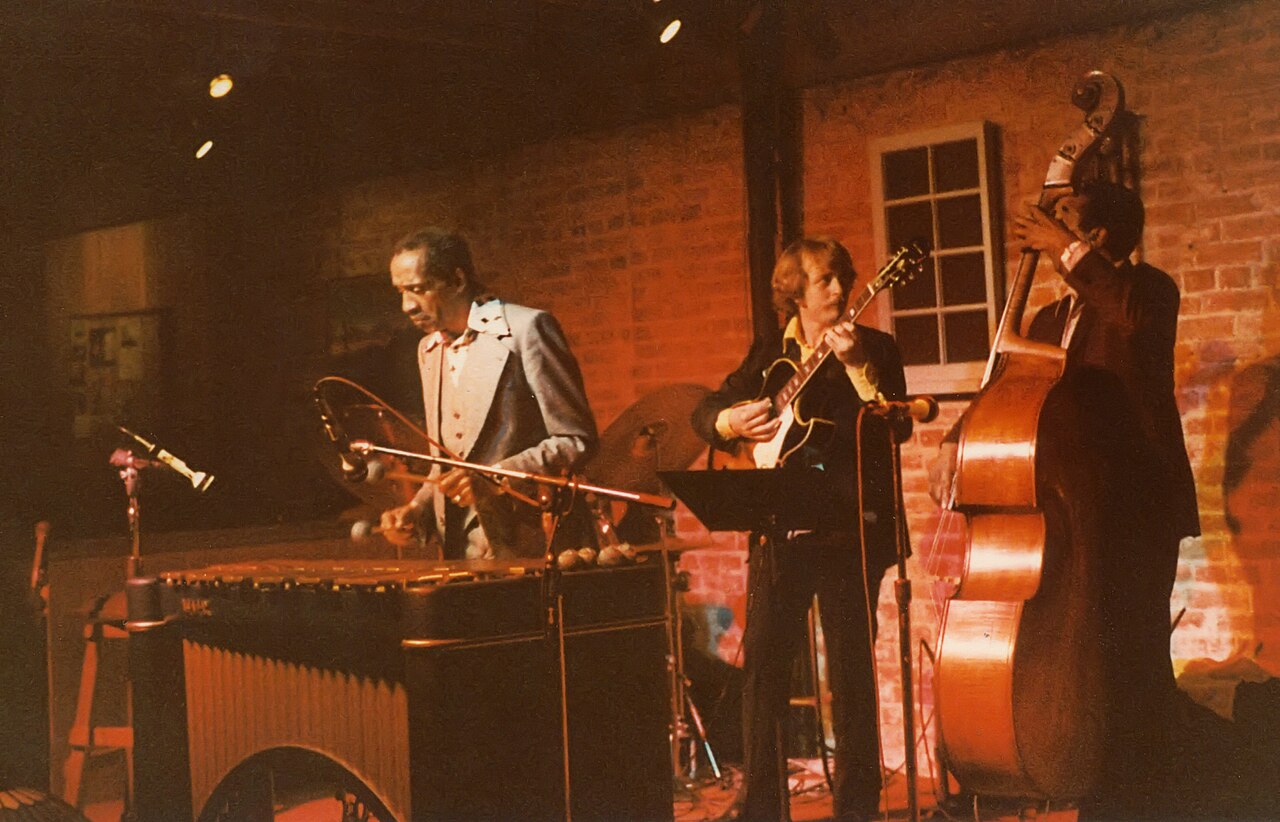
The vibraphone is a mallet percussion instrument whose tuned metal bars are arranged like the keys of a piano. Struck with mallets, its sound is amplified and colored by a set of resonator tubes beneath the bars, and by a motor-driven mechanism that creates the instrument's signature vibrato or tremolo effect. In common usage it is often shortened to "vibes." Its combination of sustained tone, mellow metallic timbre, and the ability to produce vibrato has made it a distinctive voice both in jazz combos and in twentieth-century orchestral and chamber repertoire.
Image gallery
10 Images




Construction and mechanism
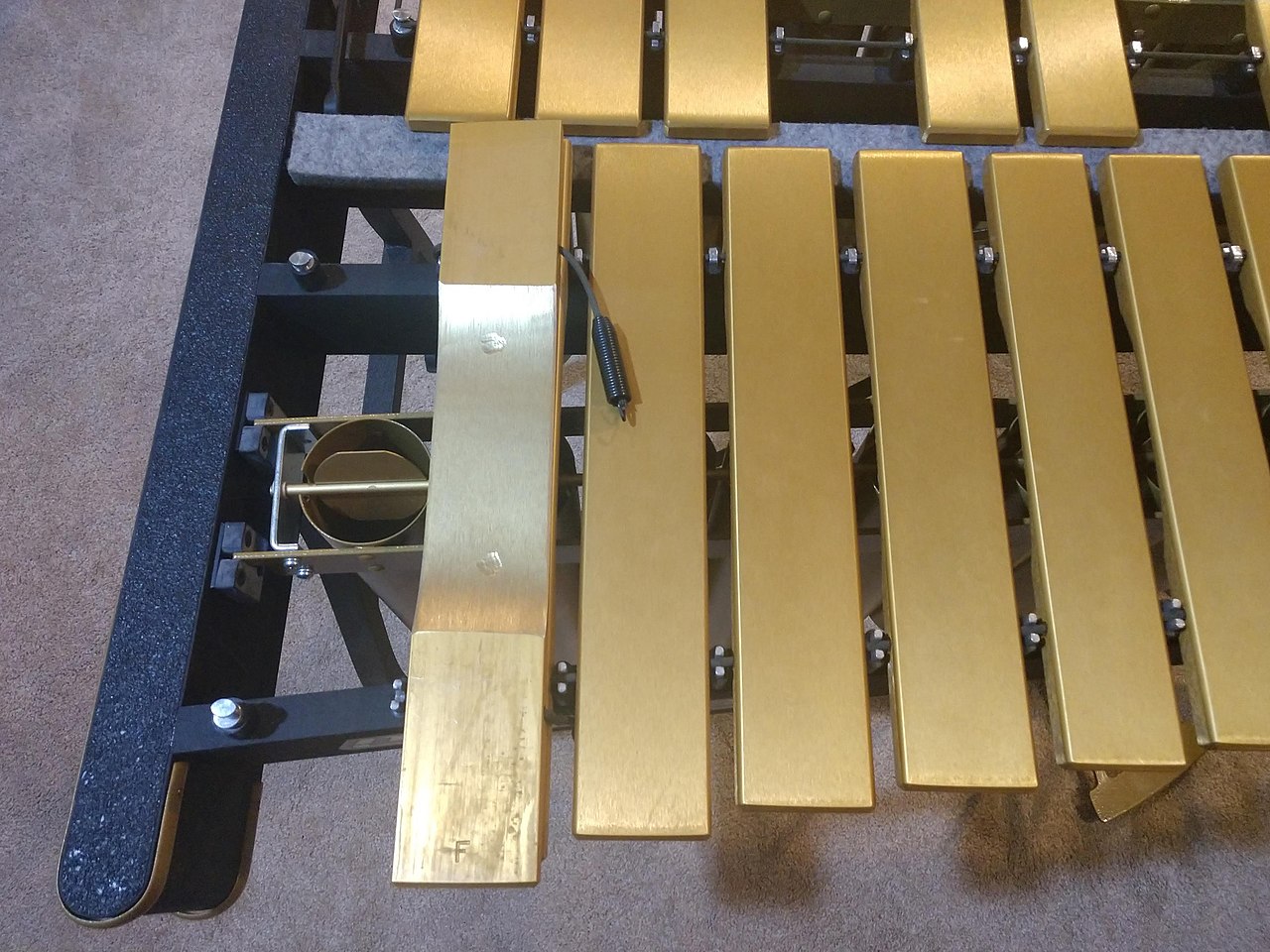
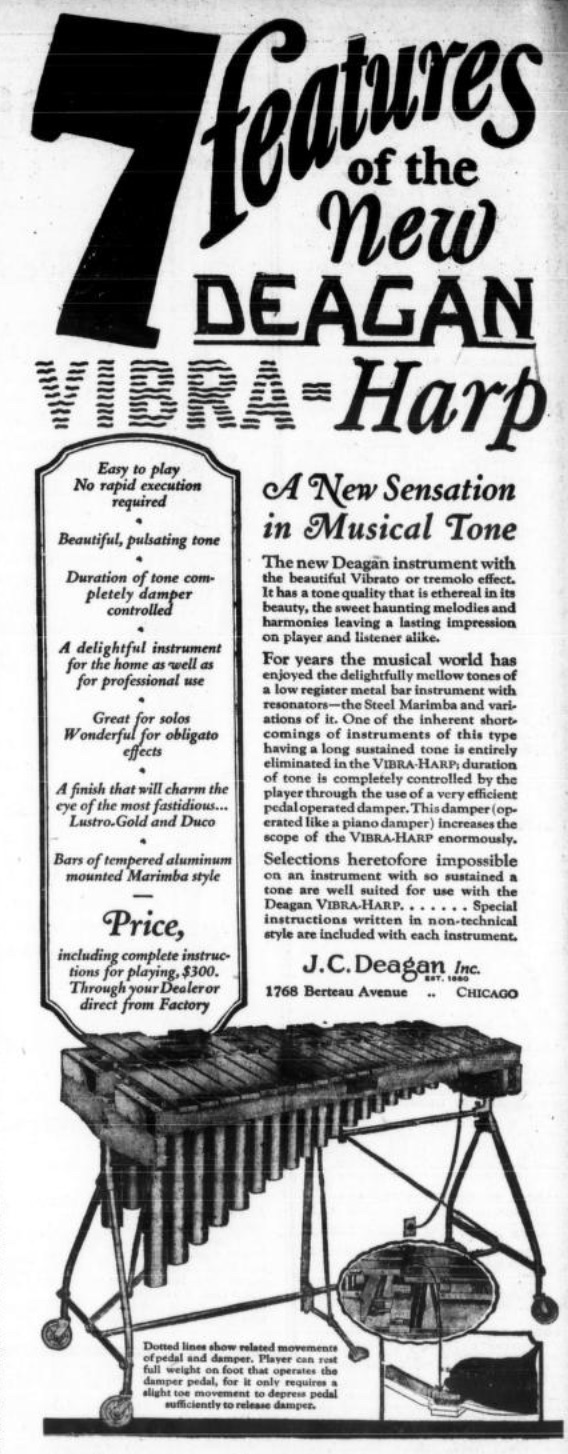
Standard vibraphones have anodized aluminium bars mounted on a frame with resonator tubes under each bar to reinforce the fundamental frequency. A damper bar, operated by a foot pedal, controls sustain much like a piano sustain pedal. Many instruments include an electric motor attached to a set of rotating discs or fans inside the resonators; when engaged the rotating fans periodically open and close the resonator ports, producing a regular amplitude modulation commonly heard as a vibrato or tremolo effect. Common factory ranges include three-octave instruments (frequently F3–F6) and larger four-octave models. Frames, bar material, resonator length and the design of the motor all influence the instrument's response and tone.
Playing technique and mallets
Players strike the bars with mallets that typically have a rubber core wrapped in yarn or cord and mounted on shafts made of rattan, birch, or synthetic materials. Mallet hardness affects attack and warmth: softer mallets emphasize sustain and blend, harder mallets increase articulation and presence. Musicians use one or two mallets per hand; advanced performers use four-mallet grips to play chords and inner voices. The pedal is used to control damping and sustain, enabling legato lines or short, staccato articulations. Extended techniques include glissandi or pitch-bending by sliding a mallet along a bar, bowing the bar edge with a cello or double-bass bow to produce sustained harmonics, and using mutes or preparations to alter timbre.
History and repertoire
The vibraphone emerged in the United States in the early 1920s and quickly found favor in dance bands and then in jazz. Big-band and small-combo players developed distinct stylistic roles for the instrument: early figures in jazz popularized the instrument's lyrical potential, while bebop and modern players expanded its harmonic and improvisatory uses. In classical and modern art music the vibraphone was adopted by several leading composers of the twentieth century; it appears in operatic and symphonic works as a coloristic and percussive voice. Notable orchestral uses include passages by Alban Berg and Olivier Messiaen, and it has been employed by composers such as Leonard Bernstein, Benjamin Britten, and Ralph Vaughan Williams among others.
Variations, related instruments and contexts
The vibraphone is part of a family of percussion keyboards that includes the marimba and xylophone. It differs from these instruments mainly in bar material (aluminium for vibraphone, wood for marimba and xylophone) and in the presence of resonators with rotating fans for vibrato. The glockenspiel and celesta are other pitched percussion instruments with bright, bell-like sounds, but they lack the vibraphone's sustained, metallic warmth and motorized modulation. Alternate keyboard layouts such as the 6-plus-6 system exist for certain players, arranging two rows at whole-tone intervals with the rows separated by a semitone to facilitate particular fingering patterns and harmonic approaches.
Uses, notable players and listening tips
- The vibraphone is a staple of jazz ensembles where it can function as a lead melodic instrument, chordal comping voice, or textural color.
- In classical settings it is used for atmosphere, novelty, and to underscore bright, shimmering textures in orchestral and chamber music.
- Familiar listening examples and pioneers of the instrument can help new listeners identify typical vibraphone sonorities and techniques.
References and links
- Instrument overview
- Comparison with xylophone
- Bar materials
- Wood vs metal bars
- 6-plus-6 system description
- Whole-tone row layout
- Semitone spacing
- Motor and pedal mechanism
- Early history in the United States
- Mallet construction and materials
- Common grip methods
- Four-mallet harmony techniques
- Chordal possibilities
- Bowing techniques
- Use of cello bow
- Use of double bass bow
- Berg's Lulu
- Opera repertoire
- Specific orchestral examples
- Messiaen's works
- Bernstein and percussion
- Britten's orchestral uses
- Vibraphone in jazz
Questions and answers
Q: What is a vibraphone?
A: A vibraphone is a percussion instrument that looks like a xylophone but with aluminium bars instead of wood. It has resonators underneath the bars and an electric motor which can be switched on by a pedal to create a vibrating sound.
Q: How are the bars arranged?
A: The bars are arranged in a similar way to a piano keyboard so that tunes can be played. There is also an alternate form called the 6-plus-6-system, where each row has the bars in a whole-tone distance and both rows are in half-tone distance.
Q: What type of mallets are used for the vibraphone?
A: Mallets (beaters) with rubber balls at the end, wrapped tightly in yarn or cord, are usually used for playing the vibraphone. They may be made of rattan or birch, and they may also be slightly harder than those used for marimbas.
Q: How should mallets be held when playing?
A: Mallets should typically be held between the thumb and index finger, using other fingers to help control them. Playing with four mallets allows players to play harmony (chords with four notes).
Q: Are there any special techniques used when playing the vibraphone?
A: Yes, sometimes special techniques such as "pitch bending" are used by sliding one of the mallets along a bar in a specific way or by bowing across an edge of one of its bars using cello or double bass bows.
Q: When was it first made?
A: Vibraphones were first made in 1921 in America.
Q: In what types of music is it commonly heard?
A: Vibraphones are commonly heard in jazz music, especially within combos, as well as works by composers such as Alban Berg's opera Lulu; Olivier Messiaen; Leonard Bernstein; Benjamin Britten; and Vaughan Williams' Symphony no 8 opening piece.
Related articles
Author
AlegsaOnline.com Vibraphone Leandro Alegsa
URL: https://en.alegsaonline.com/art/104864