
Very Large Telescope (VLT) — ESO's flagship optical observatory
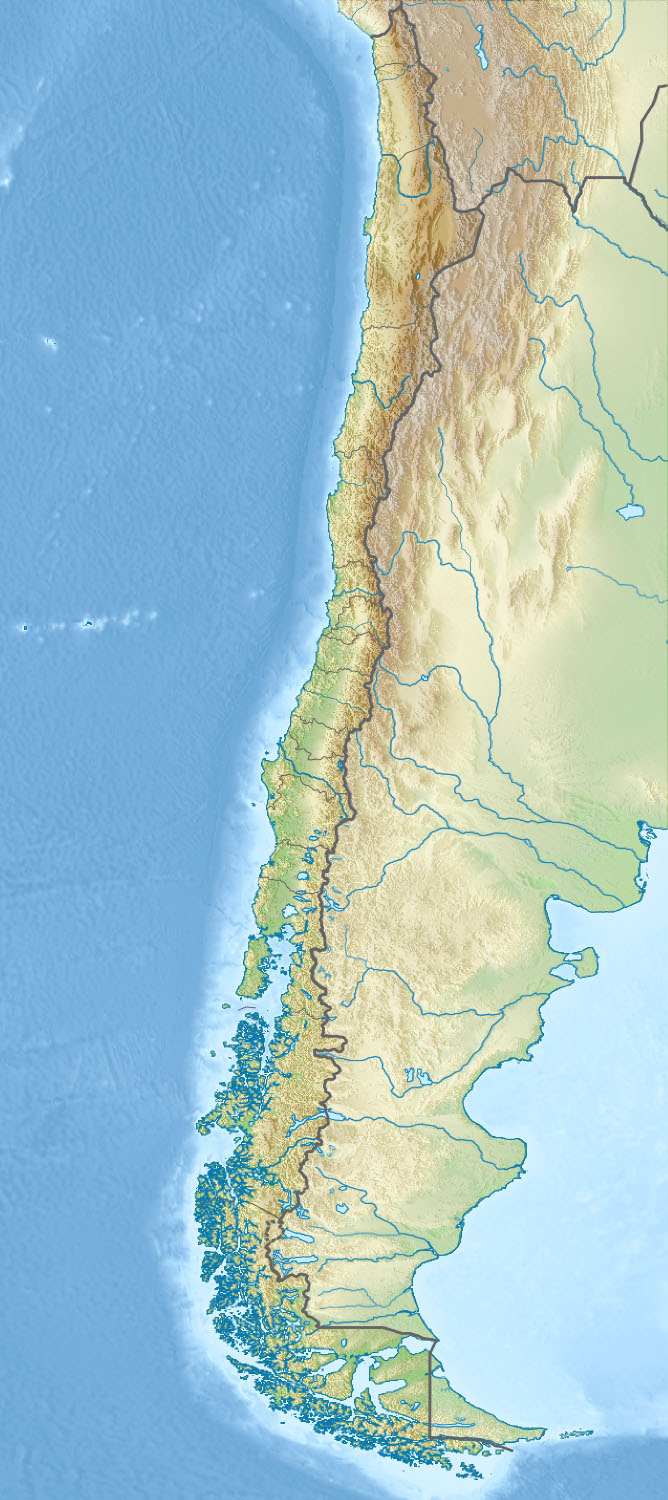
The Very Large Telescope (VLT) is a ground-based optical/infrared observatory run by the European Southern Observatory on Cerro Paranal in the Atacama Desert of northern Chile.
The Very Large Telescope (VLT) is a major ground-based astronomical facility operated by the European Southern Observatory. Located on Cerro Paranal in the Atacama Desert, northern Chile, the VLT provides high-resolution imaging and spectroscopy across optical and infrared wavelengths. It is designed both for standalone observations with large mirrors and for combined operation as an interferometer to achieve very fine angular resolution.
Image gallery
10 Images



Configuration and instruments
The observatory consists of multiple movable and fixed telescopes that can work independently or together. Key elements include:
- Several large unit telescopes with primary mirrors that collect faint light for deep imaging and detailed spectroscopy.
- Smaller auxiliary telescopes used primarily for interferometric combinations and flexible scheduling.
- A suite of adaptive optics systems, spectrographs and cameras allowing observations from visible to mid-infrared wavelengths.
Interferometry and performance
One of the VLT's distinctive capabilities is the Very Large Telescope Interferometer (VLTI), which coherently combines light from separate telescopes. By doing so it attains angular resolution far finer than any single telescope in the array, enabling studies of small-scale structures around stars, protoplanetary disks and distant galactic nuclei.
History and development
Built in the late 20th century, the VLT was planned to exploit the clear, dry skies and high altitude of the Atacama to minimize atmospheric absorption and turbulence. Its modular design allowed incremental installation of telescopes and instruments, and continuous upgrades have kept the facility competitive with newer observatories.
Scientific impact and uses
The VLT has contributed to a wide range of fields: precision studies of the center of the Milky Way, direct and indirect detections of extrasolar planets, detailed spectroscopy of distant galaxies, and time-domain observations of transient phenomena. Its combination of collecting area, instrumentation and interferometric modes makes it a versatile tool for observational astronomy.
Notable facts
Situated in one of the world's driest regions, the VLT benefits from exceptional sky transparency and stable seeing. It remains one of the most productive optical/infrared observatories in the southern hemisphere, often operating in coordination with other facilities to maximize scientific return.
Questions and answers
Q: What is the Very Large Telescope?
A: The Very Large Telescope is a telescope operated by the European Southern Observatory.
Q: Where is the Very Large Telescope located?
A: The Very Large Telescope is located on Cerro Paranal in the Atacama Desert of northern Chile.
Q: Who operates the Very Large Telescope?
A: The Very Large Telescope is operated by the European Southern Observatory.
Q: What is the purpose of the Very Large Telescope?
A: The purpose of the Very Large Telescope is to observe and study objects in space.
Q: What kind of objects can be observed with the Very Large Telescope?
A: The Very Large Telescope can observe a wide range of objects in space, such as galaxies, nebulae, planets, and stars.
Q: How does the location of the Very Large Telescope help its observations?
A: The location of the Very Large Telescope in the Atacama Desert provides clear, dry and stable atmospheric conditions, making it an ideal location for astronomical observations.
Q: How does the technology of the Very Large Telescope work?
A: The Very Large Telescope uses advanced technology, such as adaptive optics and spectroscopy, to capture and analyze high-quality images and data of celestial objects.
Related articles
Author
AlegsaOnline.com Very Large Telescope (VLT) — ESO's flagship optical observatory Leandro Alegsa
URL: https://en.alegsaonline.com/art/104771
Sources
- eso.org : "The Very Large Telescope"
- ui.adsabs.harvard.edu : 2010AN....331..338T
- doi.org : 10.1002/asna.200911339
- eso.org : "The Very Large Telescope — the world's most advanced visible-light astronomical observatory handout"