
Vatican City: History, Government, Culture and Key Facts
Vatican City is the world’s smallest independent state by area, an ecclesiastical city-state within Rome that is the spiritual and administrative centre of the Roman Catholic Church.

The Vatican City is a landlocked sovereign city-state entirely surrounded by the Italian capital, Rome. It is the smallest independent country in the world by area — occupying less than one square kilometre — and is an ecclesiastical state that functions as the central government of the Roman Catholic Church. Although geographically tiny, the territory holds an outsized cultural, religious and diplomatic role: it is the residence of the Pope and the seat of the Holy See.
Image gallery
10 Images





Characteristics and institutions
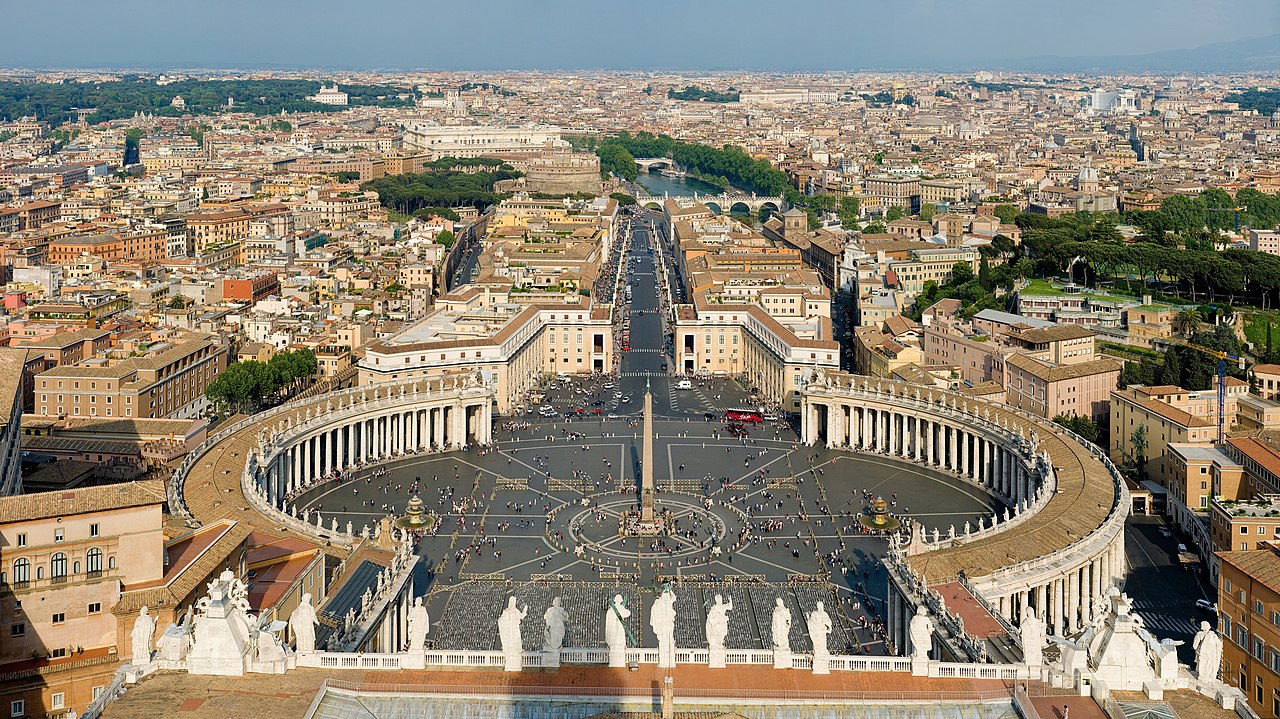
Vatican City contains a number of key institutions and sites associated with the Catholic Church and papal government. These include St. Peter’s Basilica and its square, the Apostolic Palace (the papal household and administrative offices), the Sistine Chapel, and the Vatican Museums, which preserve vast collections of religious art and historical objects. The governance of the state is closely linked to the Holy See — the ecclesiastical jurisdiction under papal authority — which carries out diplomatic relations and maintains representation at the international level.
History and legal status
The modern state of Vatican City was created in 1929 by the Lateran Treaty, an agreement between the Holy See and the Kingdom of Italy that established Vatican City as an independent sovereign entity. The treaty resolved decades of dispute dating to the 19th-century unification of Italy and the end of the Papal States. The pope serves as head of state and exercises both spiritual leadership of the Catholic Church and temporal authority over the city-state's institutions.
Culture, art and public life
Vatican City is renowned for its artistic heritage. Frescoes, sculptures and architectural masterpieces created by artists such as Michelangelo, Bernini and Raphael draw millions of visitors. Religious ceremonies, papal audiences and liturgical celebrations are central to daily life and to the city-state’s global presence. The economy is supported by donations, museum admissions, the sale of publications and stamps, and limited financial activities tied to its religious and cultural mission.
Governance, security and distinctions
The pope is sovereign of Vatican City, but much of the day-to-day administration is delegated to bodies and officials appointed by the Holy See. The Pontifical Swiss Guard provides ceremonial and personal protection for the pope. Vatican City is notable for being one of the world's few city-states and one of three countries that are completely enclosed by another country. It issues its own passports, coins and stamps, and its laws and protocols reflect a unique fusion of religious tradition and modern statecraft.
Notable facts and further reading
Many visitors come to admire the architecture, attend public audiences, or study the Vatican’s archives and collections. While its territory is small, Vatican City continues to exert influence through the moral and diplomatic authority of the Holy See, its cultural heritage and its global network of dioceses and charitable organizations.
- Official Italian name
- Sovereign status
- Smallest country by area
- Territorial extent
- Reported area measurement
- Territory and boundaries
- Surrounded by Italy
- Enclave status
- Comparison: San Marino
- Comparison: Lesotho
- Enclave of a city
- Relationship with Rome
- City-state classification
- Headquarters of the Church
- The Holy See
- Head of state
- The Pope
- Papal incumbents
- Lateran Treaty signatories
- Papal role in 1929
- Cultural significance
- Artistic heritage
- St. Peter's Square
- St. Peter's Basilica
- The Sistine Chapel
- Apostolic Palace
- Sculptures and monuments
- Paintings and collections
Questions and answers
Q: What is the smallest country in the world?
A: Vatican City is the smallest country in the world by size, at 0.49 km².
Q: What are the other two countries that are enclaves of another country?
A: The other two countries that are enclaves of another country are San Marino, also in Italy, and Lesotho in southern Africa.
Q: What type of state is Vatican City?
A: Vatican City is a city-state, because all its territory is urban and built-up.
Q: Who is the head of state for Vatican City?
A: The head of state for Vatican City is the Pope which is, religiously speaking, the Bishop of Rome and head of the Roman Catholic Church.
Q: When was Pope Francis elected as head of state?
A: Pope Francis was elected on 13 March 2013 as head of state for Vatican City.
Q: When did Vatican City become an independent sovereign state?
A: Vatican City became an independent sovereign state with the Lateran Agreement (Patti Lateranensi) signed by Benito Mussolini and Pope Pius XI on 11 February 1929.
Q:What famous attractions can be found within Vatican City?
A:The famous attractions within Vatican City include St. Peter's Square, St. Peter's Basilica, Sistine Chapel,theVatican Museums and Apostolic Palace where the Pope lives as well as hundreds of sculptures and pictures
Related articles
Author
AlegsaOnline.com Vatican City: History, Government, Culture and Key Facts Leandro Alegsa
URL: https://en.alegsaonline.com/art/104353
Sources
- commons.wikimedia.org : Vatican City
- vaticanstate.va : "Internet portal of Vatican City State"
- books.google.com : Gerhard Robbers, Encyclopedia of World Constitutions (Infobase Publishing 2006), p. 1009
- staff.ncl.ac.uk : Nick Megoran, "Theocracy" in International Encyclopedia of Human Geography, vol. 11, Elsevier 2009, p.226| Quote:elective theocracy (although its representatives would be unlikely to accept that label)
- vatican.va : www.vatican.va
- vatican.va : the text
- vaticanstate.va : the state's official website
- vaticanstate.va : vaticanstate.va/EN/homepage.htm
- vaticanstate.va : here.