
Belz Great Synagogue (Belz Beis HaMedrash HaGadol)
A major Belz Hasidic synagogue in Kiryat Belz, Jerusalem, built as a large communal prayer house and center of study and celebration for the Belz movement.
The Belz Great Synagogue, known in Hebrew and Yiddish as the Belz Beis HaMedrash HaGadol, is a prominent religious and communal building in the Kiryat Belz neighborhood of Jerusalem. Erected by followers of the Belz Hasidic dynasty, the synagogue serves as both a daily house of prayer and the focal point for large gatherings, festivals, and life-cycle events attended by Belz Hasidim and visitors from elsewhere.
Image gallery
6 Images


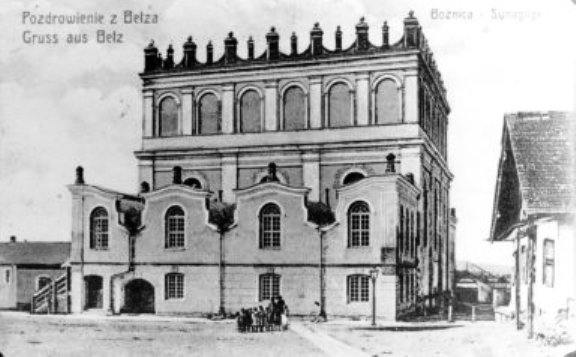


Architecture and layout
The design emphasizes a capacious central prayer hall with clear sightlines to the ark and bimah. Traditional elements appear alongside modern structural techniques: an ornate aron kodesh (Torah ark), seating arranged to serve a large congregation, and a mechitza to provide separate sections in accordance with Orthodox practice. Decorative features include prominent lighting, wood and stone finishes, and motifs inspired by earlier Belz synagogues in Galicia.
History and development
Plans for the current building were advanced by Rabbi Yissachar Dov Rokeach (II) of Belz in the late 20th century. Funding came from a global network of supporters and admirers; contributors included individual donors and communal organizations. Construction transformed a communal vision into a physical complex in Kiryat Belz, reflecting the post–World War II recovery and growth of the Belz movement. The project sought to reproduce the scale and dignity of prewar Hasidic institutions while meeting contemporary needs.
Functions and communal role
Besides serving daily and Sabbath prayers, the synagogue is used for major holiday services, large-scale tishen (Hasidic gatherings), weddings, and public lectures. It houses spaces for Torah study, meetings, and charitable activities and acts as an address that symbolizes the Belz community worldwide. Support networks and visitors from many countries continue to participate in its religious life and events, reflecting an international constituency of the Belz Hasidim (Belz Hasidic movement) and their supporters.
Notable aspects and distinctions
- One of the largest synagogues in Jerusalem by volume and attendance capacity.
- Combines traditional Hasidic liturgical practices with a building intended for very large congregations.
- Serves as a visible symbol of the revival and continuity of the Belz dynasty outside its European origins.
For visitors and students of Jewish architecture and contemporary Hasidism, the Belz Great Synagogue offers an example of how a modern, large-scale religious complex can embody historical memory, communal identity, and ongoing religious practice in an urban Israeli setting.
Questions and answers
Q: What is the Belz Great Synagogue?
A: The Belz Great Synagogue is one of the largest synagogues in Jerusalem.
Q: Who built the Belz Great Synagogue?
A: The Belz Hasidic Jews built the Belz Great Synagogue, with help from their supporters and admirers around the world.
Q: Who planned the construction of the Belz Great Synagogue?
A: Rabbi Yissachar Dov Rokeach (II) of Belz made plans for the huge synagogue to be built in the Kiryat Belz part of Jerusalem.
Q: When was the Belz Great Synagogue built?
A: The text does not state when the Belz Great Synagogue was built.
Q: Where is the Belz Great Synagogue located?
A: The Belz Great Synagogue is located in the Kiryat Belz part of Jerusalem.
Q: What is the significance of the Belz Great Synagogue?
A: The Belz Great Synagogue is significant as one of the largest synagogues in Jerusalem, built by the Belz Hasidic Jews.
Q: What is the Belz Beis HaMedrash HaGadol?
A: The Belz Beis HaMedrash HaGadol is the Yiddish name for the Belz Grand Synagogue, which is one of the largest synagogues in Jerusalem.
Related articles
Author
AlegsaOnline.com Belz Great Synagogue (Belz Beis HaMedrash HaGadol) Leandro Alegsa
URL: https://en.alegsaonline.com/art/10425