
Var (river) — river of southeastern France and namesake of a department
The Var is a river in southeastern France that rises in the Maritime Alps and flows to the Mediterranean near Nice. It lent its name to the department of Var but no longer runs through it.
The Var is a river in southeastern France whose source lies in the Maritime Alps and whose lower course reaches the Mediterranean Sea close to the city of Nice. The waterway has Latin roots in its name (Varus) and is a familiar geographic feature of the Alpes-Maritimes region. For map coordinates of the river's mouth see 43°39′15″N 7°12′0″E.
Image gallery
4 Images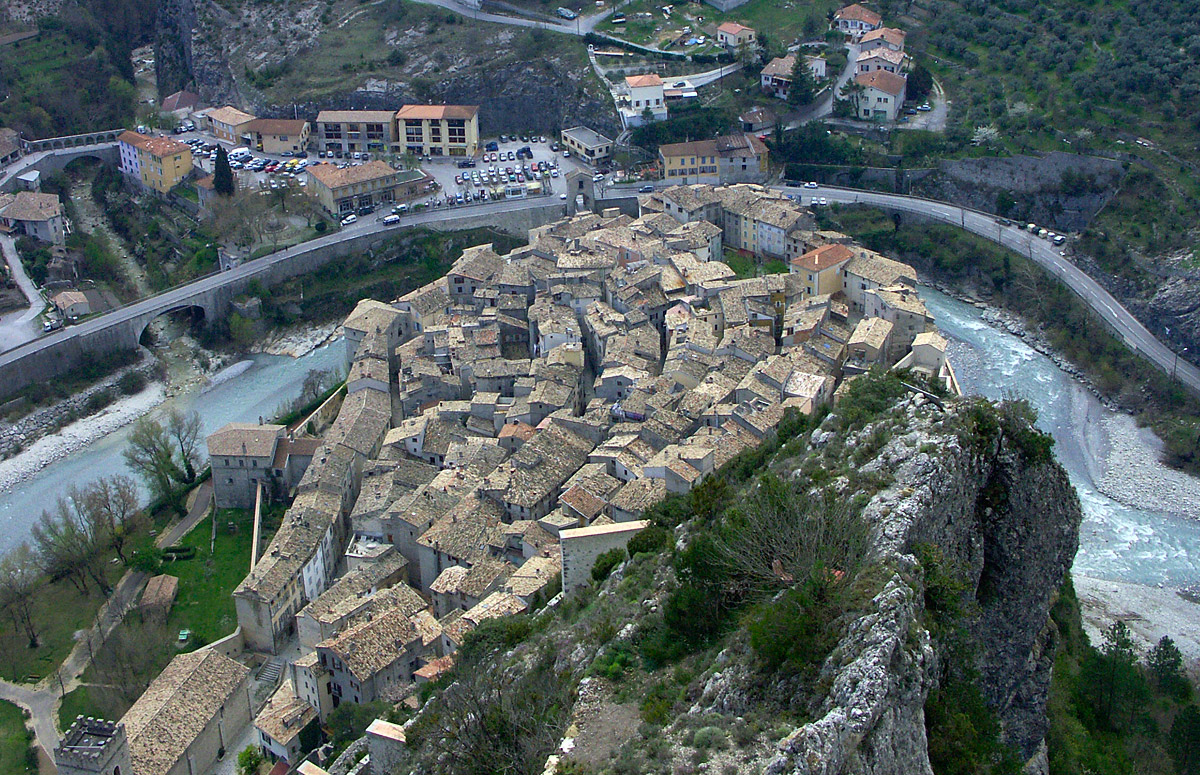


Overview and course
Rising in high mountain terrain, the Var flows generally southward through steep valleys before opening into a coastal plain near the French Riviera. Its catchment is fed by runoff and mountain streams from the Maritime Alps, which produces a river regime marked by seasonal variation and occasional rapid floods after intense storms. The mouth of the Var is on the Mediterranean coast, not as a tributary of the Rhône; it reaches the sea on the Côte d'Azur and forms a modest estuarine area near Nice.
Characteristics and uses
- Hydrology: the river shows alpine influences — snowmelt and storm-driven flows dominate at different times of year.
- Human uses: historically and today the Var supports local irrigation, small-scale water supply and recreational activities. Its steep upper reaches are largely rural and mountainous.
- Navigability: the Var is not navigable for large craft in its lower course; its estuary is relatively narrow compared with major seafaring rivers.
History and administrative significance
The Var gave its name to the French department of Var. A notable administrative curiosity arose after 19th-century territorial changes: the river no longer flows within the modern department that bears its name. That outcome is tied to the expansion of France's southeastern frontier in the mid-1800s, which shifted departmental boundaries. The river is often mentioned in regional histories and place-name studies because of this unusual mismatch between name and administrative geography.
Distinguishing facts and further reading
The Var should not be confused with larger river systems such as the Rhône. It is a regional coastal river in southeastern France that functions at a smaller geographic scale than France's great waterways. For general context on rivers and hydrological classification see river resources and regional guides to the French department system. For administrative and cartographic references related to the Var consult local archives and maps identified via geographical sources and official departmental pages linked here: coordinates, river, southeastern France.
Readers interested in visiting can follow waymarked trails in the surrounding mountains, study local flood-management measures, or explore the coastal plain where the river meets the Mediterranean. Photographs and more detailed hydrological data are available from regional environmental agencies and tourist information centers.
Questions and answers
Q: What are the coordinates of the Var river?
A: The coordinates of the Var river are 43°39′15″N 7°12′0″E / 43.65417°N 7.20000°E / 43.65417; 7.20000.
Q: In which part of France is the Var river located?
A: The Var river is located in southeastern France.
Q: Is the Var river a left or right tributary of the Rhône river?
A: The Var river is a right tributary of the Rhône river.
Q: What is the significance of the Var river's name?
A: The Var river gave its name to the French department of Var.
Q: Is the Var river unique in France in any way?
A: Yes, the Var river is a unique case in France of a river not flowing in the department named after it.
Q: What was the Var river called in Latin?
A: The Var river was called Varus in Latin.
Q: Does the text mention any other rivers in the southeastern region of France?
A: No, the text does not mention any other rivers in the southeastern region of France.
Related articles
Author
AlegsaOnline.com Var (river) — river of southeastern France and namesake of a department Leandro Alegsa
URL: https://en.alegsaonline.com/art/104225
Sources
- commons.wikimedia.org : Var River
- services.sandre.eaufrance.fr : "Le Var (Y6--0200)"
- hydro.eaufrance.fr : "Le Var à Nice [Pont Napoléon III]"
- geoportail.gouv.fr : "Source du Var"
- geoportail.gouv.fr : "Embouchure du Var"