
Van Diemen's Land — historical name for Tasmania
Van Diemen's Land was the European name for the island now called Tasmania from the 17th century until 1856, reflecting Dutch discovery by Abel Tasman and the island's later British penal colony and colonial history.
Overview
Van Diemen's Land was the name used in much European discourse for the island now commonly called Tasmania. The name dates from the 17th century and continued in official and popular use into the mid-19th century. It evokes two intertwined chapters in the island's history: early European maritime exploration and a later period during which the territory was developed as a place of British settlement and convict transportation.
Image gallery
4 Images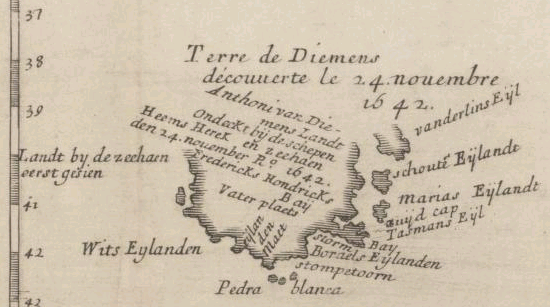


Early European discovery and the name
The first recorded European navigator to chart parts of the island's coastline was the Dutch seafarer Abel Tasman in 1642, during voyages aimed at investigating the southern lands speculated to lie beyond the Indian Ocean. Tasman named the territory Anthoonij van Diemenslandt in honour of Anthony van Diemen, the Governor-General of the Dutch East Indies who had authorised the expedition. For European mapmakers and writers the label persisted even in periods when it was not yet clear whether the land was attached to a continent or stood as a separate island.
British settlement and the convict era
European interest in the island increased in the late 18th and early 19th centuries. British forces established a settlement in 1803, and the island became an important destination for transported convicts as part of the British colonial penal system. The territory was initially administered as part of the colony of New South Wales before being granted separate administration and its own governor in the 1820s. British colonial authorities and settlers used the name Van Diemen's Land throughout this period of institutional growth and infrastructure development.
Indigenous peoples and colonial impact
Long before European arrival, the island was home to Indigenous Tasmanian communities with distinct cultures, languages and land management practices. The colonisation that followed European naming and settlement had profound and often devastating consequences for those communities through dispossession, introduced disease, and violent conflict. Historians and communities continue to study and teach these impacts as a central element of the island's history.
Renaming to Tasmania and self-government
By the mid-19th century many residents and officials wished to move beyond the penal associations attached to the name Van Diemen's Land. An alternative name derived from the Dutch chartist, Tasman, was already in use on some maps and in common speech. In 1856 the British government authorised a formal change of name to Tasmania and the colony was granted responsible government, enabling locally elected institutions and a parliamentary system to develop and assume greater control over local affairs.
Geography, economy and society
Separated from mainland Australia by the Bass Strait, Tasmania developed distinct environmental and economic characteristics, including varied landscapes, island ecosystems and climates that influenced settlement patterns, agriculture and later industries. After the end of large-scale convict transportation, the island's economy and society diversified, although the convict past remained an enduring element of memory and identity among settlers and their descendants.
Legacy and cultural memory
The term Van Diemen's Land endures in cultural works, historical studies and place-names, where it often signals discussion of early European exploration, colonial administration and the convict era. Museums, heritage sites and scholarship examine these periods and their consequences, and contemporary communities debate how best to recognise and interpret this layered past.
Key points and timeline
- 1642: Dutch exploration by Abel Tasman, who named the land for Anthony van Diemen.
- Late 18th–early 19th century: Increasing European interest and charting; British occupation established in 1803 and used as a site of penal transportation.
- Administration initially linked to New South Wales, then established as a separate colony with its own governor.
- 1856: Colony renamed Tasmania and granted responsible government, marking a political transition away from its status as primarily a convict settlement.
For broader context consult accounts of early European voyages of exploration, histories of the modern state of Australia, and studies of penal transportation and colonial impact. Further reading and collections in libraries and museums can illuminate how the island's names and identities have changed through contact, settlement and self-government. Information about the later colonial administration and settlement patterns may also be found in works focused on British colonial policy and the specific local history of Van Diemen's Land as a British settlement (British settlement).
Questions and answers
Q: What was Van Diemen's Land?
A: Van Diemen's Land was the name Europeans used for Tasmania before they knew it was an island.
Q: Who was the first European to chart some coasts of Tasmania?
A: The Dutch explorer Abel Tasman was the first European to chart some coasts of Tasmania.
Q: Why was the land named Van Diemen's Land?
A: The land was named Van Diemen's Land after Anthony van Diemen, the Governor-General of the Dutch East Indies, who had sent Tasman to explore the presumed south land in 1642.
Q: When did the British settle Van Diemen's Land as a penal colony?
A: The British settled Van Diemen's Land as a penal colony in 1803.
Q: Who was the first Governor of Van Diemen's Land when it became an independent colony in 1824?
A: George Arthur was the first Governor of Van Diemen's Land when it became an independent colony in 1824.
Q: When did Britain change the name of Van Diemen's Land to Tasmania?
A: Britain changed the name of Van Diemen's Land to Tasmania in 1856.
Q: Why was the name of Van Diemen's Land changed to Tasmania?
A: The name of Van Diemen's Land was changed to Tasmania at the request of its citizens. It had been an alternative name shown on some maps and used by the community for decades. Additionally, Britain had given the colony the right to govern itself later that year. It had its own parliament.
Related articles
Author
AlegsaOnline.com Van Diemen's Land — historical name for Tasmania Leandro Alegsa
URL: https://en.alegsaonline.com/art/104144