
Valletta — capital city of Malta and fortified Baroque port
Valletta is the fortified capital of Malta, founded in the 16th century by the Knights of St. John. Renowned for its Baroque architecture, harbors and historic monuments, it remains a cultural and administrative centre.
Overview
Valletta is the capital city of Malta and stands on a strategic peninsula between two deep natural harbours. Established in the decades after the Great Siege of 1565, the city was planned as a fortified administrative and military centre for the Knights of the Order of St. John. Today Valletta is notable for its compact street grid, dense collection of historic buildings and continued role as Malta's political and cultural hub. Despite its importance, the city itself has a relatively small resident population, numbering in the low thousands.
Image gallery
10 Images


History and development
Valletta's foundation followed the successful defence of Malta in 1565, when the Order of St. John decided to build a purpose-designed capital that could resist future sieges. The new city was named for Grandmaster Jean Parisot de la Valette. Military engineers laid out a coherent plan of streets, bastions and gates; many of the early buildings were executed under architects and builders employed by the Order. Over subsequent centuries Valletta evolved as an administrative centre of the Knights, later serving the British Empire as an important Mediterranean naval base.
Architecture and landmarks
The city is celebrated for its concentration of Baroque churches, palaces and civic buildings set within defensive walls. Key sites include:
- St. John's Co-Cathedral — famed for its ornate interior and important artworks.
- Upper Barrakka Gardens — offering panoramic views of the Grand Harbour.
- Historic auberges and palazzo houses that once housed leadership of different knightly langues.
- Fortifications and waterfront quays that reflect centuries of military and maritime activity.
Function and culture
Valletta serves as Malta's seat of government and as a focal point for museums, theatres and festivals. Restoration and conservation efforts in recent decades have aimed to preserve the built fabric while adapting historic structures for contemporary use. The city's compact scale makes it walkable, and its cultural calendar draws both residents and international visitors.
Notable facts and distinctions
Valletta is often highlighted for the exceptional concentration of heritage within a small area, and it has received international recognition for its historic value and urban ensemble. While its permanent population is modest compared with larger capitals, Valletta's administrative, cultural and symbolic importance to the nation of Malta remains outsized.
Visiting and practical notes
Visitors typically explore Valletta on foot to appreciate its streets, churches and viewpoints. Public transport and ferries from neighbouring harbours provide easy access. Conservation guidelines protect many historic façades, so changes to the cityscape are managed carefully to balance heritage and modern needs.
Geography
Location
Valletta is located on the north-east coast of the island and is situated on the promontory of Monte Sciberras, which is enclosed by the two largest natural harbours in the Mediterranean, Grand Harbour and Marsamxett Harbour. Valletta is bordered to the southwest by the neighbouring town of Floriana. In the longitudinal direction (northeast-southwest), Republic Street (formerly Queen's Street) and the parallel Merchants Street have been the main shopping streets since time immemorial.
· 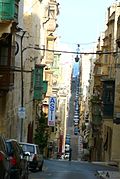
Street canyon in Valletta
· 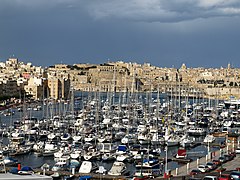
Port between Senglea and Vittoriosa, in the background Valletta
· 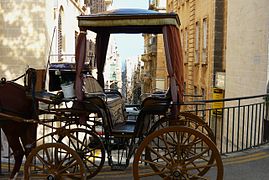
Horse-drawn carriage in front of a typical street in Valletta
· 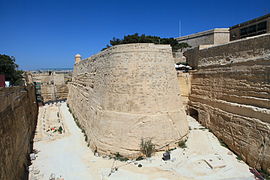
City fortifications of Valletta
· 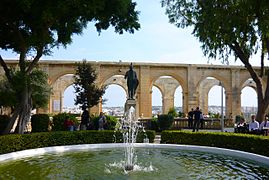
Upper Barrakka Gardens
· 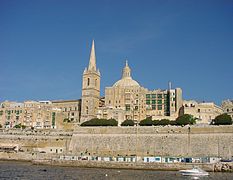
View of Valletta (2000)
Climate
Valletta has a Mediterranean climate. There are warm, dry summers with temperatures around 30 °C and humid, mild winters where the values drop to around 15 °C. Because of the island location, the daily temperature differences are usually very small (5 to 10 °C). There are about 519 millimeters of precipitation per year, 81% of which is distributed between October and March. Arid months predominate.
| Valletta | ||||||||||||||||||||||||||||||||||||||||||||||||
| Climate diagram | ||||||||||||||||||||||||||||||||||||||||||||||||
| ||||||||||||||||||||||||||||||||||||||||||||||||
| Monthly average temperatures and precipitation for Valletta
Source: wetterkontor.de | ||||||||||||||||||||||||||||||||||||||||||||||||||||||||||||||||||||||||||||||||||||||||||||||||||||||||||||||||||||||||||||||||||||||||||||||||||||||||||||||||||||||||||||||||||||||||||||||||||||||||||||||||||||||||||||||||||||||||||||||||||||||||||||||||||||||||||||||||||||||||||
Origin of the name
The official name once given to the city by the Order of Malta was Humilissima Civitas Vallettae (Most Humble City of Valletta) after Jean Parisot de la Valette, then Grand Master of the Order. As a city of mighty bastions and baroque buildings, and the splendour of the late Grand Masters, it received the reputation as Superbissima, the most ostentatious of all European cities. In Maltese, Valletta is colloquially known as il-Belt, which simply means the city. The inhabitants are called Beltin.
Related articles
Author
AlegsaOnline.com Valletta — capital city of Malta and fortified Baroque port Leandro Alegsa
URL: https://en.alegsaonline.com/art/104058