
Aosta Valley (Valle d'Aosta): autonomous region in northwestern Italy
Valle d'Aosta (Aosta Valley) is Italy's smallest, bilingual autonomous region in the Alps, known for high peaks, winter sports, Roman heritage and a special administrative status without provinces.
Overview
The Aosta Valley (Italian: Valle d'Aosta; French: Vallée d'Aoste) is a small, mountainous region in the far northwest of Italy. It is Italy's smallest region by area and has a sparsely distributed population, concentrated mostly in the valley floor and in the regional capital, Aosta. In English the region is commonly called the Aosta Valley; its official names are Regione Autonoma Valle d'Aosta in Italian and Région Autonome Vallée d'Aoste in French. The region's bilingual character is a defining feature of its public life and legal status, and both Italian and French are used in administration and signage (in English sources the area is often described as bilingual).
Image gallery
10 Images




Geography and natural environment
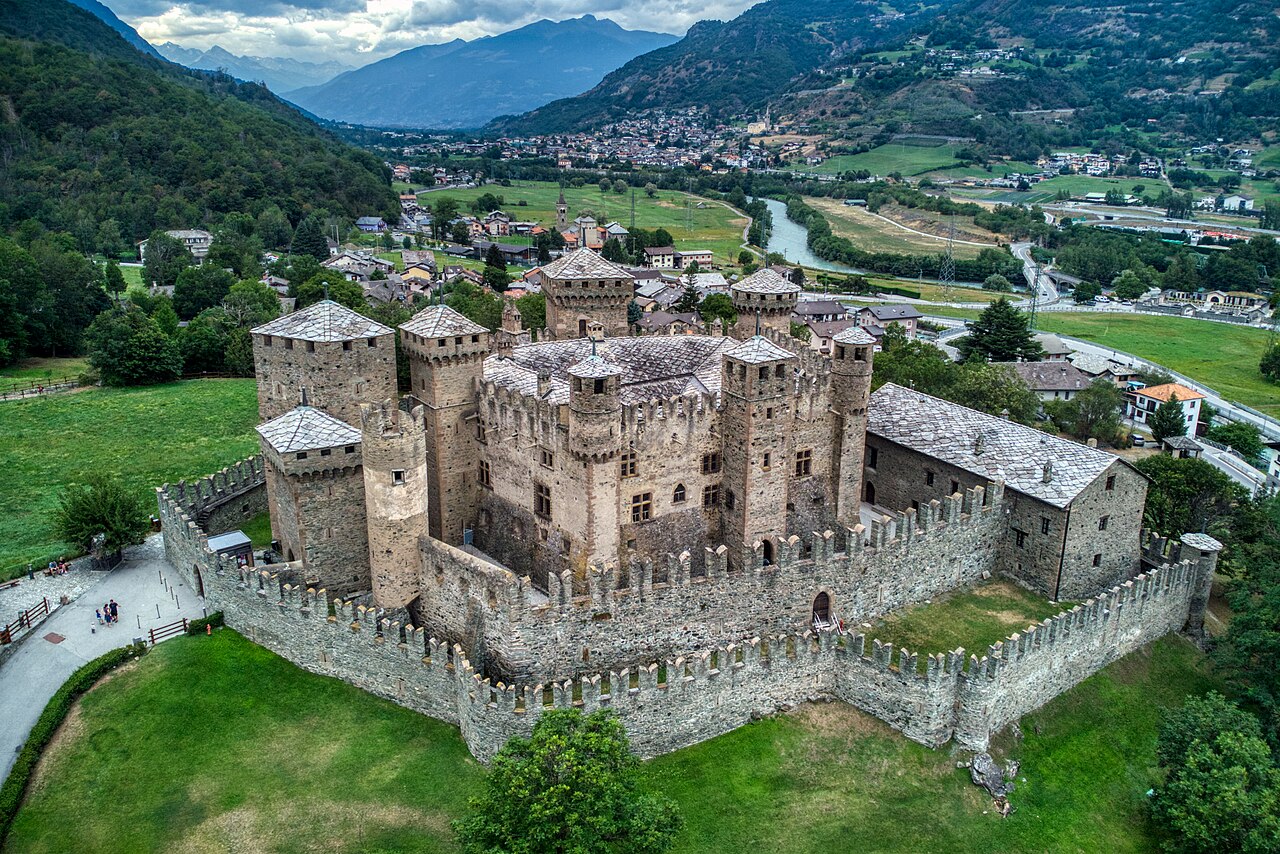
Valle d'Aosta occupies a high alpine corridor that rises toward some of the highest mountains in Europe. The valley leads up toward Mont Blanc and is framed by major ranges that include the Mont Blanc massif, the Matterhorn and the Gran Paradiso. Glaciers, steep valleys and high passes characterize the landscape, which attracts climbers, backcountry skiers and hikers. Important protected areas, including Gran Paradiso National Park, conserve distinctive alpine flora and fauna.
- Notable peaks: Mont Blanc, Matterhorn, Gran Paradiso.
- Activities: alpine climbing, downhill and cross-country skiing, summer hiking and mountain biking.
History and cultural heritage
The valley has been a transit corridor through the Alps since antiquity. Roman armies and colonists established settlements along the route and the city of Aosta preserves archaeological traces of its Roman past. Over the centuries the area has been shaped by Burgundian, Savoyard, French and Italian influences; political control shifted periodically, leaving a mixed cultural legacy reflected in architecture, language and local customs. Traditional dialects related to Franco-Provençal (often called Valdôtain) are still spoken alongside Italian and French.
Government and administrative structure
Valle d'Aosta is an autonomous region with a special statute, which grants it broader legislative powers than ordinary regions in Italy. Unlike other regions, it has no intermediate provincial tier and the regional government performs functions that elsewhere are handled by provinces; this distinctive arrangement means the region is directly divided into a number of municipalities. The region is small in area (about 3,260.9 km2) and has a population of roughly 126,000 inhabitants, distributed among many small communes (comuni).
Administratively, the absence of provinces is notable: the region carries out tasks otherwise assigned to provincial authorities (no provinces), while local councils manage municipal affairs. The capital, Aosta, remains the cultural and administrative center.
Economy, local products and tourism
The Aosta Valley economy relies heavily on tourism, both winter and summer, with well-developed ski resorts and mountain facilities. Agriculture is limited by altitude but includes dairy farming and traditional products such as Fontina cheese. Small-scale viticulture exists in lower sites sheltered from severe alpine weather. Hydroelectric production and artisanal industries also contribute to the regional economy.
Transport routes and noteworthy passages
Because it forms a natural corridor between the Po plain and transalpine regions, the valley contains historic passes and modern tunnels that connect Italy with neighboring countries. Ancient routes continue to influence transport and trade patterns, and archaeological evidence underlines the valley's long role as a mountain gateway (Roman roads and remains). The approach to the northwest connects toward France and Switzerland and has shaped the valley's strategic importance throughout history (mountainous region).
For practical information on municipalities, local services and tourism, many official and regional resources are available online; local visitor centers provide seasonal guidance and safety advice for mountain activities (Aosta, Mont Blanc, comuni). The valley's combination of high alpine scenery, bilingual institutions and long historical continuity makes it distinctive among Italy's regions.
Further reading and official pages: regional overview, English-language guides, capital information, archaeology, administration.
Questions and answers
Q: What is the region of Valle d'Aosta also known as?
A: Valle d'Aosta (Val d'Aosta or Val d'Aoste) is also known as the Aosta Valley in English.
Q: What are the two official names for the region?
A: The two official names for the region are Regione Autonoma Valle d'Aosta (in Italian) and Région Autonome Vallée d'Aoste (in French).
Q: What is the capital of Valle d'Aosta?
A: The capital of Valle d'Aosta is Aosta.
Q: How large is the area of Valle d'Aosta?
A: The area of Valle d'Aosta is 3,260.9 km2 (1,259.0 sq mi).
Q: How many people live in this region?
A: Approximately 126,883 people live in this region.
Q: Does this region have provinces?
A: No, it does not have provinces - it has taken all administrative functions from a province instead.
Q: How many comuni are there in this region?
A: There are 74 comuni in this region.
Related articles
Author
AlegsaOnline.com Aosta Valley (Valle d'Aosta): autonomous region in northwestern Italy Leandro Alegsa
URL: https://en.alegsaonline.com/art/104046
Sources
- demo.istat.it : "Statistiche demografiche ISTAT"
- epp.eurostat.ec.europa.eu : "Eurostat - Tables, Graphs and Maps Interface (TGM) table"
- europa.eu : EUROPA - Press Releases - Regional GDP per inhabitant in 2008 GDP per inhabitant ranged from 28% of the EU27 average in Severozapaden in Bulgaria to 343% in Inner London
- tuttitalia.it : "Regione Valle d'Aosta /Vallée d'Aoste"
- camera.it : camera.it/_dati/leg13/lavori/bollet/200007/0718/pdf/06.pdf
- lovevda.it : "Giants of the Alps"
- appweb.regione.vda.it : "Comunità montane"
- tuttitalia.it : "Comuni valdostani per popolazione"
- axl.cefan.ulaval.ca : "Statuto speciale per la Valle d'Aosta"