
Utah Territory (1850–1896)
Organized U.S. territory established in 1850, settled largely by Mormon pioneers. It experienced boundary changes, federal disputes over polygamy, and political evolution before admission as the State of Utah in 1896.
The Utah Territory was an organized territory of the United States established in 1850 and existing until admission of the State of Utah in 1896. It was created in the aftermath of the Mexican–American War and the rapid westward expansion of the United States. The region served as a destination for thousands of settlers, particularly members of The Church of Jesus Christ of Latter-day Saints, and it became a focal point for conflicts between local practices and federal law.
Image gallery
6 Images


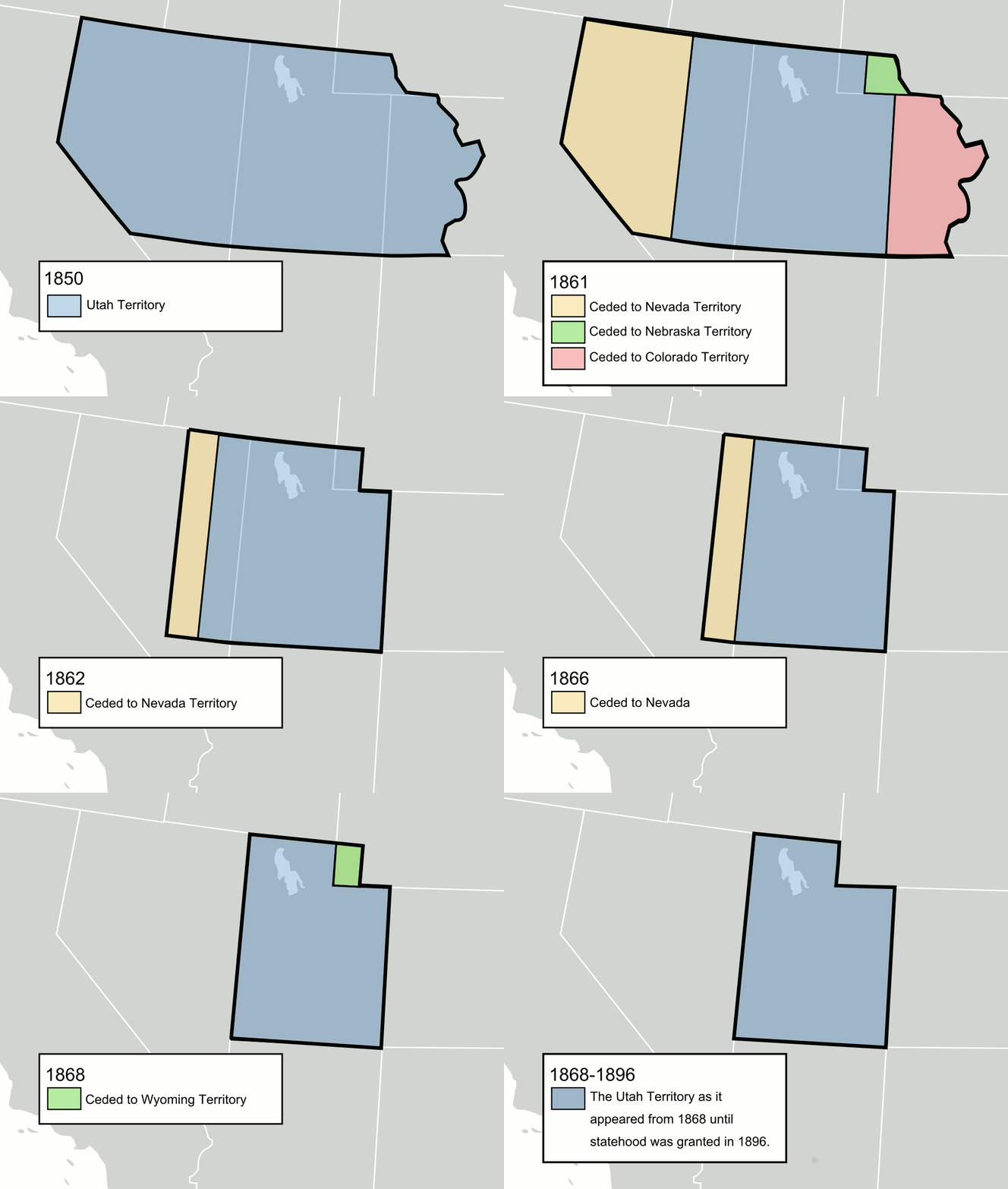

Geography and administrative development
The initial territorial boundaries covered a much larger area than the modern state, at times including parts of present-day Colorado, Nevada, Idaho and Wyoming. Over the next two decades congressional acts and the establishment of new territories reduced its size. The territory's capital moved with administrative changes, and governance combined locally elected institutions with federally appointed officials.
Settlement, economy, and society
Settlement was driven by agricultural colonization, irrigation projects, and the efforts of organized religious communities to establish self-sufficient towns. The arrival of the transcontinental railroad and development of mining districts diversified the economy. Social life revolved around church wards, cooperative institutions, and a network of small towns linked by trails and early roads.
Federal relations and controversies
Tensions with the federal government were a defining feature of the territory's later years. The practice of plural marriage among some residents prompted national debate and federal legislation that limited local authority over marriage and property. These disputes affected territorial governance and slowed the path to statehood until political compromise and legal changes reduced the principal points of contention.
Path to statehood and legacy
After decades of negotiation, legal restriction of contested practices, and political realignment, the territory was admitted to the Union as the State of Utah in 1896. Its transition illustrates themes common to western territories: migration and settlement, adaptation of legal institutions, changing boundaries, and the interplay between local culture and national policy. For contemporary reference see sources on the organized territory as an American territory and its later status as the State of Utah.
Notable facts
- Established as a U.S. territory during mid-19th century westward expansion.
- Experienced significant boundary reductions as other territories formed.
- Key national issues included settlement policy, religious freedom, and federal authority.
- Its settlement pattern contributed to the distinctive urban-rural makeup of the modern state.


Related articles
Author
AlegsaOnline.com Utah Territory (1850–1896) Leandro Alegsa
URL: https://en.alegsaonline.com/art/103718