
Utagawa Kuniyoshi: Master of Dynamic Ukiyo-e
Utagawa Kuniyoshi (1798–1861) was a major Japanese ukiyo-e artist known for bold warrior prints, inventive triptychs, kabuki portraits, supernatural imagery and influence on later illustration.
In Japanese naming practice the family name precedes the given name; the printmaker is conventionally referred to as Utagawa Kuniyoshi. Born January 1, 1798, and passing April 14, 1861, Kuniyoshi is widely regarded as one of the great masters of ukiyo-e, the woodblock print and painting tradition that flourished in Edo (modern Tokyo). He belonged to the Utagawa school, a dominant workshop and teaching lineage of print designers.
Image gallery
10 Images


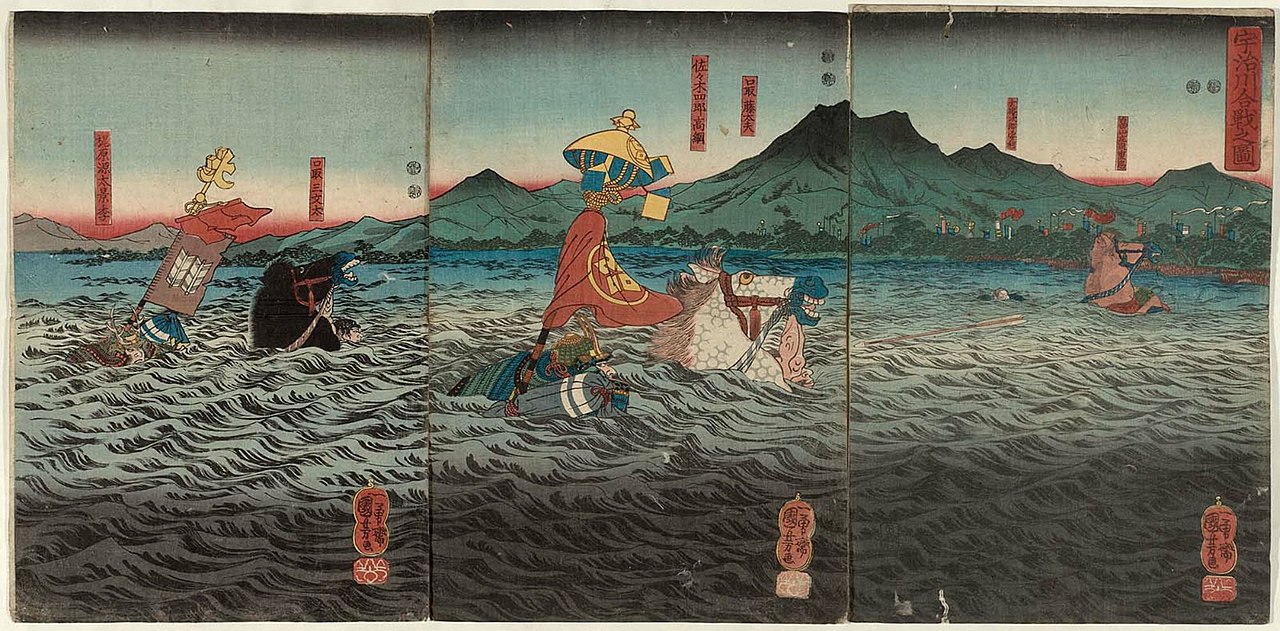
Style and technique
Kuniyoshi is celebrated for bold composition, vigorous line work and a strong sense of movement. His prints often employ dramatic foreshortening, expressive facial types and striking silhouettes. He worked in single-sheet polychrome prints and in multi-sheet formats such as diptychs and triptychs to stage expansive battle scenes or crowded theatrical moments. Like other artists of his era he worked with skilled carvers and printers to achieve precise details of pattern and costume.
Subjects and notable series
Kuniyoshi's subject range was wide. He produced musha-e (warrior prints) that portray historical and legendary heroes; striking kabuki actor portraits that capture stage drama; and numerous images of y?kai and supernatural beings rendered with imagination and sometimes humour. One of his best-known undertakings are compositions inspired by the Chinese novel Water Margin, often called the "One Hundred and Eight Heroes" series, which display large groups and individual champions in tense poses.
- Warrior prints: energetic battle scenes, often as triptychs.
- Kabuki and actor portraits: theatrical gestures and costume detail.
- Supernatural and animal subjects: inventive yokai, hybrid creatures and anthropomorphic animals.
- Book illustrations and landscapes: contributions to popular illustrated books and occasional scenic views.
Career and historical context
Trained within the Utagawa school, Kuniyoshi worked in a lively publishing environment that supplied prints to a growing urban audience. He produced commercially successful designs while also exploring personal inventions and visual jokes. Developments in print technology, pigments and the tastes of Edo's townspeople influenced the appearance and range of his output.
Legacy and influence
Kuniyoshi's imaginative compositions and creatures influenced later generations of Japanese artists and, in the modern era, illustrators and comic artists who cite his bold storytelling and dramatic poses. His work attracted attention in the West with the broader interest in Japanese print art in the 19th and 20th centuries, and many museums and private collections now preserve examples of his prints.
For further reading and illustrations see a general biography, museum collections and image galleries here, selected works and catalogues here, scholarly studies and articles here, and exhibition resources here.
Questions and answers
Q: What is the full name of the Japanese artist being mentioned?
A: The full name of the Japanese artist being mentioned is Utagawa Kuniyoshi.
Q: What is the family name of Utagawa Kuniyoshi?
A: The family name of Utagawa Kuniyoshi is Utagawa.
Q: When was Utagawa Kuniyoshi born and when did he die?
A: Utagawa Kuniyoshi was born on January 1, 1798 and he died on April 14, 1861.
Q: Was Utagawa Kuniyoshi a Japanese artist?
A: Yes, Utagawa Kuniyoshi was a Japanese artist.
Q: What was Utagawa Kuniyoshi a master of?
A: Utagawa Kuniyoshi was a master of the ukiyo-e style of woodblock prints and painting.
Q: What is the nickname given to Utagawa Kuniyoshi?
A: Kuniyoshi is the nickname given to Utagawa Kuniyoshi.
Q: What is the meaning of ukiyo-e?
A: Ukiyo-e refers to a Japanese art form that emerged in the 17th century and it means pictures of the floating world.
Related articles
Author
AlegsaOnline.com Utagawa Kuniyoshi: Master of Dynamic Ukiyo-e Leandro Alegsa
URL: https://en.alegsaonline.com/art/103713
Sources
- books.google.com : "Kuniyoshi" · archive.is
- nymag.com : "Everything But the Robots: A Kuniyoshi Retrospective Reveals the Roots of Manga,"
- books.google.com : "Miyamoto Musashi"
- books.google.com : "Kakinomoto no hitomaro"