
USS Bunker Hill (CV-17) — Essex‑class aircraft carrier
USS Bunker Hill (CV-17) was an Essex-class aircraft carrier of the U.S. Navy commissioned in 1943. She served in the Pacific during World War II and was severely damaged by kamikaze attacks off Okinawa in 1945.
Overview
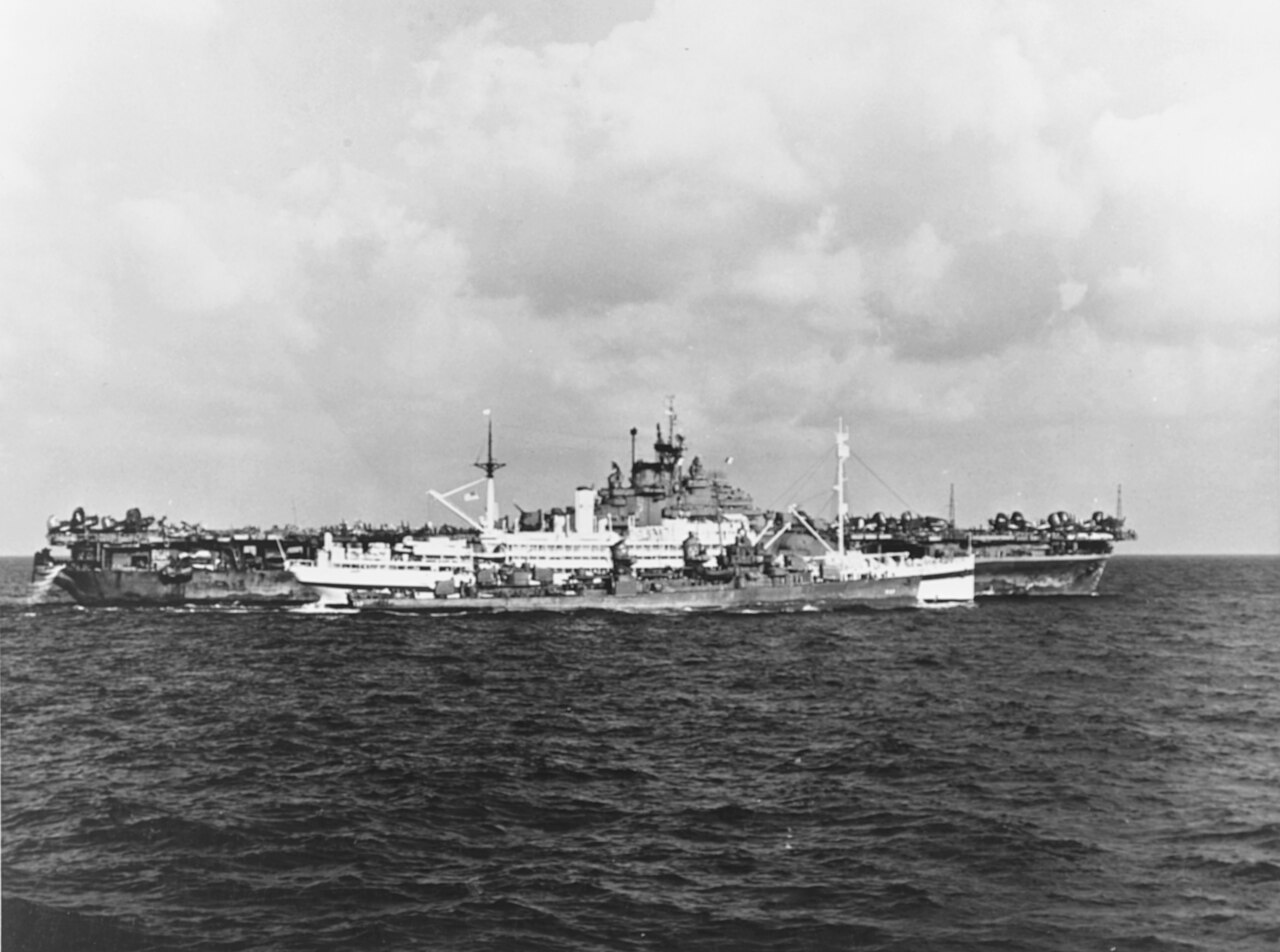
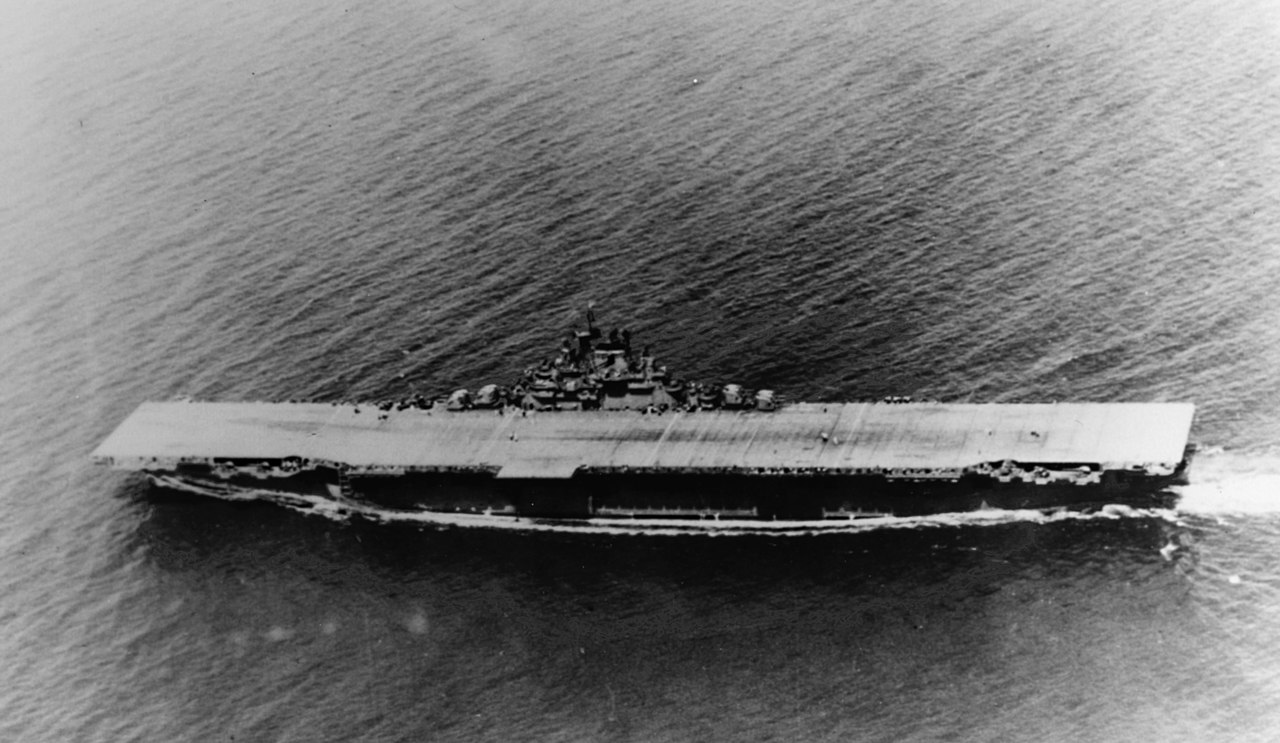
USS Bunker Hill (CV/CVA/CVS-17, later AVT-9) was one of the Essex-class aircraft carriers built for the United States Navy during World War II. Named for the Revolutionary War engagement known as the Battle of Bunker Hill, she was commissioned in May 1943 and became part of the Pacific carrier forces that helped secure American naval and air superiority. The Essex class formed the backbone of the Navy's fast carrier task forces in the latter half of the war. For background on the class see Essex-class carriers and on the service branch see United States Navy.
Image gallery
10 Images



Design and air group
Bunker Hill embodied the general characteristics of late‑war U.S. carriers: a long flight deck, an island superstructure, extensive anti-aircraft batteries and facilities to carry, launch and recover a large air group. Typical air wings aboard Essex-class ships included fighters, dive bombers and torpedo bombers — aircraft types such as the F6F Hellcat, SB2C Helldiver and TBM Avenger were commonly embarked. These carriers combined speed, survivability and aircraft capacity to support sustained operations across the vast Pacific theater.
Wartime service and operations
After entering service, Bunker Hill joined the fast carrier task forces that conducted strikes across the central and western Pacific. Her air groups participated in raids against Japanese-held islands, supported amphibious landings, and struck targets in the Philippines and on the Japanese home islands as the fleet pushed westward. She operated as part of the carrier task forces that were central to the U.S. strategy of seizing air and sea control and projecting power to support ground operations.
Kamikaze attack at Okinawa
On 11 May 1945, while operating off Okinawa, Bunker Hill was hit by two Japanese kamikaze aircraft in rapid succession. The strikes ignited aviation fuel and ordnance on the flight deck and among parked aircraft, producing catastrophic fires and secondary explosions. Casualties were heavy: more than six hundred sailors and airmen were killed, wounded or reported missing, with contemporaneous reports listing roughly three to four hundred confirmed dead or missing. The attack ranked among the most devastating single incidents suffered by a U.S. carrier in the Pacific war; additional context on the concept behind the attacks is available at kamikaze operations.
Aftermath and later status
Emergency damage control efforts by shipboard crews and assistance from nearby vessels ultimately brought the fires under control, but the damage to flight decks, hangars and machinery spaces was severe. Bunker Hill received temporary repairs to make her seaworthy for a voyage back to the United States, where more extensive overhaul was required. In the postwar years she was reclassified multiple times (CVA, CVS and AVT designations reflect changing roles and administrative categories) before being removed from active service.
Legacy
USS Bunker Hill is remembered both for her contribution to Allied victory in the Pacific and for the tragic human cost of the kamikaze attack that nearly destroyed her. Her story illustrates the intensity of carrier warfare in 1944–45 and the risks imposed by suicide tactics late in the conflict. For further reading on the ship, the battle that inspired her name and the Essex-class carriers see Battle of Bunker Hill, Essex-class carriers and U.S. Navy history resources.
Questions and answers
Q: What was USS Bunker Hill (CV-17)?
A: USS Bunker Hill (CV-17) was a US Navy aircraft carrier built during World War II.
Q: Why was the ship named Bunker Hill?
A: The ship was named after the Battle of Bunker Hill, which took place during the American Revolutionary War.
Q: When was USS Bunker Hill commissioned?
A: USS Bunker Hill was commissioned in May 1943.
Q: What happened to USS Bunker Hill while it was covering the invasion of Okinawa?
A: USS Bunker Hill was struck by two kamikazes in quick succession, which set the vessel on fire.
Q: How many people were casualties on USS Bunker Hill?
A: More than 600 people were casualties on USS Bunker Hill.
Q: How many confirmed dead were there on USS Bunker Hill?
A: There were 346 confirmed dead on USS Bunker Hill.
Q: Were there any missing persons on USS Bunker Hill?
A: Yes, there were 43 missing persons on USS Bunker Hill.
Related articles
Author
AlegsaOnline.com USS Bunker Hill (CV-17) — Essex‑class aircraft carrier Leandro Alegsa
URL: https://en.alegsaonline.com/art/103688
Sources
- archive.org : President on Tour, 1945/06/25